Technology
AI Start‑ups Tackle India’s Land‑Record Chaos and Pothole Plague
By Today News Hours Editorial Desk
In 2020, Sanjay Mandava flew from Chicago to Chennai to resolve a personal land dispute. He spent months visiting government offices to gather a dozen documents that would prove his family’s ownership of a property. A single sale deed was insufficient; authorities required building certificates, property‑tax receipts, land‑survey maps and other records. Frustrated, Mandava founded Landeed, an AI‑driven platform that aggregates fragmented land records, verifies titles and performs legal checks with a few clicks across 24 Indian states. He explained to the BBC that, unlike the US or UK where the government verifies ownership, India follows presumptive titling, placing the burden on buyers to prove title.
Landeed uses geo‑spatial technology and data from state land‑revenue departments, registration offices, survey records and municipal databases to link registered properties to official land identification and survey numbers. An AI layer reads titles, extracts information and flags inconsistencies within minutes—a task that can take lawyers and brokers days. The platform now holds 1.8 billion documents and serves millions of individual and enterprise customers in real‑estate transactions.
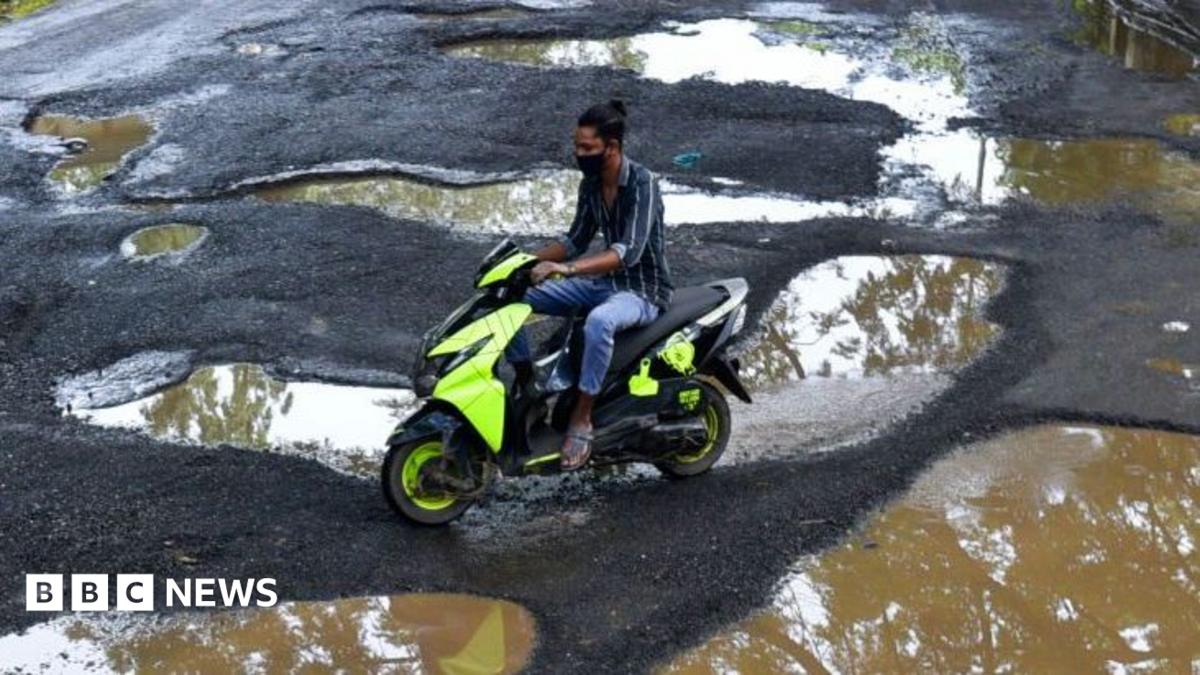
Other Indian start‑ups are addressing complex national challenges with AI. Bengaluru‑based Gaurav Sen’s app detects potholes using dash‑cam footage, satellite navigation and an AI vision model, then identifies the civic officials responsible for repairs and sends them the data. Sen said the app could be used by municipal corporations on public buses and taxis to access real‑time road‑condition data.
In Mumbai, Fractal Analytics has deployed its AI tool “Vaidya” in hospitals run by the local civic authority. The app provides citizens with AI‑generated, simplified summaries of lab reports in multiple languages, identifies nearby healthcare facilities based on needs, and offers doctors AI‑guided pre‑consultation support such as medical history and medication details. It also supplies hospital administrators with a public‑health dashboard derived from aggregated, anonymous lab‑report insights, helping them monitor emerging infections and disease trends.
Funding for Indian AI start‑ups has surged, rising 265 % year‑on‑year according to Inc42, with over $1 billion raised in the first nine months of the year despite a muted broader ecosystem. Yet companies face challenges in commercialising their ideas. Fractal’s co‑founder Srikanth Velamakanni told the BBC that the cost of building in India can exceed what customers are willing to pay, and that the computing power needed to run an AI model is the same whether built in India or the US, but American customers have a larger paying capacity.
Indian founders also contend with scarce high‑quality GPUs, a major impediment. Mandava said he is “starved for GPUs” and struggles to acquire them, even though the government has pledged 38,000 GPUs through its AI mission. Demand for compute power far exceeds supply. Cumbersome regulation and bureaucracy further hinder progress, raising concerns that solutions may become quickly redundant.
Despite these obstacles, founders remain determined. Mandava asked policymakers for support that would give Indian companies the tools to compete globally, while Sen acknowledged that his product must become more sophisticated to be sustainable and hard to replicate.
The BBC reports on these developments through its India coverage on Instagram, YouTube, X and Facebook.