Climate & Environment
Hawaii Governor Reports at Least One Death as Hurricane Lowell Wreaks Widespread Damage
By Tyler Ory, Mary Gilbert, Briana Waxman, Chris Dolce, Kate S. Petersen, Julianna Bragg
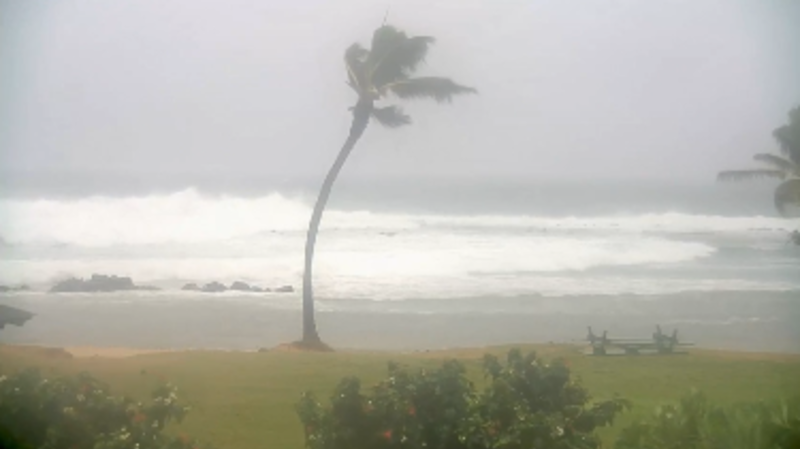
Hurricane Lowell caused significant destruction across Hawaii's islands, leaving at least one person dead, damaging numerous homes, and cutting power to tens of thousands of residents, according to Governor Josh Green.
Speaking with CNN's Jake Tapper, Green described extensive damage near coastal areas and estimated the storm's cost could reach "hundreds of millions of dollars." A homeless man on Oahu was killed when a tree fell onto the tent where he was living, the governor confirmed.
Emergency crews have been working to restore electricity to hospitals, and Green said more than 300 National Guard members have been deployed throughout the islands. The state's Department of Transportation is assisting with mudslides and damaged or washed-out roads.
"We're doing what we can to recover, but this was a very serious storm," Green told CNN.
The hurricane struck Hawaii's westernmost islands overnight into Tuesday, bringing hurricane-force winds and massive surf. As a Category 2 storm, Lowell's center passed within roughly 50 miles of Niihau in Kauai County, making it the most powerful hurricane to affect the main Hawaiian Islands since Category 4 Hurricane Iniki in 1992. It marks the third storm to threaten Hawaii in just over three weeks, as El Niño conditions intensify the Pacific hurricane season.
Ryan Wilson, spokesperson for Kauai County's emergency management agency, reported that wind and storm surge damaged homes and structures throughout the county, along with some storm-related injuries. Specific details on injury severity or property damage were not disclosed.
Wind gusts exceeding 80 mph cut power to approximately 90% of homes and businesses in Kauai County, according to PowerOutage.com. The local utility provider said Tuesday morning that no restoration timeline was available, warning outages could persist for an extended period.
"There are currently downed power lines, downed trees, debris all over Kauai, so we are really urging folks to stay in place," said Alan Clinton, situation unit leader for Kauai County.
On Oahu, more than 30,000 customers lost power due to tropical-storm-force winds.
Governor Green noted in a Monday evening briefing that the storm pushed ocean water onshore, generating destructive waves that damaged shoreline areas of Kauai extensively.
Voluntary evacuation advisories were issued for 650 residences along Kauai's south and west shores because of storm surge risk, according to Wilson and Molly Pierce, spokesperson for the county's emergency management office. In Kapa'a, dozens of guests were evacuated from the ISO Hotel to shelters, CNN affiliate KITV reported. As of Tuesday morning, more than 300 people and dozens of pets were staying in emergency shelters across Kauai County.
Maui also experienced coastal flooding that closed roads in the South Maui region and elsewhere in Maui Nui on Monday, according to a county Facebook post. The flooding left behind debris-clogged roads, damaged transportation infrastructure, and forced park and service closures.
On Oahu, high surf flooded several ground-floor units at a condominium on the western side of the island, CNN affiliate Hawaii News Now reported.
All flights were canceled Monday afternoon at Lihue Airport, Kauai's main airport, according to the state Department of Transportation, which said the facility would reopen once conditions allow.
Green announced that state and county offices, Kauai Community College, and public schools in Kauai County and on Oahu would remain closed Tuesday as cleanup and damage assessment efforts continue.
By Tuesday, Lowell had weakened to a tropical storm while moving north away from Hawaii. Although its strongest winds have diminished, trailing rainbands were expected to bring additional rain to already saturated areas through the rest of Tuesday. Kauai's higher elevations received more than a foot of rain, while Oahu's Koolau mountains recorded 5 to 9 inches, with most other regions seeing 1 to 3 inches.
El Niño conditions are contributing to heightened storm activity in the central Pacific this year by warming ocean temperatures and weakening upper-level winds that typically suppress storms, compounding effects from broader ocean warming linked to climate change. Five named storms, including Lowell, have formed or moved into the Central Pacific so far this season—matching the typical seasonal average—though NOAA forecasts predict as many as 13 could develop before the season ends.