Law & Justice
IMDA Investigation Could Lead to Fines or Licence Changes for Simba, Experts Say
By Tang Jia Wen
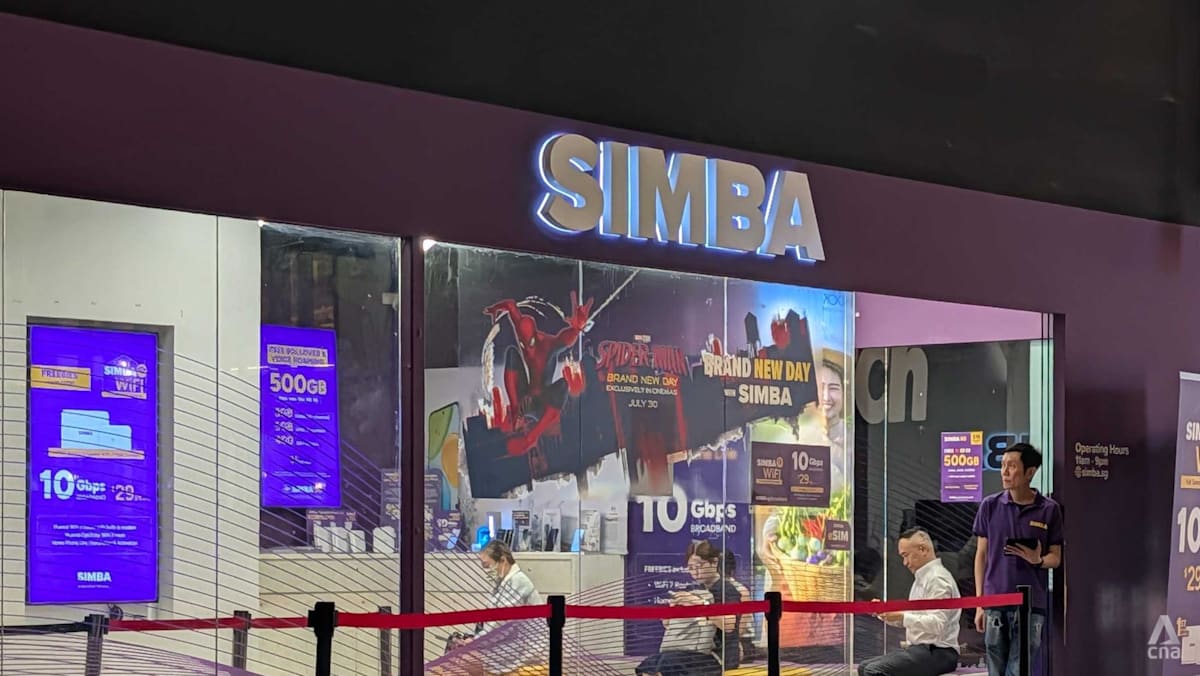
The Infocomm Media Development Authority (IMDA) has issued Simba, one of Singapore’s four major telcos, a notice outlining six allegations, including alleged unauthorised spectrum use, breaches of telecommunication regulations, and concerns about governance and compliance practices. The allegations state that Simba deployed dynamic spectrum sharing technology at about 133 sites in 2022 and 2023, allowing use of the 2100 MHz band for both 4G and 5G services, although it was authorised only for 5G. It also allegedly used the 2340 MHz to 2360 MHz band at about 92 sites between 2023 and 2026 without authorisation. IMDA claims both instances were intentional and approved by senior management, and that Simba also deployed 5G indoor radio access network equipment at two locations before being authorised. The regulator further alleges that Simba failed to comply with a document‑production order deliberately and intentionally.
Simba has assured customers that their services, plans and wallet balances are 100 percent unaffected while the investigation continues. Parent company Tuas said on 26 October that IMDA has not yet decided whether regulatory action should be taken or what form it might take.
Experts say a licence cancellation would be unprecedented for a major telco in Singapore. Triangle Legal director Sean Lee notes that a fine or a modification of licence conditions, such as restrictions on spectrum use, is more likely. He adds that other cases involving Simba’s competitors have resulted in financial penalties.
A financial penalty would not immediately affect coverage or service quality, according to senior fellow Ms Asha Hemrajani of the S Rajaratnam School of International Studies. However, if IMDA suspends or cancels some of Simba’s spectrum rights, the operator could continue on authorised frequencies but with reduced capacity, potentially leading to slower data speeds and congestion during peak periods.
In the unlikely event of licence revocation, customers might need to switch providers. Ms Hemrajani says prepaid balances and network connectivity are separate matters, so customers could still be owed unused balances even if Simba ceases operations. If the company were to close, it could refund customers if solvent, or go into liquidation, potentially leaving customers with only partial recovery, according to Mr Lee.
Customers of other telcos could also feel the impact if a large number of Simba subscribers moved to Singtel, StarHub or M1, potentially increasing congestion on those networks. Mr Hussaini Saifee of Maybank Securities notes that competition in Singapore’s mobile market is highly elevated, driven in part by Simba’s cheaper plans, and that any market rationalisation could lead to higher pricing or reduced data quotas.
The investigation remains ongoing, and no conclusions have yet been reached regarding regulatory action against Simba.
Frequently asked questions
Which spectrum bands did Simba allegedly use without authorization?
Simba allegedly used the 2100 MHz band for both 4G and 5G services at about 133 sites in 2022 and 2023, and the 2340 MHz to 2360 MHz band at about 92 sites between 2023 and 2026.
What regulatory actions could IMDA take against Simba?
IMDA could impose a fine or modify licence conditions, such as restricting spectrum use; a licence cancellation is considered unprecedented for a major telco.
How might a licence revocation affect Simba's customers?
If licence revocation occurs, customers might need to switch providers, and while prepaid balances and network connectivity are separate, customers could still be owed unused balances; the company could refund if solvent or liquidate, potentially leaving partial recovery.