India
Fertilizer Demand to Rebound in Rabi Amid Water Shortages
By Vijay C Roy
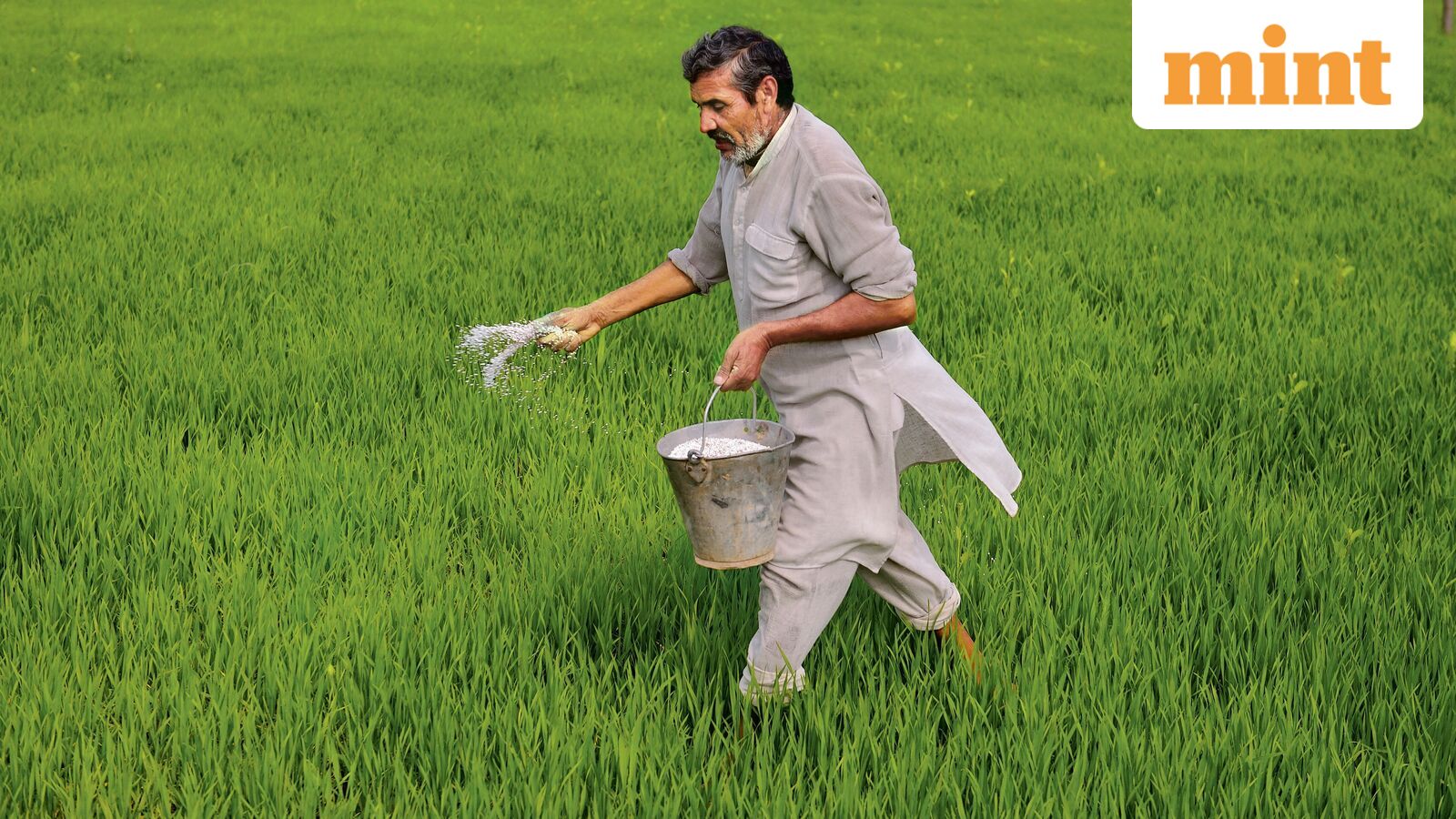
New Delhi – Fertilizer demand is expected to rebound this rabi season after a weak kharif, with higher government subsidies likely to improve the affordability of complex fertilizers and encourage farmers to replenish soil nutrients. However, depleted reservoirs in parts of southern India, following a deficient monsoon, could limit the recovery, particularly for nutrient‑rich NPKS fertilizers, said S. Sankarasubramanian, chairman of the Fertiliser Association of India (FAI). Sankarasubramanian, who is also managing director and chief executive of Coromandel International Ltd, expects urea consumption to remain broadly stable and demand for di‑ammonium phosphate (DAP) to hold near last year’s levels. Consumption of other nitrogen‑phosphorus‑potassium‑sulphur (NPKS) fertilizers, however, could moderate, especially in Karnataka and Telangana, where rainfall and reservoir conditions remain unfavourable.
As of last week, water levels at India’s 178 reservoirs supplying irrigation canals, hydropower units and municipal drinking water were down 27 % from a year ago to 121.9 billion cubic metres (bcm), according to official data.
India, the world’s second‑largest fertilizer consumer and largest urea importer, requires 19.9 million tonnes (mt) of urea for the 2026‑27 rabi season, 5.5 mt of DAP, 1.64 mt of muriate of potash (MOP) and 7.9 mt of complex NPKS fertilizers, according to the fertilizer ministry.
"Rabi has started on a slightly weak note, but we expect the season to normalize and sowing to pick up in the coming weeks," Sankarasubramanian said, noting forecasts that El Niño could turn neutral by year‑end, potentially easing its impact. He added that the key factor to watch is the onset of the northeast monsoon, and that two cyclones have brought some relief to Andhra Pradesh.
On crop outlook, he said wheat acreage is expected to remain more or less normal, while conditions in West Bengal’s potato‑growing regions and the central regions are also looking satisfactory. "Overall, we expect the rabi season to be near normal," he mentioned. However, early sowing data point to a slower start. As of 6 November, wheat acreage was down 12 % year‑on‑year at 1.97 million hectares, rice acreage fell 3.1 % to 673,000 hectares, and pulses acreage declined 14.4 % to 3.2 million hectares, according to the latest agriculture ministry data. Sowing of rabi crops continues till end of December.
The expected recovery follows a broad‑based slowdown in fertilizer consumption during the kharif season. Urea consumption fell 4 % to 18.5 mt from 19.3 mt a year earlier, even as production rose 4 %. DAP consumption remained largely flat at around 4.4 mt, while NPKS consumption dropped 22 % to 6 mt from 7.7 mt in the previous kharif season. Single super phosphate (SSP) volumes were broadly unchanged. The agriculture ministry had assessed the total fertilizer requirement for the kharif season at 38.39 mt, including 19.03 mt of urea and 5.62 mt of DAP.
Sankarasubramanian attributed the decline in consumption to delayed availability during the initial part of the season, higher prices, and deficient rainfall. "In fact, we faced multiple headwinds in the kharif. One is the availability in the initial stage, and subsequently we had a challenge in the prices. And in the kharif, whatever the nutrient‑based subsidy (NBS) rates the government announced was inadequate, so it affected the viability of production as well. And post that El‑Niño seriously impacted the consumption," he added.
The revised NBS rates for the rabi season are expected to support demand by moderating prices of NPK and other complex fertilizers, and to improve the economics of domestic production, allowing manufacturers to resume operations at full capacity and improving farmers’ access to balanced plant nutrition. On 11 November, the Union cabinet approved revised NBS rates for phosphatic and potassic (P&K) fertilizers for the current rabi season. The estimated budgetary requirement is ₹62,370.02 crore, ₹24,417.73 crore higher than the ₹37,952.29 crore required for the corresponding season last year.
On the supply side, Sankarasubramanian said fertilizer availability remains comfortable despite geopolitical uncertainties. Diversification of imports from countries including Russia and China, preferential natural gas allocation for urea production and government support for domestic manufacturers have helped secure supplies. A 20 % subsidy announced in August to offset higher sulphur costs has also supported domestic production. Sulphur prices have risen from around $500 a tonne to nearly $1,050–1,100, adding to manufacturers’ input costs. Fertilizer subsidy expenditure crossed ₹2.17 trillion in fiscal year 2026 (FY26), while the government has budgeted ₹1.77 trillion for the current fiscal year.