India
Memoirs of Indian Politicians Spark Controversy and Renew Debate
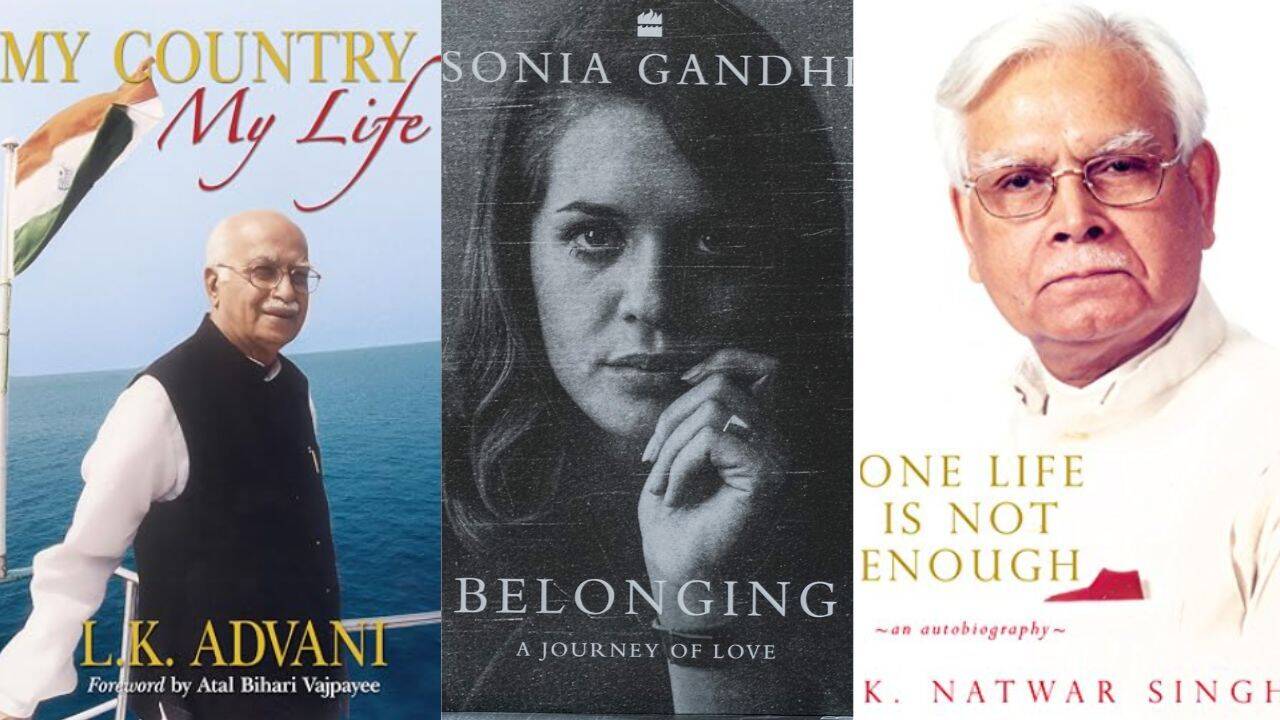
Political memoirs often bring long‑held views, personal accounts and contested versions of history back into the spotlight. In 2014, former external affairs minister Natwar Singh released an autobiography that ignited a storm by claiming that Sonia Gandhi had declined the prime minister’s post after the 2004 elections because her son Rahul Gandhi feared she might be assassinated like her husband Rajiv Gandhi and mother‑in‑law Indira Gandhi. Singh said Rahul’s opposition forced Sonia to offer the post to Manmohan Singh. He also described Sonia as increasingly authoritarian and secretive, and recounted conversations with former prime minister P.V. Narasimha Rao that he said were troubling. The revelations prompted Sonia to reject the account and announce her own book. Former prime minister Manmohan Singh dismissed Singh’s claims as a “marketing gimmick,” while the Congress accused Singh of distorting facts.
Sonia Gandhi’s own memoir, *Belonging: A Journey of Love*, was released on 10 November, providing her perspective on her life, family and political journey. The book has already triggered political reactions and renewed debate over contentious episodes involving the Gandhi family.
L.K. Advani’s autobiography, *My Country, My Life*, published in New Delhi on 19 March 2008 by then President A.P.J. Abdul Kalam, traces his journey from childhood in Karachi and Partition to his association with the RSS, the growth of the BJP, the Ram Janmabhoomi movement and his years in the Union government. A key section revisits the controversy surrounding Advani’s June 2005 visit to Pakistan and his remarks on Muhammad Ali Jinnah. Advani praised Jinnah’s August 1947 address to Pakistan’s Constituent Assembly, which spoke of religious freedom and equal citizenship. The remarks triggered backlash within the BJP and the Sangh Parivar, leading to Advani’s resignation as BJP president. In his book, Advani described the episode as “the most agonising moment of my political life” and explained that he had intended to be a messenger of peace and contribute to normalising relations between India and Pakistan.
Mamata Banerjee’s *My Unforgettable Memories*, published in January 2012 by Roli Books, is a translation of excerpts from her earlier Bengali writings. The book offers a personal account of relationships, disappointments and political rivalries that shaped her career. It appeared months after the Trinamool Congress won the 2011 West Bengal assembly elections, ending the Left Front’s 34‑year rule. Banerjee’s observations about Sonia Gandhi and Rajiv Gandhi attracted attention. She described Sonia as the “Queen Mother” and criticised the Congress for censoring regional leaders, while expressing affection for Rajiv Gandhi, whom she called “the leader of our hearts.” She recalled Rajiv’s support after her 1991 attack in Kolkata and her devastation at his 1991 assassination.
Jayaprakash Narayan’s *Prison Diary* was written during his detention in the Emergency and published in 1977. The diary documents his experiences, health, reading and reflections on the political crisis. It includes a striking opening entry dated 21 July 1975, in which Narayan writes, “My world lies in a shambles all round me.” The diary criticises the Emergency’s imposition, the arrest of opposition leaders and the curtailment of civil liberties. It also records Narayan’s deteriorating health, including kidney failure, and his release on medical grounds on 12 November 1975.
Former President Pranab Mukherjee’s *The Presidential Years* (2012‑2017) was released in December 2020. The memoir offers his assessment of the Congress’s decline, his dealings with Prime Minister Narendra Modi and key decisions during his presidency. Mukherjee attributes the Congress’s 2014 Lok Sabha defeat to its failure to recognise the end of its charismatic leadership. He describes the party as a “government of averages.” The book also discusses his interactions with Modi, describing them as cordial but criticising the NDA government’s handling of Parliament between 2014 and 2019. A notable revelation concerns demonetisation: Mukherjee says Modi announced the decision on 8 November 2016 without consulting him. Mukherjee describes demonetisation as a bold step that could cause a temporary economic slowdown.
The memoir also became the subject of a family disagreement. Mukherjee’s son, former Congress MP Abhijit Mukherjee, asked the publisher to halt publication until he had reviewed the manuscript and given written consent. Mukherjee’s daughter, Sharmistha Mukherjee, opposed the demand, stating that the final draft retained her father’s handwritten notes and that preventing the book’s release would be a “greatest disservice.” The disagreement played out on social media, adding a family feud to the political conversations surrounding the memoir.
Political memoirs provide a rare window into the personal experiences and perspectives of those who have occupied positions of power. They can reveal ideological differences, internal party dynamics and relationships that rarely find space in official accounts. However, they are also personal interpretations of history. The authors decide which episodes to revisit, which conversations to disclose and how to explain decisions made years earlier. As the controversies surrounding these books show, what a politician writes long after leaving office can reopen debates that their public life had never quite settled.
Frequently asked questions
Why did Natwar Singh's autobiography cause a storm?
It claimed Sonia Gandhi declined the PM post after the 2004 elections because Rahul feared she might be assassinated, and described her as authoritarian and secretive.
What did L.K. Advani's memoir reveal about his 2005 visit to Pakistan?
It revisited his June 2005 visit to Pakistan and remarks praising Jinnah’s 1947 address, which triggered backlash and led to his resignation as BJP president.
What family dispute surrounded Pranab Mukherjee’s memoir?
His son requested the publisher to halt publication until he reviewed the manuscript, while his daughter opposed the demand, leading to a social media feud.