India
India’s Poverty Decline Leaves Millions on the Brink of Destitution
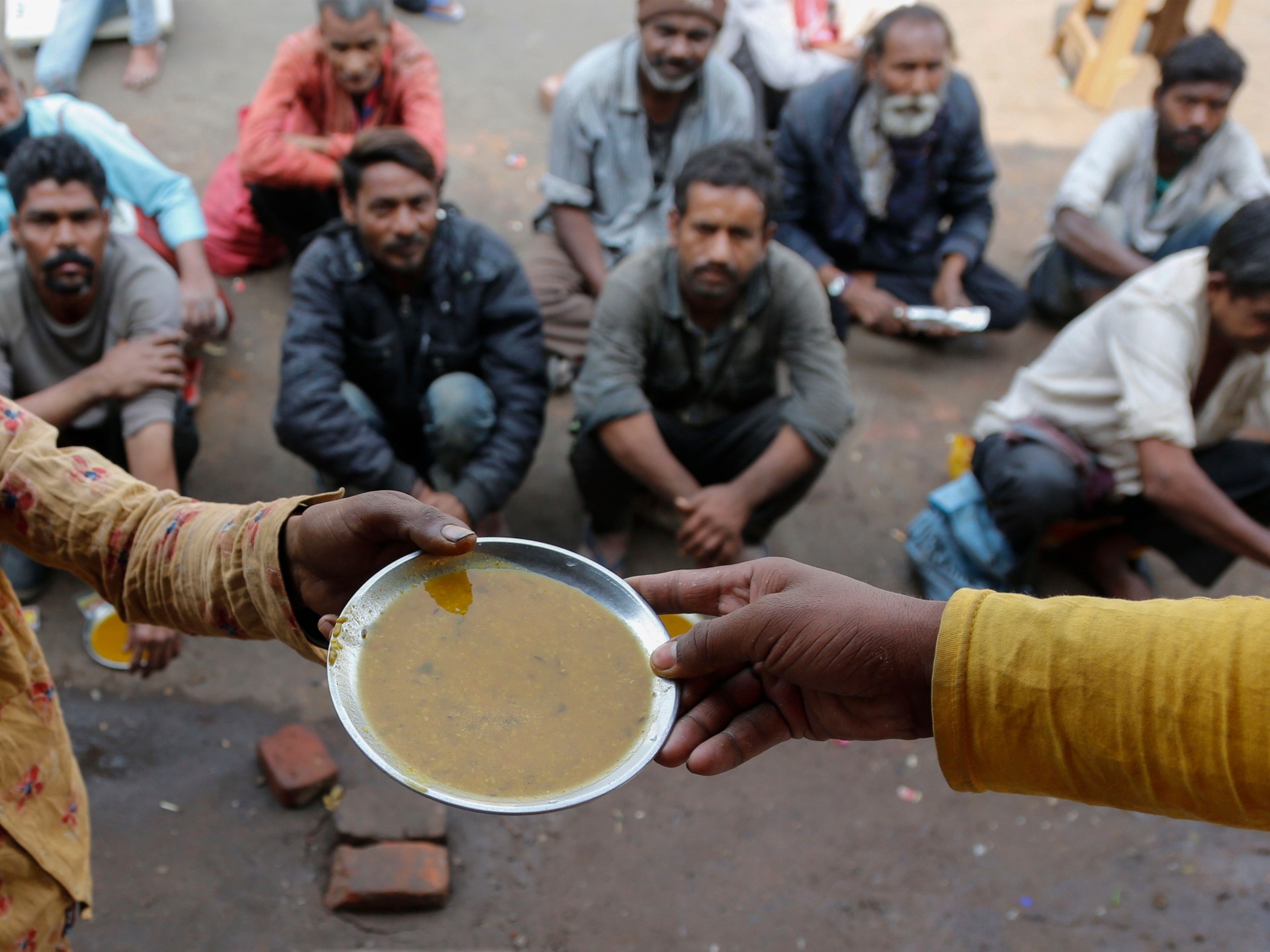
The World Bank reports that India lifted nearly 500 million people out of poverty between 2011 and 2023, reducing extreme poverty from 27.1 percent to 2.6 percent. The country’s poverty threshold is based on a consumption‑based measure that the World Bank applies to newer surveys, as India has not published an official estimate for more than a decade. The report notes that the top 1 percent of Indians own 40 percent of the country’s wealth and that rising female labour participation has helped improve poverty rates.
Hema Prajapat, 25, of Rajsamand district, Rajasthan, says her family is no longer poor on paper. She spends 11 000 rupees ($117) a month on a household of three, about 49 percent above the World Bank’s poverty line of 7 380 rupees ($78) for that size. Hema’s husband, Hari, runs a street food stall that closed during the pandemic, and Hema now cleans houses for 5 000 rupees ($53) a month. The family has no land, and Hema’s son, Divyansh, receives a large share of the family’s food.
Hema describes the cost of living as a constant threat: "The prices have multiplied in recent years, and whatever we earn falls short," she told Al Jazeera. She added that a private hospital visit for her son cost 6 000 rupees ($64), more than her monthly earnings.
The World Bank cites the national food‑security programme, which provides free or subsidised grains to nearly 800 million citizens, as a key factor in reducing extreme poverty. However, consumer prices rose by at least 51 percent between September 2016 and September 2025, while wage increases have not kept pace.
Santosh Mehrotra, a developmental economist in New Delhi, says the poverty threshold is too low and that a single shock—pandemic, drought, flood, or even a wedding—can push families back into poverty. He also notes that the threshold does not distinguish between rural and urban populations.
Hema’s neighbour, Sushila Salvi, 31, faced a similar shock when she became pregnant again. She spent nearly 65 000 rupees ($695) on private maternity care, depleting her savings and forcing her to withdraw her daughter from extra tuition.
Seema Kumar, 37, on the outskirts of New Delhi, spends 20 000 rupees ($214) a month on a family of three. She turns to loans when expenses rise, such as during festivals or her son’s birthday. A recent Diwali firecracker burst caused air‑quality levels in New Delhi to hit a record, leading to health problems for her family.
Hema says that if she cannot work for even a single day, the family could return to extreme poverty. She hopes her son will find a way out of their precarious situation.
Frequently asked questions
How many people were lifted out of poverty in India between 2011 and 2023?
Nearly 500 million people were lifted out of poverty between 2011 and 2023, according to the World Bank.
What is the World Bank's poverty line for a household of three?
The World Bank's poverty line for a household of three is 7,380 rupees ($78).
By how much did consumer prices rise between September 2016 and September 2025?
Consumer prices rose by at least 51 percent between September 2016 and September 2025.