India
IAF to Conduct Week‑Long High‑Altitude Air Exercise Near LAC
By Dhruv Yadav
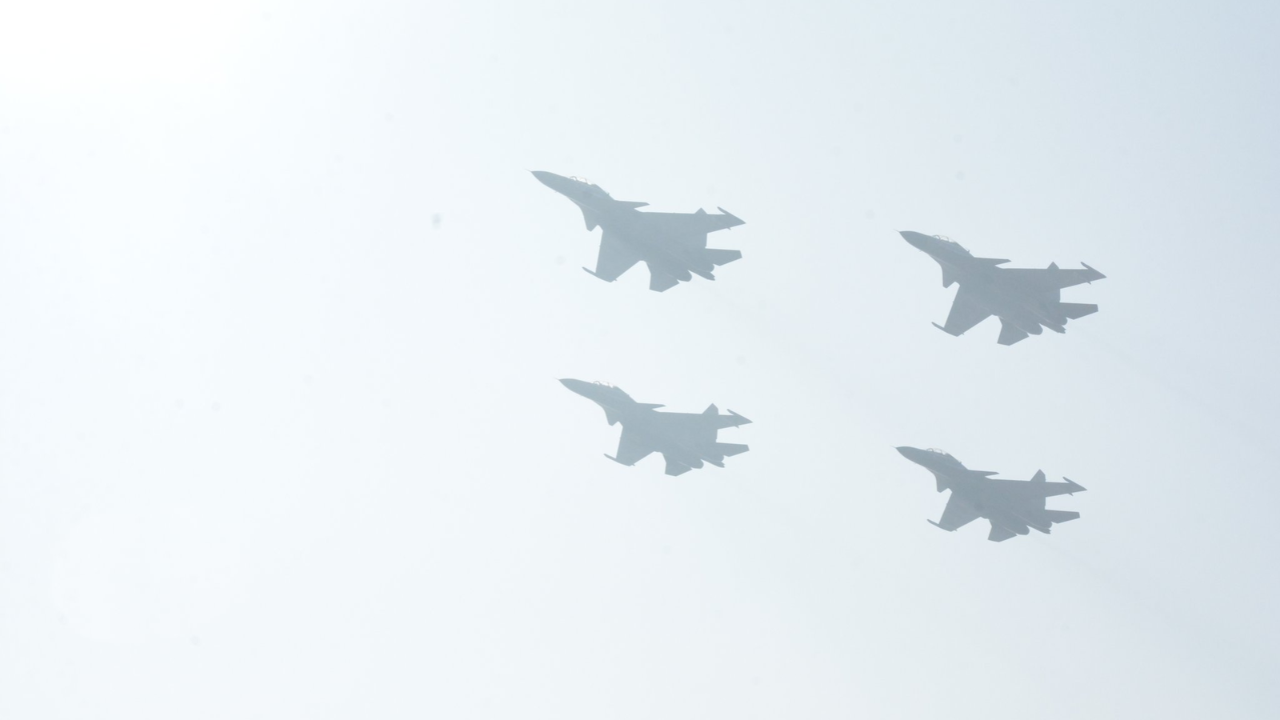
The Indian Air Force will hold a week‑long air exercise from November 13 to 21 near the Line of Actual Control in Uttarakhand. Airspace will also be reserved over the mountainous areas of Jammu and Kashmir, Ladakh and Himachal Pradesh, as well as over the plains of Punjab. The exercise will feature frontline fighters such as the Sukhoi‑30MKI and Mirage‑2000, transport aircraft including the An‑32 and C‑295, and Mi‑17 helicopters. It aims to evaluate the IAF’s ability to carry out complex missions in high‑altitude terrain while maintaining a rapid‑response posture along India’s northern frontier.
The drills will cover a strategically important stretch of the central Himalayan border, where rugged mountains, narrow valleys and unpredictable weather make military aviation particularly challenging. At high‑altitude airbases and elevations exceeding 20,000 feet, aerodynamic performance, weapon effectiveness and aircraft survival margins deteriorate. Strong winds striking mountain ridges can generate severe turbulence and violent updrafts and downdrafts. Moist air rising from valleys can freeze on aircraft surfaces, adding weight and disrupting wing aerodynamics. Weather conditions in deep valleys can change rapidly, with clear skies giving way to blizzards within minutes. Temperatures can plunge to –40 °C, thickening hydraulic fluids, draining batteries and making engine starts at forward bases increasingly difficult.
The terrain itself presents additional challenges. Mountain peaks and deep valleys create radar blind spots, allowing aircraft, drones and air‑defence systems to remain concealed until the last moment. Thinner air also changes the way bombs and missiles behave. Reduced drag alters their trajectories, while missiles and guided bombs that rely on dense air to generate control forces through their fins can become less manoeuvrable at extreme altitudes. For a pilot forced to eject, the dangers are equally severe. Lethal cold, hypoxia and glaciated terrain can make survival difficult, while search‑and‑rescue helicopters may struggle to reach the crash site.
The exercise will assess the IAF’s ability to sustain combat operations, coordinate aircraft movements and make effective use of forward operating locations and supporting infrastructure. Advanced Landing Grounds (ALGs) will be a key part of this operational framework. These remote airstrips enable the faster movement of personnel, equipment and supplies across otherwise inaccessible terrain. The IAF recently landed an IL‑76 transport aircraft at the forward airfield in Nyoma, about 35 km from the LAC. The ability to rapidly move forces and supplies between valleys remains central to maintaining operational readiness in the Himalayas.
For civil aviation, the impact is expected to be limited but noticeable. A Notice to Airmen (NOTAM) is an official advisory informing pilots and airlines about temporary airspace restrictions or special activities. During the exercise, some civilian flights may have to alter their routes depending on the airspace allocated for military operations. Airlines are expected to coordinate closely with the authorities to minimise disruption.
Frequently asked questions
When will the IAF conduct the high‑altitude air exercise near the LAC?
From November 13 to 21.
Which aircraft will participate in the exercise?
Sukhoi‑30MKI, Mirage‑2000, An‑32, C‑295, and Mi‑17.
How might the exercise affect civilian flights?
Some civilian flights may need to alter routes due to airspace restrictions; a NOTAM will be issued.