Climate & Environment
Brooklyn Students Restore Coastal Dunes to Shield Coney Island From Flooding
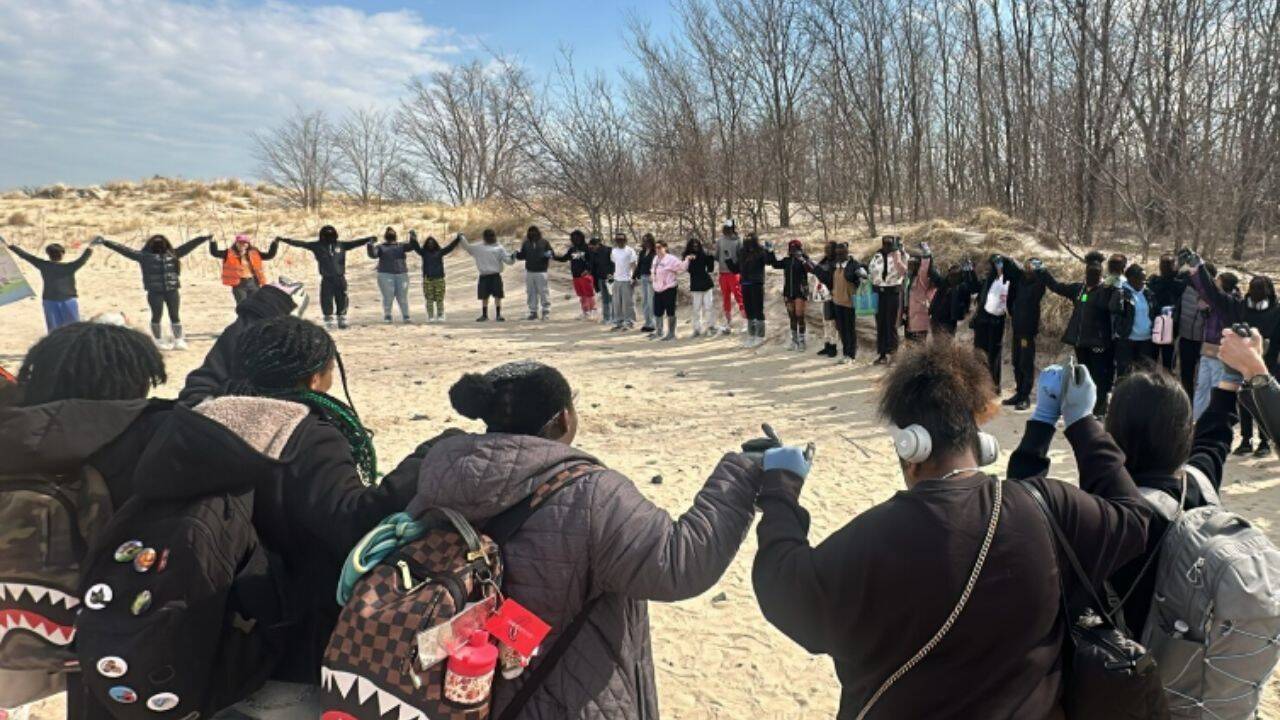
Nearly 4,000 New York City public school students have helped restore protective dunes at Coney Island Creek Park in Brooklyn, planting more than 100,000 American beachgrass culms across over 2.25 acres of frontal dunes since 2022.
The initiative is part of the Resilient Schools and Communities (RiSC) programme, run by the National Wildlife Federation (NWF), which combines environmental education with habitat restoration to help the community prepare for flooding and other extreme weather risks.
Coney Island's coastline has experienced significant flooding during major storms, including Superstorm Sandy in 2012 and Hurricane Ida in 2021. The RiSC programme began in 2017 across seven South Brooklyn public schools, including those in Coney Island, to teach students about these risks and their local environment while addressing gaps in climate education. Previously, students received limited climate instruction, mostly through science classes, with little focus on resilience.
NWF created a dedicated curriculum along with a RiSC Vulnerability Assessment to help students evaluate how their schools and communities could be affected by climate-related dangers and how to respond to them.
The restoration work centers on American beachgrass, a native species with dense root and rhizome networks that stabilize soil and reduce erosion. The resulting dunes can offer flood protection during severe wave events. The grass also shelters wildlife in the park, including snakes, small mammals, and both native and migratory birds.
Since 2022, restoration events have brought together nearly 4,000 students, more than 200 teachers, and hundreds of community members, working alongside NWF, NYC Parks, the American Littoral Society, corporate volunteers, and local residents. Teachers also participate in professional development sessions at the site, linking the restoration efforts to classroom learning.
The programme aims to expand plantings further, with a goal of providing functional flood protection for more than 50,000 people living near the park. Organizers also hope the beachgrass will prevent sand from spreading into streets, homes, and sewer drains, since blocked drains can intensify flooding.
The RiSC programme was influenced by the aftermath of Superstorm Sandy in October 2012, when roughly 50,000 homes in Coney Island became uninhabitable. Many public housing residents went without heat and hot water for weeks after an 11-foot storm surge brought polluted water and sand into homes and businesses.
A specialized curriculum, RiSC 3.0, was developed for Coney Island in collaboration with community leaders, teachers, and scientific advisers, examining the area's ecological and social history alongside its vulnerability to coastal flooding. The Federal Emergency Management Agency notes that primary frontal dunes often serve as the first line of defense against flooding in coastal areas.
Future plans include planting native woody shrubs and trees in the maritime forest near the roadway, which are expected to add further flood protection, stabilize sand, and create additional bird habitat. NWF reports that eBirders have documented 244 bird species in the park, including grebes, loons, gulls, terns, warblers, ducks, and sandpipers.
Community engagement has remained a core part of the effort. In November 2025, NWF conducted extensive outreach in Coney Island before hosting a meeting where residents could learn about the programme, ask questions, and share feedback. Attendees included students, community board members, representatives from four elected officials' offices, and a homeowners' association. NWF said the response was overwhelmingly positive, and continued shoreline restoration was named a top priority by the local community board.
NWF has been building relationships in Coney Island since 2020. NYC public schools continue supporting the restoration work, while NYC Parks assists with permits, staff, tools, plant materials, and other supplies.
Emily Fano, who leads NWF's NYC project, said working in a community with a history of disinvestment required patience and trust. "I think about these four key things as a nonprofit coming into a frontline community like Coney Island that has experienced historic disinvestment: listen, be humble, earn trust, and ask what people need," she said. Fano added that residents were involved in planning and design as paid advisers, and that local educators and volunteers received stipends for their participation.
NWF has committed to continuing its work in Coney Island until it can confirm the plantings deliver effective flood protection.