Climate & Environment
Delhi’s Air Quality Reaches ‘Severe’ Levels After Diwali Fireworks
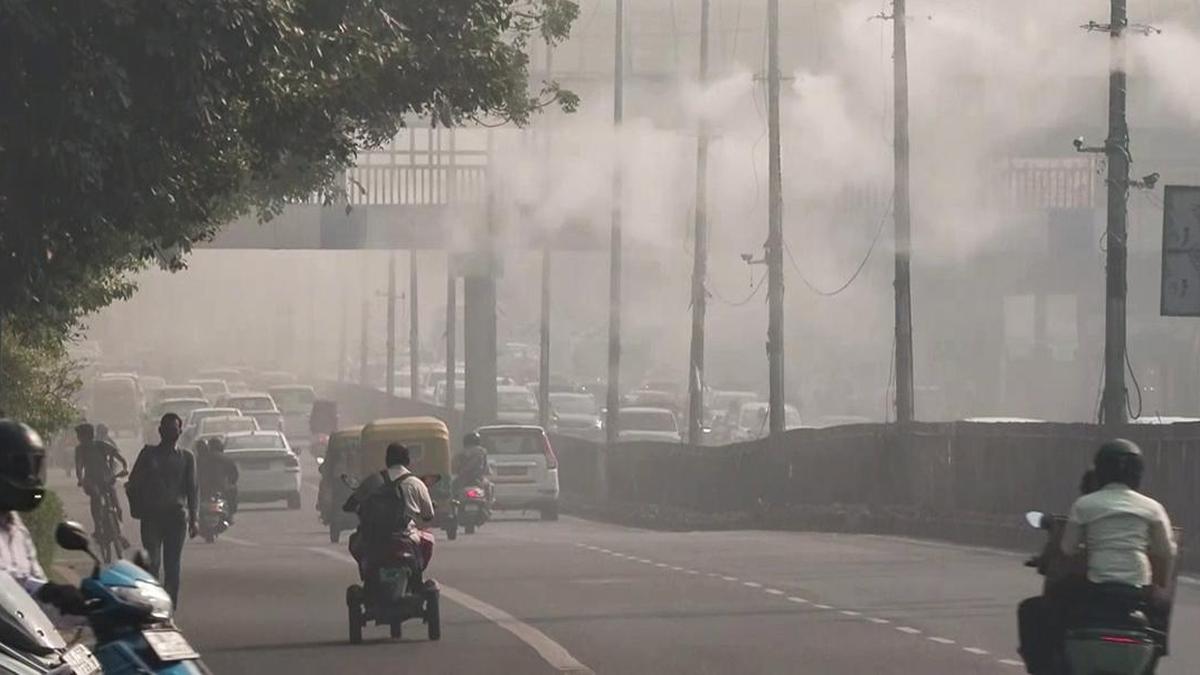
On Monday, November 9, 2026, Delhi’s Air Quality Index (AQI) climbed to 404 at 4 a.m., approaching the ‘severe’ threshold. The rise followed a widespread use of fireworks on Diwali night, despite a Supreme Court‑issued ban that required fireworks to cease by 10 p.m. The Central Pollution Control Board’s Live Dashboard recorded the highest AQI of 441 at Burari Crossing, followed by Vivek Vihar (437), Delhi Technological University (434), North Campus of Delhi University and Jahangirpuri (433 each), and Rohini (430). AQI readings have since eased.
In other cities, air quality worsened. Mumbai experienced thick smog over Kalanagar and Bandra, with Kherwadi‑Bandra East registering an AQI of 264, Sewri 226, Ghatkopar 221, Chembur 216, Byculla 193, Mindspace‑Malad West 191, Kandivali West 187, Worli 148, and Kurla 96. Lucknow’s AQI reached 246, while Amritsar, Jodhpur, Ahmedabad, Dehradun, Jaipur, Udaipur, and Surat recorded 242, 234, 230, 228, 223, 223, and 207 respectively, all falling into the ‘poor’ category.
Central and industrial regions saw spikes: Nagpur 239, Pune 221, Bhopal 205, Mumbai 171, and Kolkata 167. Southern cities remained comparatively cleaner; Chennai’s AQI was 208 (‘poor’), Bangalore 127, Hyderabad 120, and Thiruvananthapuram 67, all moderate to satisfactory.
The Central Pollution Control Board classifies AQI as follows: 0‑50 ‘good’, 51‑100 ‘satisfactory’, 101‑200 ‘moderate’, 201‑300 ‘poor’, 301‑400 ‘very poor’, and 401‑500 ‘severe’. With Stage III restrictions in place, the Central Authority for Air Quality Management (CAQM) will maintain current limits and add further pollution‑control measures, enforcement, and directives to agencies to prevent further deterioration. The emergency action plan covers Delhi and adjoining districts in Haryana, Uttar Pradesh, and Rajasthan, and is activated based on forecasts from the India Meteorological Department and the Indian Institute of Tropical Meteorology. The four‑stage GRAP framework, managed by CAQM with CPCB and state governments, tightens restrictions as air quality worsens.
(ANI inputs)