India
Manipuri Musician's Killing in Delhi Reignites Debate on Northeast Discrimination
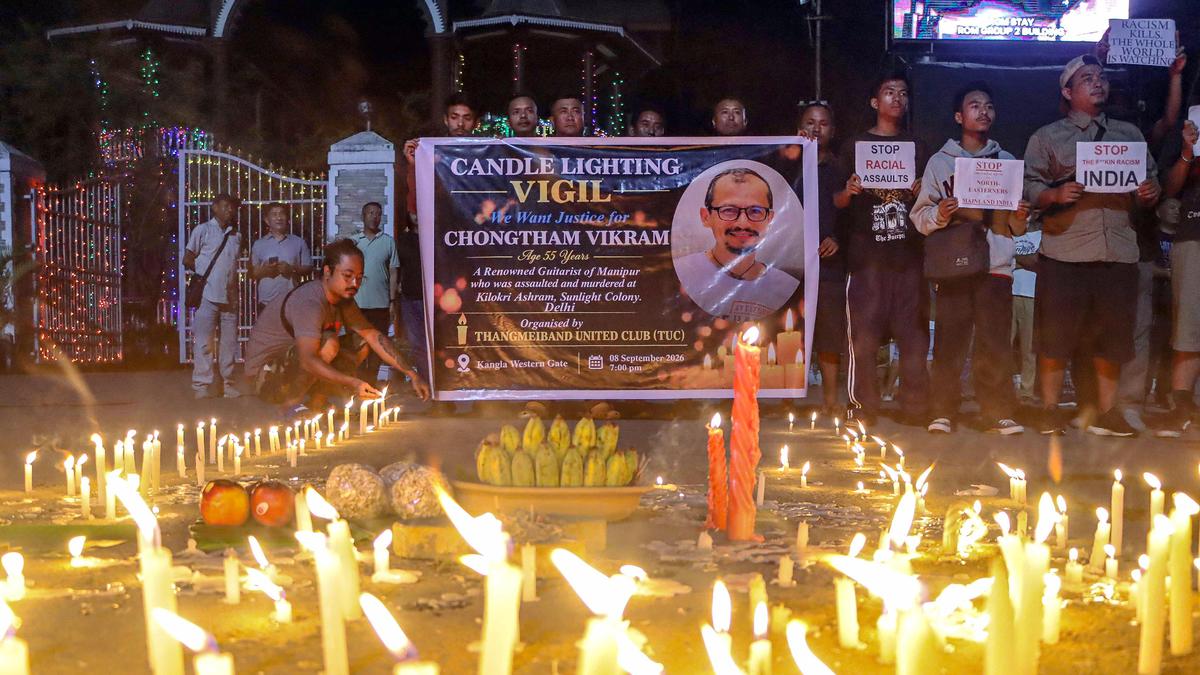
Chongtham Vikram Singh, a well-known musician from Imphal, Manipur, was fatally assaulted by a group of men in Delhi's Ashram area on the night of September 6, 2026, after he objected to their loud noise. Delhi police have arrested seven men and a 15-year-old boy in connection with the killing, which is being investigated as a case of mob lynching.
According to police, Singh had complained about noise coming from nearby dhabas, which allegedly triggered the attack. Family members said Singh had stepped out after dinner that night when he was chased up the stairs by a group of men believed to be intoxicated. His 20-year-old son, Yaiphaba, told police that his father had recognized some of the attackers and had mentioned that they had previously threatened him during earlier disputes over noise.
People close to the family said Singh often went for walks or took out the trash after dinner, and it is believed he was doing so that night when he was chased into the stairwell of his residential building and beaten outside his own door. His son opened the door after hearing screams and saw the attackers fleeing.
Singh was taken to Holy Family Hospital in Okhla but died the following day. His body was then sent to the All India Institute of Medical Sciences for a post-mortem examination. Civil society groups assisting the family said it took considerable pressure and protest before police registered the case under the appropriate mob lynching provisions of the Bharatiya Nyaya Sanhita (BNS). Police have said they are examining the “circumstances leading to the assault and death.”
The BNS, India's revised criminal code introduced in 2023, includes Section 103(2), which for the first time explicitly criminalizes mob lynching. The provision allows for punishments up to life imprisonment or death when five or more people acting together commit murder based on race, caste, community, sex, place of birth, language, personal belief, or similar grounds.
Singh's death has triggered widespread reactions, particularly among communities from northeastern India, who have called for the incident not to be treated as isolated. Many pointed to earlier episodes of discrimination, including a February incident in which women from Arunachal Pradesh faced racial abuse in Delhi's Malviya Nagar area.
Manipur-based rights activist Binalakshmi Nepram said the killing has once again raised questions among people from the northeast about their safety in what she called a “newly developed India.” She said the government bears responsibility for educating the public to foster respect rather than violence toward people from the region.
The North East Media Forum urged a swift and impartial investigation while emphasizing that the case should be viewed within a broader pattern of discrimination. Manipur Chief Minister Y. Khemchand Singh requested that Delhi's Chief Minister ensure a high-level probe led by senior police officials. Meghalaya Chief Minister Conrad K. Sangma said the killing had reopened old wounds related to past mistreatment of northeastern residents in the capital.
Union Minority Affairs Minister Kiren Rijiju offered condolences, stating that the safety and dignity of every citizen, including those from the northeast, remain non-negotiable. The opposition Congress party also criticized the government over the safety of people from northeastern states, noting that many families are now questioning whether they are truly secure in the capital.