Climate & Environment
Festive Celebrations Leave Lingering Environmental and Health Footprint
By Ayush Pandey
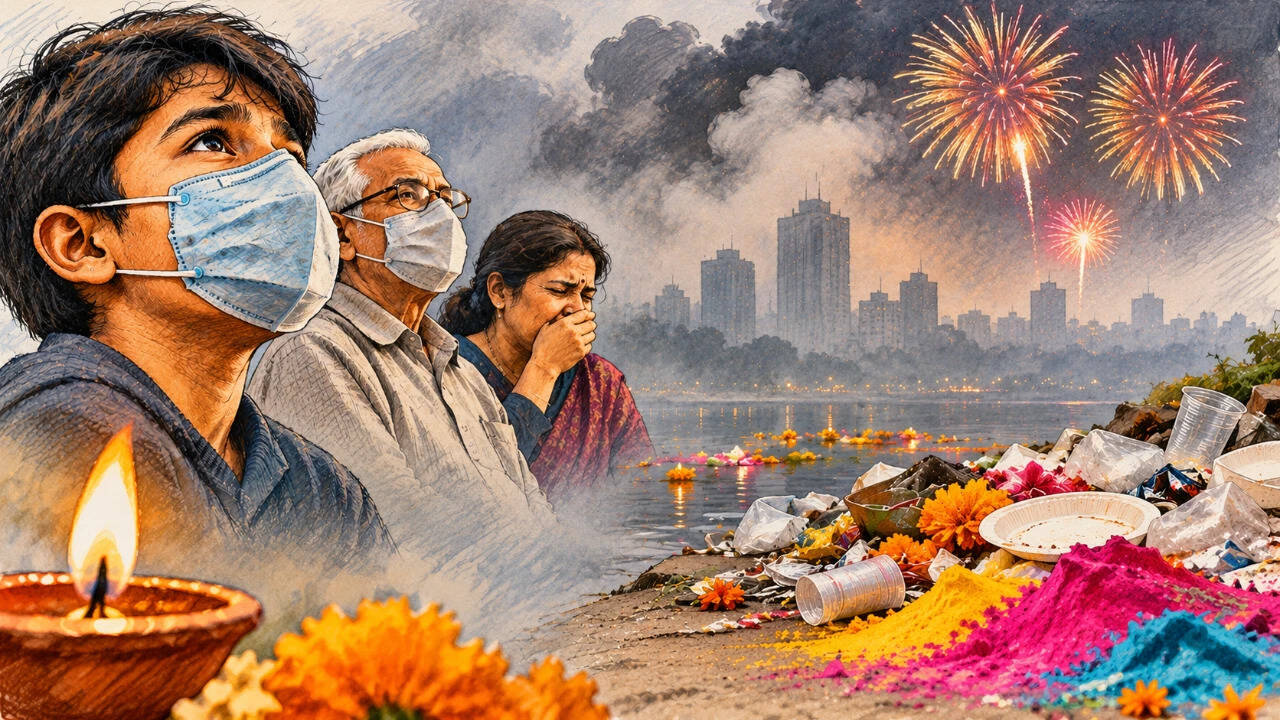
Festivals in India, celebrated with lights, colours, music, food and community gatherings, increasingly leave a significant environmental and health impact. Firecrackers emit particulate matter such as PM2.5 and PM10, sulphur dioxide, nitrogen oxides, and metallic compounds like barium and aluminium. These fine particles can penetrate deep into the lungs, causing irritation, inflammation, coughing, throat irritation, breathlessness and worsening respiratory conditions such as asthma and COPD. Dr. Abhishek Agrawal, a medical officer at a government hospital, notes that during Diwali the concentration of pollutants rises, leading to increased complaints of respiratory symptoms and hospital visits for asthma exacerbations, breathing difficulties, burns, eye injuries and hearing problems.
The health effects are not limited to the lungs. Fine particles can trigger cardiovascular complications, including increased blood pressure and heart rhythm disturbances, especially in people with pre‑existing heart conditions. Exposure to the chemicals released by fireworks can affect the kidneys and liver, while noise from firecrackers can cause tinnitus, temporary hearing discomfort and, at high levels, permanent hearing damage. Repeated exposure to high concentrations of pollutants can raise the risk of chronic health problems.
Beyond air pollution, festivals generate plastic waste, chemical residues from synthetic colours, and debris from firecrackers. These materials can enter water bodies and soil, contaminating rivers, lakes and urban drainage systems. Idol immersion activities often involve plaster of Paris, synthetic paints and non‑biodegradable decorations that further increase waste in lakes and rivers. In urban areas already burdened by untreated sewage, industrial discharge and solid waste, this additional load can worsen contamination and harm aquatic ecosystems.
Noise pollution is another overlooked consequence. Loudspeakers, musical processions and firecrackers expose residential neighbourhoods to high sound levels, disrupting sleep, concentration and daily routines. The World Health Organization links excessive environmental noise to sleep disturbance, hearing impairment and cardiovascular health risks.
Electricity consumption rises during festivals due to decorative lighting, shopping, food deliveries and travel. Although LED lights are more efficient, widespread use still increases cumulative demand. Artificial lighting also contributes to light pollution, affecting the natural day‑night cycles of birds, insects and other wildlife.
The environmental burden does not end when celebrations finish. Fine particles can remain suspended in the atmosphere for days, especially under low wind speeds, atmospheric stability and temperature inversions. Chemical residues and improperly disposed materials continue to affect soil and water quality, and waste accumulated in drainage systems can cause problems during subsequent rainfall.
Dr. Agrawal advises individuals to avoid outdoor activities when air quality is poor, especially early morning and late evening. Patients with asthma should follow prescribed medication, and children and elderly people should limit exposure to smoke. Wearing a well‑fitted N95 mask, keeping windows closed during heavy pollution and using HEPA air purifiers indoors can reduce indoor exposure. Firecracker residues should be cleaned with damp methods rather than dry sweeping to prevent resuspension of particles.
Reducing festive pollution requires greater awareness of everyday choices. Using natural colours, opting for traditional clay idols, avoiding single‑use plastics, segregating waste and ensuring responsible disposal of religious offerings can lessen the burden on water bodies and public spaces. Community celebrations, designated immersion facilities and improved waste collection can also improve environmental management. The challenge is to preserve the cultural significance of festivals while protecting the air people breathe, the water they depend on and the environment they share.
Frequently asked questions
What pollutants are emitted by firecrackers?
Firecrackers emit particulate matter such as PM2.5 and PM10, sulphur dioxide, nitrogen oxides, and metallic compounds like barium and aluminium.
What health advice does Dr. Abhishek Agrawal give during festivals?
Avoid outdoor activities when air quality is poor, especially early morning and late evening. Asthma patients should follow medication, children and elderly should limit exposure. Use N95 masks, keep windows closed, use HEPA purifiers, and clean firecracker residues with damp methods.