Agriculture
Latin American Banana Growers Demand Higher Wages Amid Climate‑Driven Production Losses
By Sarah Butler
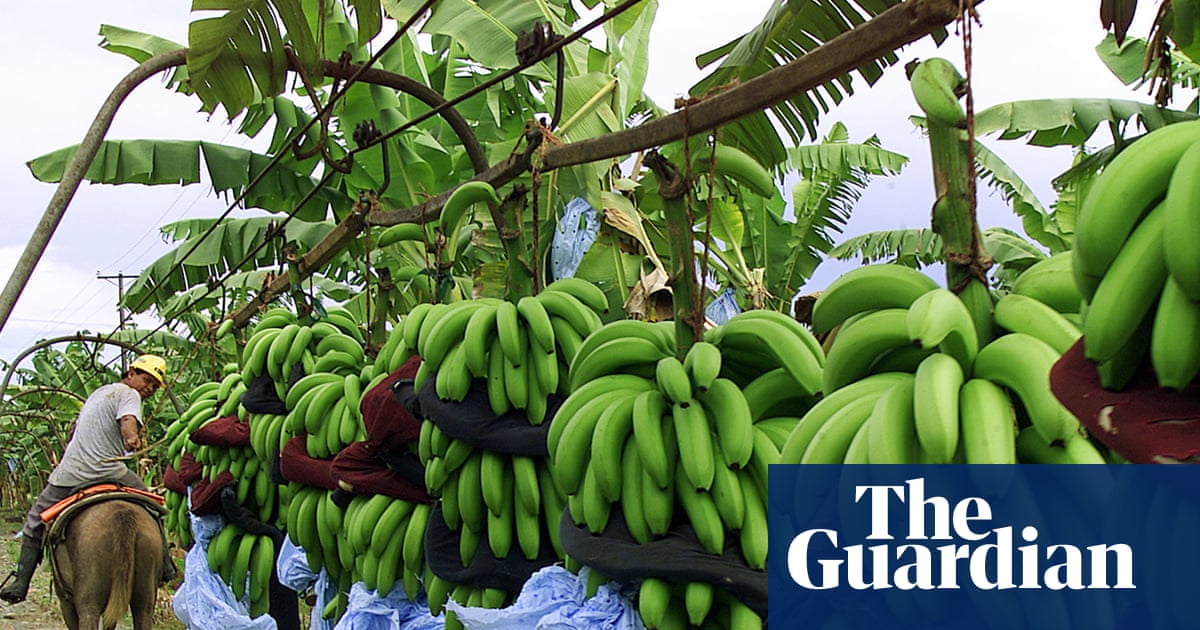
Banana producers across Latin America are demanding higher pay to offset the impact of the current super El Niño event, which has already caused significant production declines. In Colombia, high winds have disrupted output in a key UK supplier region, while Peru and Ecuador are experiencing heavy rainfall. The Dominican Republic is also facing expected droughts, with forecasts of drier and warmer conditions. Fairtrade research shows that during the previous El Niño cycle, productivity fell 13 % in the Dominican Republic, 22 % in Ecuador, and 6 % in Peru compared with the prior year. The 1983 El Niño, one of the strongest on record, reduced Ecuador’s planted banana area by 15 % and cut exports by 36 %. Dr Carley‑Jane Stanton, Fairtrade’s climate and environment lead, warned that the current El Niño is likely to bring more extreme weather, including heavy rainfall and strong winds, and that producers’ impacts will be more severe than in the 2023‑24 cycle.
Exports from Colombia’s Caribbean region fell 32 % to $122 million (£91 million) between July and September, according to the Association of Banana Growers of Magdalena and La Guajira, as reported by Fruitnet. In September alone, shipments dropped 42 % year‑on‑year, with earnings nearly halved to $40 million from $70 million. The association called on international markets to create commercial conditions that reflect actual production costs and support sector sustainability, noting that climate‑related productivity losses and currency issues are undermining the industry’s economic viability.
Ever Antonio Flores Muños, a worker at Agrosiete in Colombia, told Fairtrade that the past decade has seen hotter weather, flooding, and strong winds, all of which threaten workers, colleagues, and wages.
Fairtrade is urging UK legislation to address unfair trading practices such as low or late payments and contracts that shift risk down the supply chain, enabling producers to invest in crop resilience and reduce pest and disease risks. Worker health is also expected to suffer from more extreme weather.
Some retailers, including Sainsbury’s, the Co‑op, and Waitrose, have voluntarily sourced only Fairtrade bananas, which guarantee a minimum price, but Fairtrade says further action is needed. Eleanor Harrison, Fairtrade chief executive, said the UK’s banana supply depends on growers having the resources to adapt to climate change and invest in their future, linking fair prices, climate resilience, and decent work.
Despite rising costs for fertilizer, fuel, and labour, supermarket prices have remained unchanged for almost 40 years. Caoimhe Buckley, chief corporate affairs officer at Fyffes, said the long‑term sustainability of the banana sector cannot be separated from purchasing practices and that supermarket prices must reflect the real and sustainable cost of production, including labour, environmental management, human‑rights due diligence, and climate‑adaptation investment.
Research by the Ethical Trading Initiative found that in 2026, prices paid to suppliers did not even cover basic production costs for 66.7 % of them. The study also noted that suitable land for banana cultivation could shrink by an average of 61 % across Latin America and the Caribbean by 2050, according to 2020 Inter‑American Development Bank research.