Politics
Republican Party Faces Growing Debate Over Israel Support After Midterm Losses
By Said Arikat
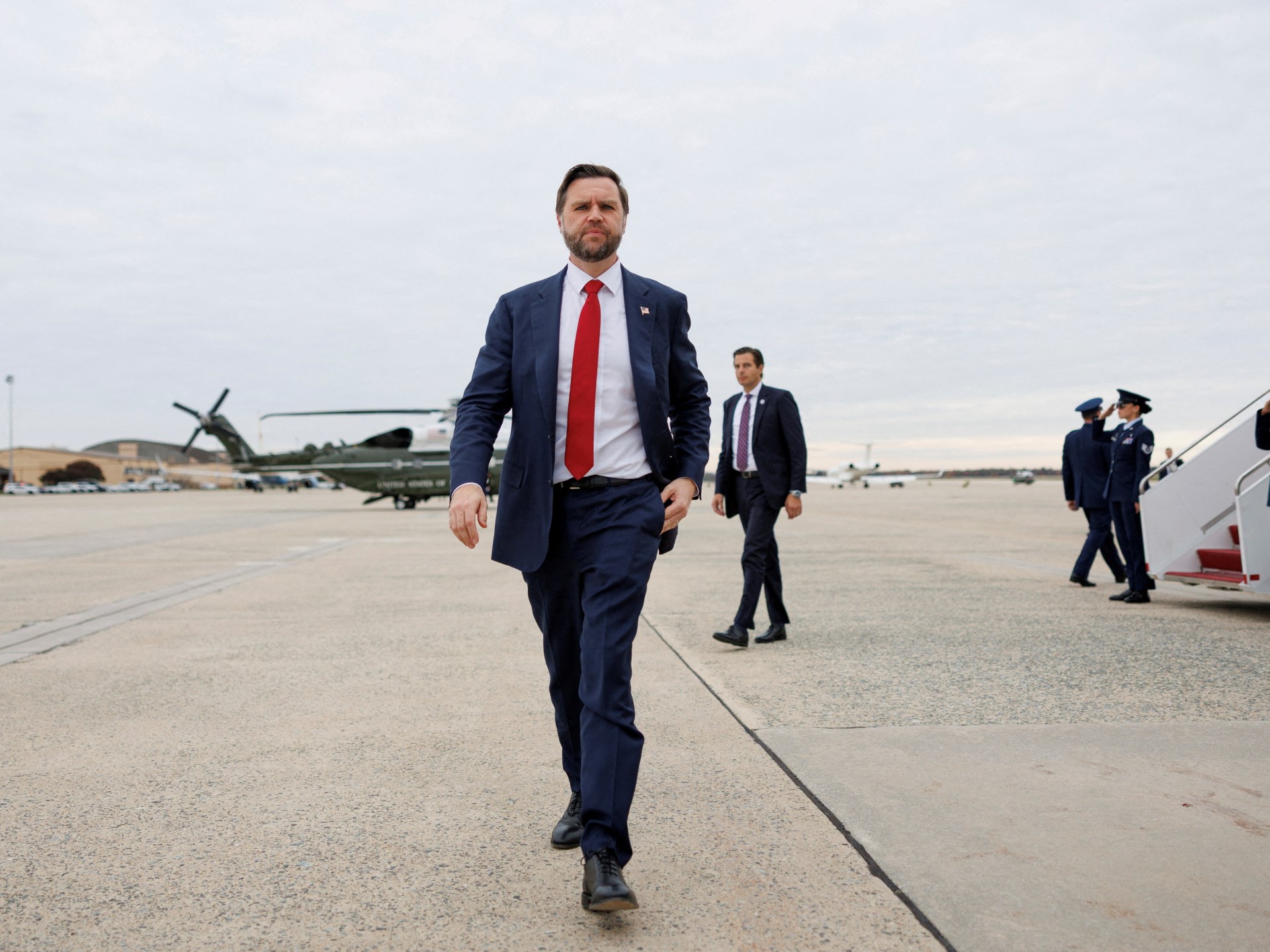
The November 3 midterm elections, in which Republicans suffered a sweeping defeat, have sparked a debate within the party about the United States’ relationship with Israel—a topic that had previously been considered untouchable. Vice President JD Vance, the administration’s second‑highest official and a potential 2028 presidential contender, publicly acknowledged that dissatisfaction with America’s ties to Israel was one of the reasons Republican voters turned away from the party. Vance identified four factors driving former Trump supporters toward Democrats: the Iran war, the cost of living and inflation, the principle of putting America first, and the changing U.S.–Israel relationship.
Vance’s remarks are significant because they come from a senior Republican leader and because they suggest that unconditional support for the Israeli government may no longer be politically cost‑free, even within the Republican coalition. The question raised—whether America’s commitment to Israel continues to serve U.S. interests—has long been avoided by Republican politicians.
The Republican alliance with Israel has rested on evangelical Christian support, strategic and intelligence cooperation, military interests, and conservative political organizations that have made backing Israel an almost unquestionable test of loyalty. Those foundations are increasingly challenged by a younger generation of conservatives, particularly within the America First movement, who question why American resources and military commitments should be directed toward foreign conflicts while economic pressures mount at home. Their skepticism does not necessarily reflect sympathy for Palestinians or opposition to Israel’s existence; rather, it challenges the assumption that American and Israeli interests are automatically identical.
The wars in Gaza and the confrontation with Iran have sharpened this question. Israel’s military campaign in Gaza, the resulting humanitarian catastrophe, and Washington’s continued military and diplomatic backing have imposed mounting moral, diplomatic, and strategic costs on the United States. The subsequent confrontation with Iran further exposed the dangers of allowing Israeli security priorities and regional calculations to influence American decisions about war and peace.
Earlier polling had already identified declining enthusiasm for Israel among younger Republicans, even as traditional constituencies remained considerably more supportive. A 2026 Chicago Council survey found declining Republican favorability toward Israel compared with 2022, although Republicans continued to favor maintaining or increasing military assistance. The picture is therefore not one of a party abandoning Israel, but of one increasingly divided over the terms and consequences of the relationship.
By identifying dissatisfaction with Israel policy as a factor in the electoral losses, Vance has legitimized a debate that conservative politicians have long avoided and signaled that the issue could become an important point of differentiation among potential presidential contenders preparing for 2028. For Donald Trump, the contradiction is particularly damaging. He built his movement around putting America first and ending costly foreign entanglements, yet his presidency has become closely associated with extraordinary support for Benjamin Netanyahu’s government, including military cooperation, diplomatic backing, and confrontation with regional adversaries. The Iran war has made that contradiction harder to defend.
Vance has been more explicit in recognizing the political price of the administration’s foreign policy choices, whereas Trump has continued to defend the decision to launch the Iran conflict. That difference could become an important fault line within Republican leadership.
Recognizing the political costs of the relationship does not automatically change it. Congressional Republicans have traditionally supported substantial military assistance, while evangelical organizations, influential donors, lobbying networks, and defense sector interests continue to exercise considerable influence. Beyond domestic politics, the relationship encompasses intelligence sharing, military technology, regional security arrangements, and decades of diplomatic commitments. Consequently, even an administration persuaded that unconditional support carries electoral risks could find it difficult to translate that recognition into meaningful policy.
The midterm results have altered Washington’s political calculations. With Democrats controlling both chambers of Congress, continued military assistance and diplomatic protection will face greater scrutiny. Republicans contemplating their political future must also consider whether defending every decision of the Israeli government remains electorally advantageous, particularly among younger voters and independents whose support increasingly determines national outcomes.
The real test will be what Republicans are prepared to do: support conditions on military assistance, reconsider automatic diplomatic protection when Israeli policies violate international law, challenge settlement expansion and annexationist ambitions, and recognize that a sustainable regional settlement must address Palestinian freedom, security, and political rights rather than treating them as secondary considerations. These questions distinguish a genuine reassessment from electoral opportunism.
For Palestinians, the stakes are considerable. A meaningful Republican shift could create political space for greater accountability, a less permissive American approach to Israeli military operations, and renewed pressure for a political settlement grounded in Palestinian rights. However, expectations should remain measured. A change in Republican rhetoric does not necessarily translate into a change in America’s strategic priorities, much less an immediate departure from decades of established policy.
Ultimately, the significance of the midterm defeat may lie less in an immediate transformation of American policy than in the erosion of an assumption that has governed Washington for generations: that support for Israel is politically untouchable. The Republican Party now faces a choice: ignore the warning or recognize that its political future may depend, in part, on responding to it. The alliance is not about to disappear, but the political immunity that has long shielded it from serious scrutiny may finally be eroding. Whether that erosion produces a substantive change in American policy toward Israel remains the defining question of the post‑election period.