Climate & Environment
Delhi Faces Record‑High Pollution on Diwali Eve Amid Weak Winds and Farm Fires
By Binayak Dasgupta, Saloni Bhatia
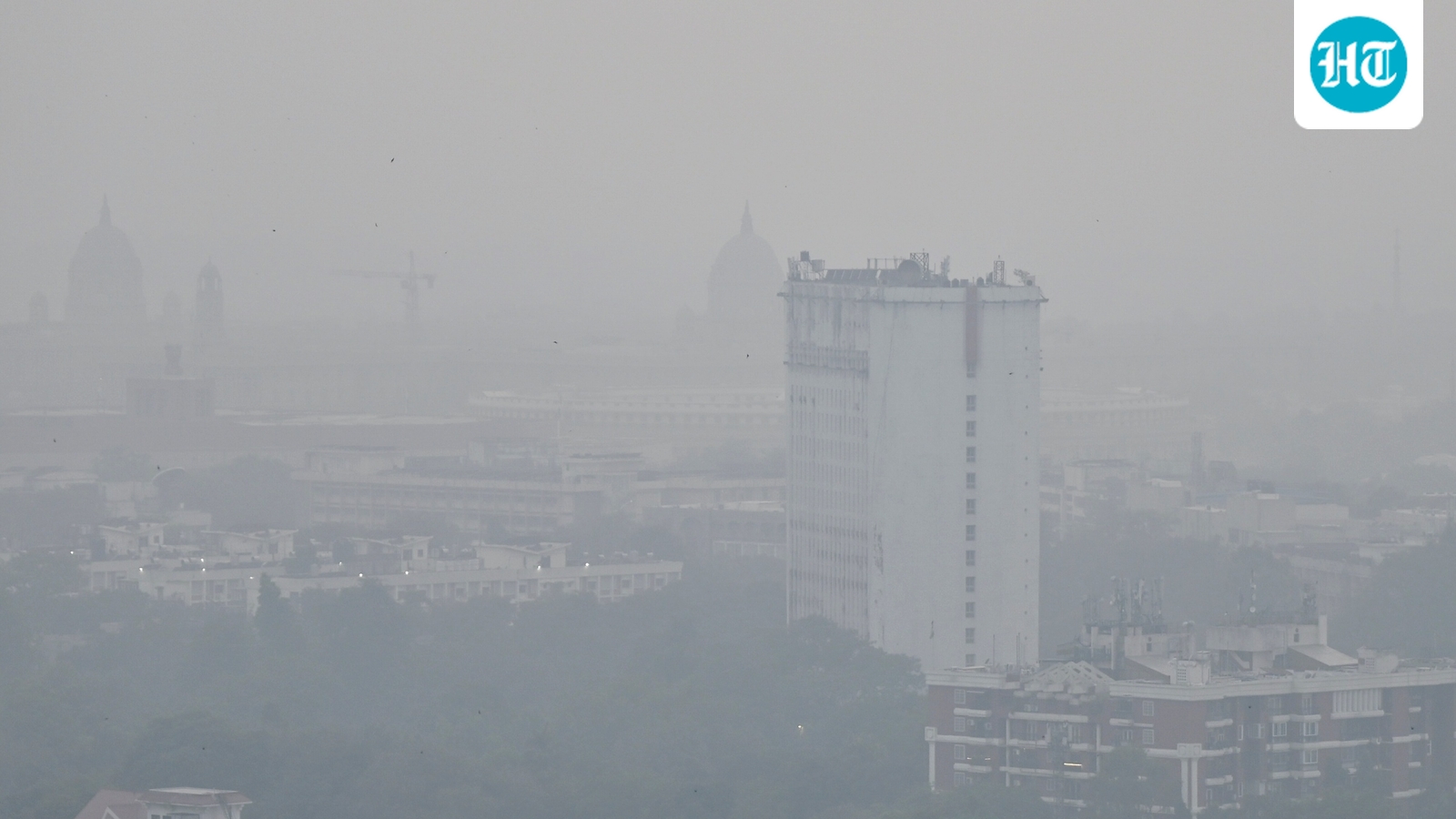
Delhi woke to Diwali on Sunday with the worst air quality on a festival eve in a decade, as weak winds trapped pollution and farm fires in Punjab and Haryana intensified. The Central Pollution Control Board (CPCB) recorded an air quality index (AQI) of 369 at 4 pm on Saturday, the highest before Diwali since 2016, when the index reached 404. The AQI, an average of the past 24 hours, had risen from 261 on November 1.
Fine particulate matter (PM2.5) peaked in the morning, averaging 295 µg/m³ between 10 am and 11 am across Delhi’s 59 monitoring stations; 36 stations recorded levels above 250 µg/m³, the CPCB’s threshold for the “severe” band. The afternoon offered the best ventilation of the week, with the mixing layer returning to its usual depth after four days of being about half that. Nevertheless, every hour from 11 am to 5 pm was dirtier than Friday.
When the evening window for firecracker bursting opened at 8 pm, PM2.5 rose sharply: from 177 µg/m³ at 7:45 pm to 208 µg/m³ at 8 pm, climbing to 289 µg/m³ by 10 pm across 55 reporting stations. In residential areas such as Punjabi Bagh, PM2.5 nearly tripled in an hour, from 208 µg/m³ at 7 pm to 593 µg/m³ at 8 pm. By 9 pm, nine stations recorded levels above 400 µg/m³, and from 10 pm the median station exceeded 250 µg/m³. Mundka reached 718 µg/m³.
The Supreme Court’s November 2 order permits certified green crackers for one hour in the morning and two in the evening on Saturday and Sunday, citing that a complete ban had not improved air quality or stopped illegal sales. Delhi Police have deployed more than 250 enforcement teams, but officers acknowledge that full compliance is unlikely. Conventional crackers remain available in markets such as Chandni Chowk and Sadar Bazaar, and boxes lacking the court‑mandated QR codes were noted by the court on November 3.
Last year’s Diwali night saw an average PM2.5 of 1,137 µg/m³ across 27 stations, up from 535 µg/m³ at 10 pm, the cut‑off for bursting. India’s 24‑hour limit is 60 µg/m³. This year’s forecast predicts the AQI climbing to 406 by 4 am on Monday, surpassing 400 into the “severe” category. The Indian Institute of Tropical Meteorology (IITM) warns that weak winds will keep pollution trapped, and that every Diwali since 2015 has left the city’s air worse the day after the festival.
Farm fires continue unabated. INSAT‑3DS counted 415 fire pixels in Punjab and Haryana on Saturday, 5.5 times the count on November 1, with 647 of 652 detections between 4 pm and 6 pm. NASA’s satellite reported a 1.7‑fold increase over its November 1 level. The Global Forecast System (GFS) predicts light winds of about 3 km/h in the lowest air layer on Sunday, with no rain expected through November 14. The mixing layer was 578 m high on Saturday morning, 5.2 °C warmer than the ground.
Experts say that cutting firecracker use, reducing truck traffic, and stopping waste burning over the next two days could mitigate the impact. The current conditions place Delhi at or near the “severe” air quality category for Diwali and the following day, with the worst air calendar dates falling between November 6 and 9.