Politics
Sonia Gandhi Addresses Nepotism Allegations in The Guardian Interview
By Rajeev Singh
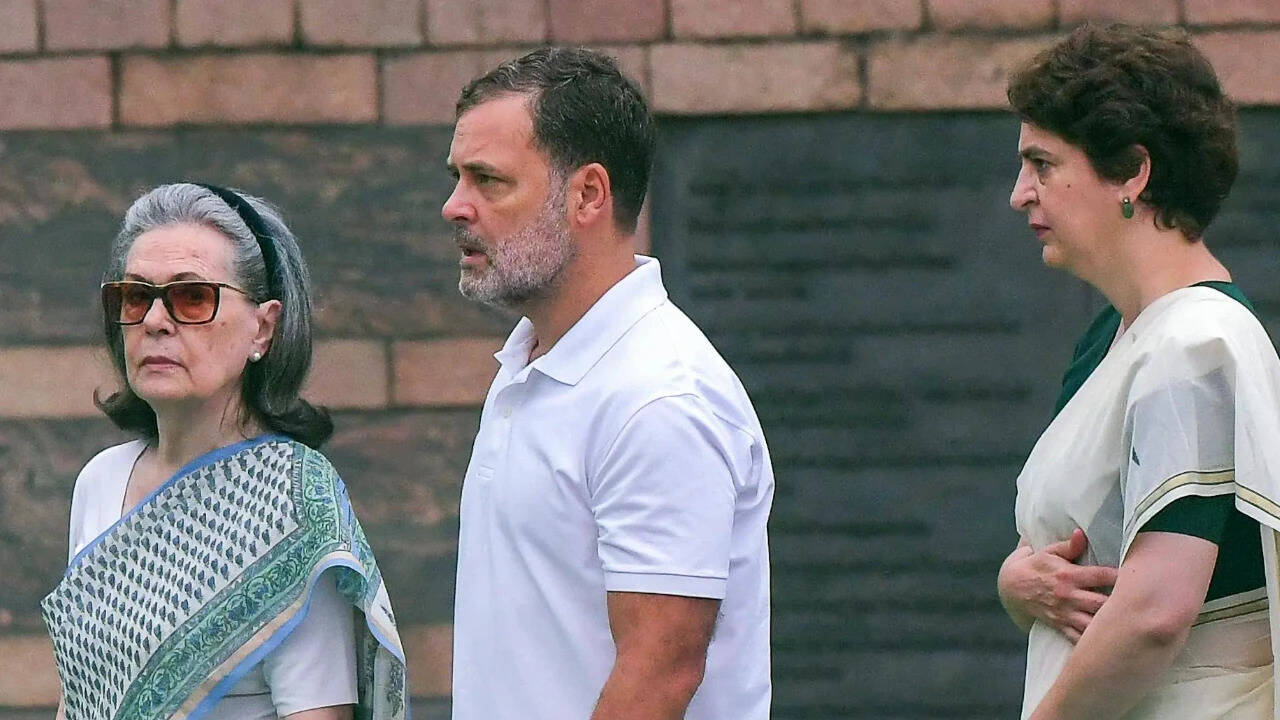
Sonia Gandhi, the Congress party’s long‑time leader, answered questions about the party’s continued family control and accusations of nepotism during an interview with the British newspaper The Guardian. When asked why Congress had not moved beyond the Gandhi family’s leadership, she said the issue should be addressed by the party itself. The Guardian reported that Gandhi “skated over the question of nepotism”, noting her reply that the party, like all others, wins and loses elections. The interview, published on Saturday, also included an edited excerpt from her forthcoming memoir, "Belonging: A Journey of Love", due for release early next week.
Gandhi maintained that Congress could still be a credible alternative to the BJP, although the interviewer pointed out that many remain unconvinced after the party’s repeated electoral defeats. The article highlighted Congress’s decline under Rahul Gandhi’s leadership, noting that he has lost the last three general elections to Prime Minister Narendra Modi. The party now governs only a few states, while the BJP’s Hindutva ideology has become the dominant political force in India.
When asked about the Congress‑led United Progressive Alliance (UPA) government, which ruled for a decade until 2014, Gandhi defended the coalition by saying that ministers resigned in almost every instance. The conversation also turned to the Emergency imposed by her mother‑in‑law, former prime minister Indira Gandhi, in 1975. Gandhi described the decision as a “mistake” and said she believed Indira herself eventually came to feel the same way. She said the family was “split on the decision” to impose the Emergency. According to her account, her husband, Rajiv Gandhi, opposed the move and advised his mother to wait for the next election, while her younger son, Sanjay Gandhi, reportedly pushed for a tougher response to the opposition.
Gandhi recalled the trauma of losing her husband, Rajiv Gandhi, who was assassinated in 1991, and the assassination of Indira Gandhi in 1984. She described the ex‑prime minister’s death as an excruciating experience, noting the slow drive to the hospital and the sense that Indira might already have been dead. She said she lived “like a ghost” in the aftermath, reflecting on the grief that followed.
The interview was conducted by Rajeev Singh, a Digital Content Producer with The Times of India, who covers politics, policies, defence, and conflicts for readers interested in their implications.