World
Heavy Rain Floods Gaza, Threatening War‑Damaged Buildings and Families
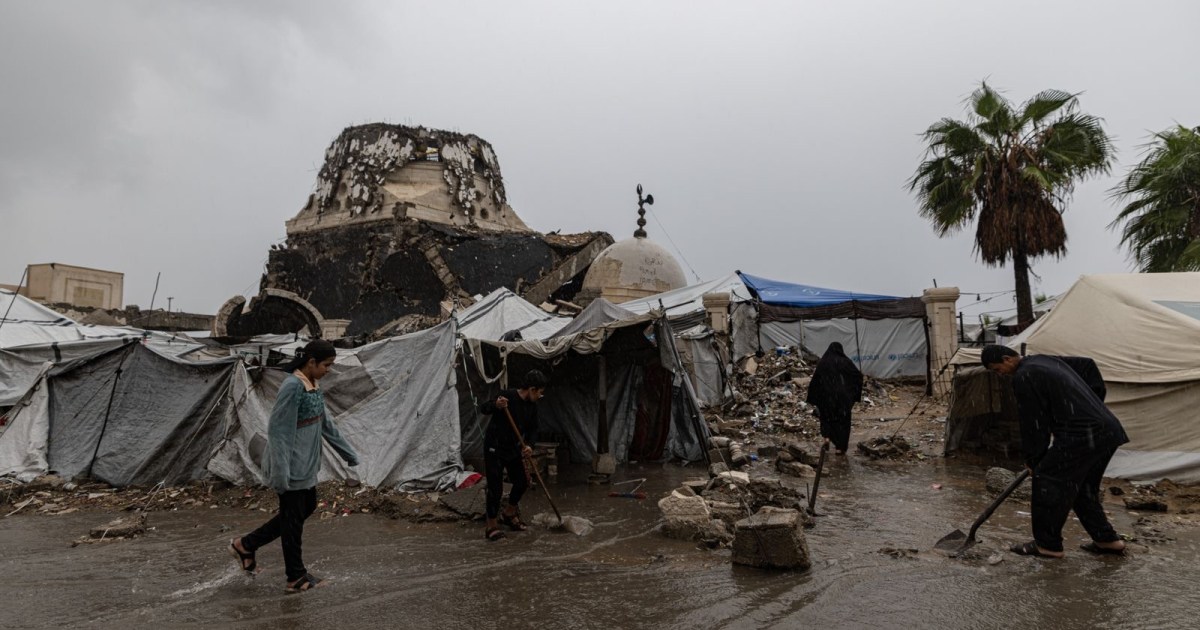
Floods have swept through Gaza after heavy rain, endangering families and putting war‑damaged buildings at risk. In al‑Mina camp in northern Gaza, 29‑year‑old Rana Adnan Hmeida and her husband, Sameh, were awake since midnight as rain and strong winds flooded their tent, soaking bedding, blankets and clothes. Hmeida told Al Jazeera that her two‑month‑old baby was freezing and that the wind made the tent feel as if it could be ripped from the ground. The couple’s tent is close to the sea and lacks tarpaulins or insulation.
Water levels rose 30 to 40 cm (12 to 16 in) at several camps, with Gaza’s civil defence agency receiving hundreds of calls. In al‑Mina, where about 1,700 families live, the ground turned into pools of muddy water. Raed Abu Amsha, 40, said his tent collapsed on his family during the storm, soaking the clothes and blankets of nine children, four of whom were orphans.
In Nuseirat, a decades‑old camp in central Gaza, rainfall threatens families in buildings damaged by Israeli bombardments. Nasser al‑Hajj, 54, lives in a tower block hit in a September 2025 strike. Debris from upper floors fell onto his home, creating a hole in the ceiling that now lets water in. An engineer warned that the apartment is dangerous, with a risk of further rubble falling if weather worsens. Al‑Hajj moved his children to a neighbour’s home during the storm; two of his children with autism sleep in the tower block’s guard room.
The United Nations Office for the Coordination of Humanitarian Affairs (OCHA) reports that about 950,000 displaced people in Gaza live in flood‑exposed areas, with more than 400,000 in high‑risk coastal or low‑lying sites. Roughly 44,000 Palestinians live in structurally unsafe buildings, and over 4,000 buildings require full or partial demolition due to Israeli air‑strike damage. About 294,250 families need shelter assistance before winter, but available supplies cover only 18 % of their needs.
The Gaza Municipality is also struggling to respond. About 15 km of rainwater drainage lines and 212 km of sewage networks have been damaged. Eight pumping stations and three main stormwater collection basins are out of service. The remaining system can handle no more than 20 % of rainwater under best circumstances, according to spokesperson Hosni Muhanna. He said the municipality is cleaning drains, removing rubbish, repairing damaged sections and operating pumps, but shortages of fuel, equipment and spare parts limit the restoration of capacity.
More than 2,000 buildings in Gaza City alone are at risk of collapse, and the volume of rubble in the city has exceeded 25 million tonnes. Emergency committees in displacement camps are also short of shelter supplies. Adli Awad, an official with the emergency committee in Nuseirat refugee camp, said his team is distributing tents and tarpaulins, especially to families affected by the rain, and helping families dig channels to divert rainwater away from tents.