Politics
Trump’s Endorsement Divides Arizona’s Wealthiest District Ahead of Midterms
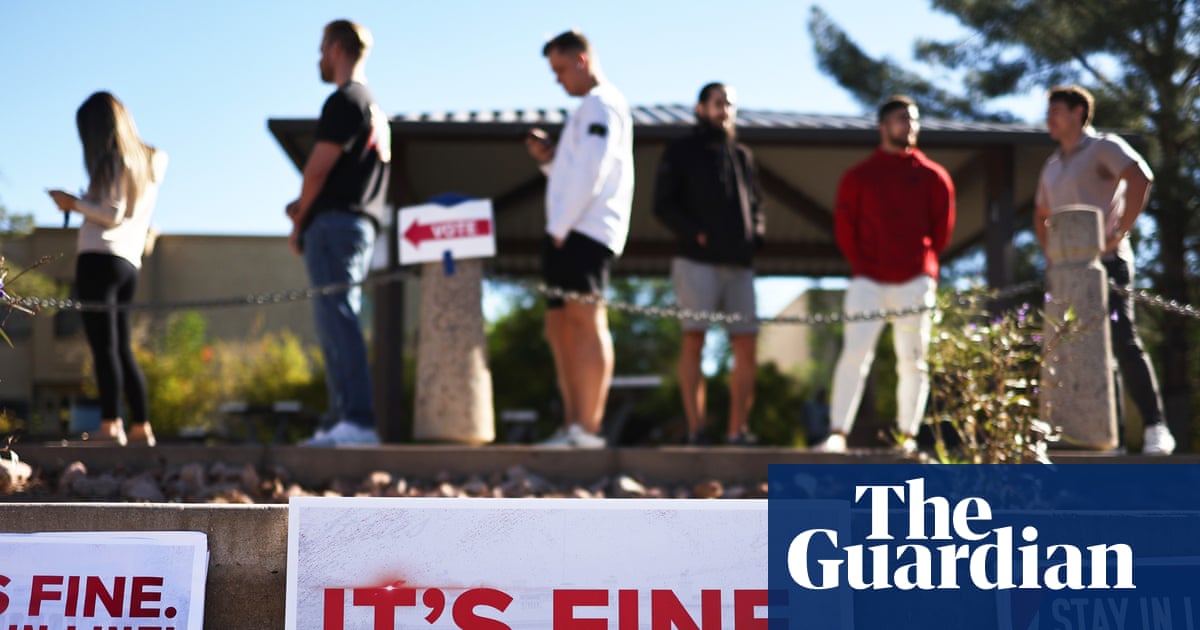
Donald Trump has urged voters to treat his name as if it were on the November ballot, a tactic that has made his presence a key issue in Arizona’s most affluent congressional district. In a region marked by Teslas and gated luxury homes, the effect of Trump’s endorsement on the race between Democrat Amish Shah and Republican Jay Feely is contested.
Tom Wolfe, a lifelong Republican, told a reporter over a burger and fries that he would not vote for any Republican and that Trump’s endorsement was a "death knell." He plans to vote for Democrats in the upcoming election.
In contrast, David McGahan, a retired accountant living in Rio Verde outside Scottsdale, said he is satisfied with the country’s direction under Trump. While pumping gas at a Costco, he noted the $101 price of a fill‑up but remained supportive of the president.
Arizona’s 1st congressional district, which includes north Scottsdale and Paradise Valley, sits between blue cities and red counties and has become a national political battleground. The district’s high‑end golf courses and desert estates host the contest between Shah, an emergency‑room doctor who narrowly lost the seat in 2024, and Feely, a former NFL kicker who received Trump’s backing.
The seat is open after Republican incumbent David Schweikert declined to seek a ninth term. Democratic strategist Matt Grodsky described the voters as "McCain‑type"—business owners with college degrees who are politically engaged. He said the lack of an incumbent and current dissatisfaction with Trump’s agenda create a ripe opportunity for a shift.
Mike Noble, founder of Noble Predictive Insights, notes that the district’s median income is $102,000, 33 % of residents hold a bachelor’s degree, and 22 % hold an advanced degree. Voters lean conservative but are not aligned with Trump’s MAGA movement. The district has helped deliver recent Democratic victories, including both Senate seats, a slight tilt for Joe Biden in 2020, and a slate of statewide officials in 2022 who rejected MAGA‑aligned candidates.
Schweikert’s narrow hold on the seat weakened in 2024 when Nikki Haley captured nearly 25 % of the district’s vote in the Republican presidential primary, even though Trump had already secured the nomination. Trump won Arizona overall, but his margin in the district was 3 % compared with 5.5 % statewide. Political consultant Stan Barnes described the shift as a "political revolution playing out in slow motion."
Voter Greg Edmunds, a lifelong Republican who supported McCain and George W. Bush, said Feely’s public embrace of Trump makes the choice clear: he will vote for Shah to block Trump’s agenda. Edmunds added, "We can’t have a rubber‑stamp Congress. I can’t vote for someone like that."
In September, as Trump’s national approval ratings fell, the Cook Political Report moved the Feely‑Shah race from "toss‑up" to "leans Democrat." Feely’s supporters argue the district remains conservative at heart and that voters are motivated by low taxes and affordable prices. Republican Adam Kwasman, a Scottsdale city council member, said Feely fits the district’s conservative profile and compared him to former governor Doug Ducey.
Feely, who Trump encouraged to drop his campaign in a neighboring district and run in the 1st, has highlighted his football ties, hosting team huddles and using football‑themed campaign signs. Shah, a former team doctor for the New York Jets during Feely’s time as a kicker, has similar football connections. The two have not met, but the shared background has become a talking point.
Feely’s campaign, backed by Turning Point Action, has portrayed Shah as a socialist by linking him to Senator Bernie Sanders. Shah, who won the Democratic nomination after a contested primary against a DCCC‑backed rival, rejects the socialist label and cites an endorsement from former state house speaker Rusty Bowers, a Republican who opposed Trump’s attempts to overturn the 2020 election results in Arizona.
Independents are the second largest voting bloc in the district, after Republicans, and are crucial to the November outcome. Cindy Cummens, an independent, said she will vote for Shah because he worked with Republicans as a state lawmaker and believes bipartisan cooperation can address high prices. No Labels, a startup party aiming to capture the independent vote, endorsed Shah for his willingness to work across the aisle.
Since the July primary, Feely has downplayed Trump’s endorsement, removing it from campaign signs and the website and skipping Trump’s mid‑October visit to Arizona. He did, however, speak at the Republican Party’s midterm convention in Texas, an event many Republican candidates avoided. Feely also thanked former senator Kyrsten Sinema, an Arizona Democrat‑turned‑independent, for her support, though she has not publicly endorsed him.
Political consultant Barnes said Feely’s shift away from Trump is a smart move, noting that a candidate cannot win solely by being the Trump nominee. Shah has also adopted a more centrist tone, moving from a universal single‑payer healthcare proposal to a public‑option plan.
Abortion, a major issue in the race, could be decisive. Two years ago, district voters supported a statewide ballot measure guaranteeing abortion rights with 64.8 % in favor. Reproductive Freedom for All has invested heavily in messaging that highlights Feely’s anti‑abortion stance and promotes Shah’s support for reproductive rights. In 2024, Shah helped collect signatures to place abortion rights on the ballot. Feely voted against the initiative and says abortion policy should be decided locally, not federally.
Donna Hale and Henry Male, both voting for Shah, cited women’s rights as a top priority. Hale worried about her 28‑year‑old daughter’s future under Trump’s remaining term. Male, who dropped his lifelong Republican registration after Trump’s first term, said he would not support Feely.
This story was amended on 28 October 2026 to correct the name of Reproductive Freedom for All in the second reference.
Frequently asked questions
Who are the candidates in Arizona's 1st congressional district?
Democrat Amish Shah, a former emergency-room doctor and former team doctor for the New York Jets, and Republican Jay Feely, a former NFL kicker who received Donald Trump's endorsement.
How has Donald Trump's endorsement influenced the race?
Trump’s endorsement has become a key issue, with some voters seeing it as a death knell and others supporting him; Feely has downplayed it, while Shah has shifted his platform.
What is the voter demographic profile of Arizona's 1st district?
The district has a median income of $102,000, 33% hold a bachelor’s degree, 22% hold an advanced degree, and voters lean conservative but are not aligned with Trump’s MAGA movement.