Space
Voyager 1 to Cross One-Light-Day Distance from Sun on Nov. 18, 2026
By Kat Troche
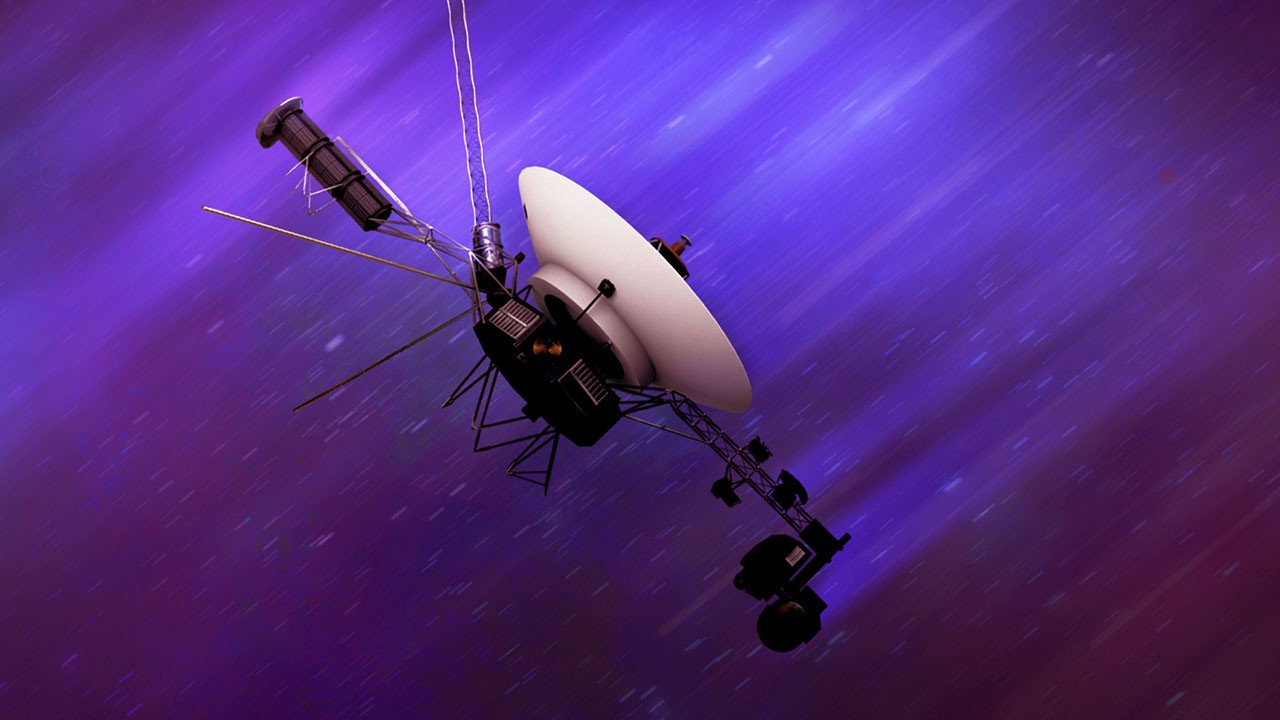
In 1977 NASA launched twin spacecraft Voyager 1 and Voyager 2, taking advantage of a planetary alignment that occurs once every 175 years. The alignment of Jupiter, Saturn, Uranus, and Neptune allowed the probes to use six gravity assists to travel to the outer planets. By the 1980s the two probes had split at Saturn. Voyager 2 continued toward Uranus and Neptune, while Voyager 1 captured a final image of Earth before heading farther out. Each craft carries a 12‑inch Golden Record that contains spoken greetings in 55 languages, 27 musical tracks, 116 images, and other sounds from Earth. The record is protected by copper and gold plating, and the cover is made of aluminum and electroplated with ultra‑pure uranium‑238, which has a half‑life of 4.468 billion years. In August 2012 and November 2018, Voyager 1 and Voyager 2 crossed the heliopause, the boundary where the Sun’s solar wind meets the interstellar medium. NASA’s Deep Space Network keeps track of both spacecraft. At the time of this article the Canberra antenna was tracking Voyager 1 at 25.80 billion km (just over 16 billion miles). On November 18, 2026, 49 years after its launch, Voyager 1 will reach the one‑light‑day mark, 16.1 billion miles from the Sun.
Frequently asked questions
When will Voyager 1 reach the one‑light‑day distance from the Sun?
On November 18, 2026.
What does the Golden Record on Voyager 1 contain?
Spoken greetings in 55 languages, 27 musical tracks, 116 images, and other sounds from Earth.