Politics
National Capital Planning Commission Approves Trump‑Proposed Memorial Arch Amid Ongoing Legal Challenges
By AP
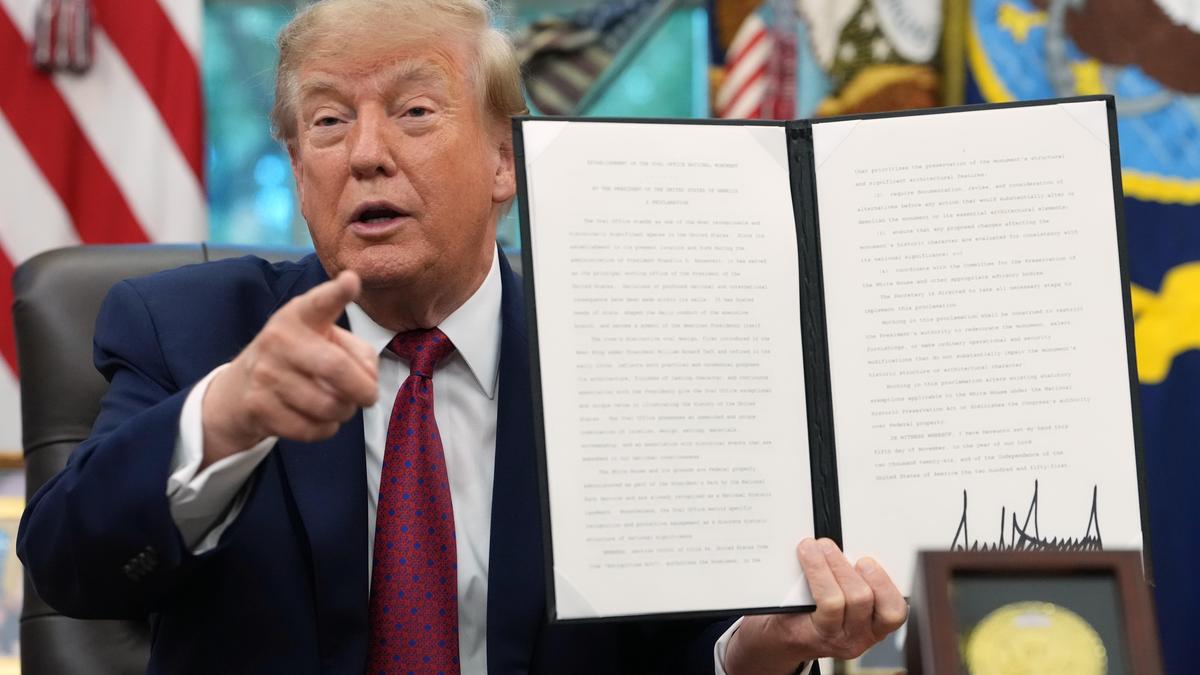
On Thursday night, November 5, 2026, the National Capital Planning Commission voted 8‑4 to approve President Donald Trump’s proposed 76‑metre (250‑foot) memorial arch near downtown Washington, clearing a key hurdle for construction. The commission, which oversees federal land projects in the city, had begun reviewing the arch plan in June 2026. The vote was split along federal and local lines: supporters were largely administration staff or connected to the President, while opponents represented the city of Washington.
The commission’s chairman, Mark Paoletta—appointed by Trump and also serving as general counsel for the White House Office of Management and Budget—opened the remote, call‑in hearing with praise for the monument and for Trump’s vision of national identity through grand monuments. Republican lawmakers and a veteran also expressed support during the hearing.
Opponents, including city officials, veterans, and relatives of those buried at Arlington National Cemetery, argued that the arch would disrupt sight lines between landmarks such as the Lincoln Memorial and Arlington National Cemetery and would cast a literal shadow over graves. They also contended that the monument would be too large for the skyline and would undermine the solemnity of the cemetery.
The arch remains subject to legal challenges. Three lawsuits have been filed against the project, and U.S. District Judge Tanya Chutkan has ordered that any decision by the planning commission be reported to her within an hour. The judge also set similar time limits for decisions by the National Park Service and the Department of the Interior. On November 2, 2026, Judge Chutkan noted that a contractor had begun site preparation on October 31, 2026, apparently without National Park Service authorization.
The proposed arch would sit on a patch of grass off a bridge that spans the Potomac River and connects Washington with Arlington National Cemetery. When completed, it would be 30 metres (100 feet) taller than the Statue of Liberty without its pedestal. The 106‑page plan submitted by the administration envisions a more than 12‑storey structure with a bronze statue of Lady Liberty, an observation deck, mezzanines, program space, offices, a staff lounge, circular staircases, multiple elevators, and a fire command centre. The project also proposes significant traffic changes and a national security function.
Republican Representative Jared Huffman, who will chair the House Natural Resources Committee, called the project ill‑advised and illegal, describing it as a tribute to Donald Trump rather than to veterans. Virginia Representative James Walkinshaw warned that if the arch is built, he would not stop until it is made temporary.
The commission’s approval does not resolve the pending lawsuits, and a judge is expected to rule soon on whether to block construction. The administration has said that construction could begin within a day of the commission’s approval.
Published – November 06, 2026 11:51 am IST
Frequently asked questions
What was the vote count for the National Capital Planning Commission's approval of the Trump memorial arch?
The commission voted 8‑4 to approve the arch.
What legal challenges remain after the commission's approval?
Three lawsuits have been filed, and U.S. District Judge Tanya Chutkan has ordered that any decision be reported to her within an hour, with similar time limits for the National Park Service and the Department of the Interior.
How does the height of the proposed arch compare to the Statue of Liberty?
The arch would be 30 metres (100 feet) taller than the Statue of Liberty without its pedestal.