Climate & Environment
Delhi’s Winter Air Quality Declines as New Measures Struggle to Curb Pollution
By Today News Hours Editorial Desk
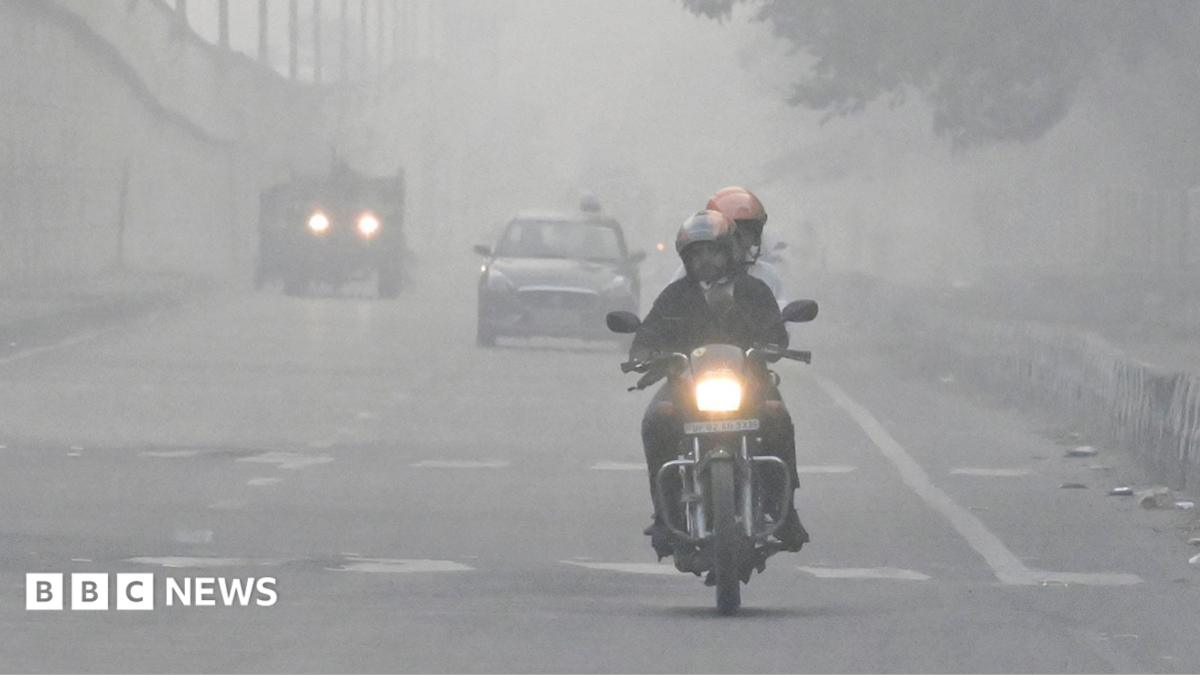
Two cardboard boxes sit in Meenu Rana’s Delhi living room: one holds Diwali decorations, the other air purifiers. The 43‑year‑old teacher says mornings feel already stuffy and that conditions will worsen, urging preparation. Every winter, Delhi and its satellite cities face months of heavily polluted air. Falling temperatures and slower winds trap pollutants near the ground, while crop‑stubble burning in neighbouring states, vehicle and factory emissions, construction dust, and festival firecrackers add to the problem.
In response, the Delhi government launched a Winter Action Plan from 1 November to 28 February, the period when pollution usually peaks. Experts welcomed the early rollout, noting that earlier years often saw measures only after air quality deteriorated. The plan limits entry of older, more polluting vehicles registered outside Delhi, denies fuel to vehicles lacking emission‑standard certificates, bans demolitions and outdoor construction that generate dust, and discourages private vehicle use. Offices are asked to allow half their employees to work from home, stagger office timings, and double parking charges. The government also plans to strengthen pollution monitoring, enforcement, and promote public transport and electric vehicles.
Separately, the federal Commission for Air Quality Management’s Graded Response Action Plan (Grap) imposes restrictions in stages as pollution rises. This week, Grap’s second stage is active, restricting diesel generators, coal and firewood burning. While the combined measures outline a roadmap for rising pollution, experts say success depends on enforcement. Parthaa Bosu, a strategic adviser at the Environmental Defense Fund, notes that planning has improved but execution remains at the same level.
Manoj Kumar, an analyst at the Centre for Research on Energy and Clean Air, argues that deeper targets are needed for all sectors—power generation, industry, transport—beyond vehicle entry, construction, and stubble burning. Bosu highlights secondary pollutants formed when gases react with sunlight, water vapour and other substances, noting that dust, coal and fly ash, brick‑kiln materials, and large‑scale urban waste burning also contribute.
Delhi’s pollution is further aggravated by pollutants traveling from neighbouring states and northern India. Even with local measures, Delhi can only achieve limited gains without regional cooperation.
Health impacts are severe. Winter monitoring stations frequently record Air Quality Index (AQI) readings above 300, classified as “very poor,” with occasional spikes to 500. International trackers such as IQAir have logged readings near 1,000. The World Health Organization recommends an average PM2.5 level of no more than 15 µg/m³ over 24 hours; Delhi often exceeds this by more than 25 times during the pollution season. Dr. Manoj Goel, head of the pulmonology unit at Fortis Memorial Research Institute, explains that these fine particles penetrate deep into the lungs and bloodstream, triggering inflammation and affecting multiple organs. Short‑term exposure can cause throat irritation, coughing, wheezing, breathlessness, and worsen existing heart and lung conditions. A 2025 report by the Energy Policy Institute at the University of Chicago estimated that air pollution could reduce life expectancy in Delhi by up to 8.2 years.
The restrictions also disrupt daily life. Delhi is closely linked to satellite towns Noida and Gurugram, with thousands commuting daily. Long queues form at city borders as vehicles are stopped and checked, causing traffic delays. Despite public pressure and government measures, pollution returns each winter, leading to protests, political debates and court interventions.
Rana keeps her windows closed and curtains drawn, adding indoor plants. She says the winter brings dread, but she and her family will not move out of Delhi because of her son’s school and their jobs. “I would have left the city long ago had there been an option, but my son has his school, my husband and I have our jobs as well, which makes it practically impossible,” she says. “What option do we have? It is unfair but we will have to live with it.”