Politics
New Zealand Election Heads to Tight Contest as National and Labour Stand Even
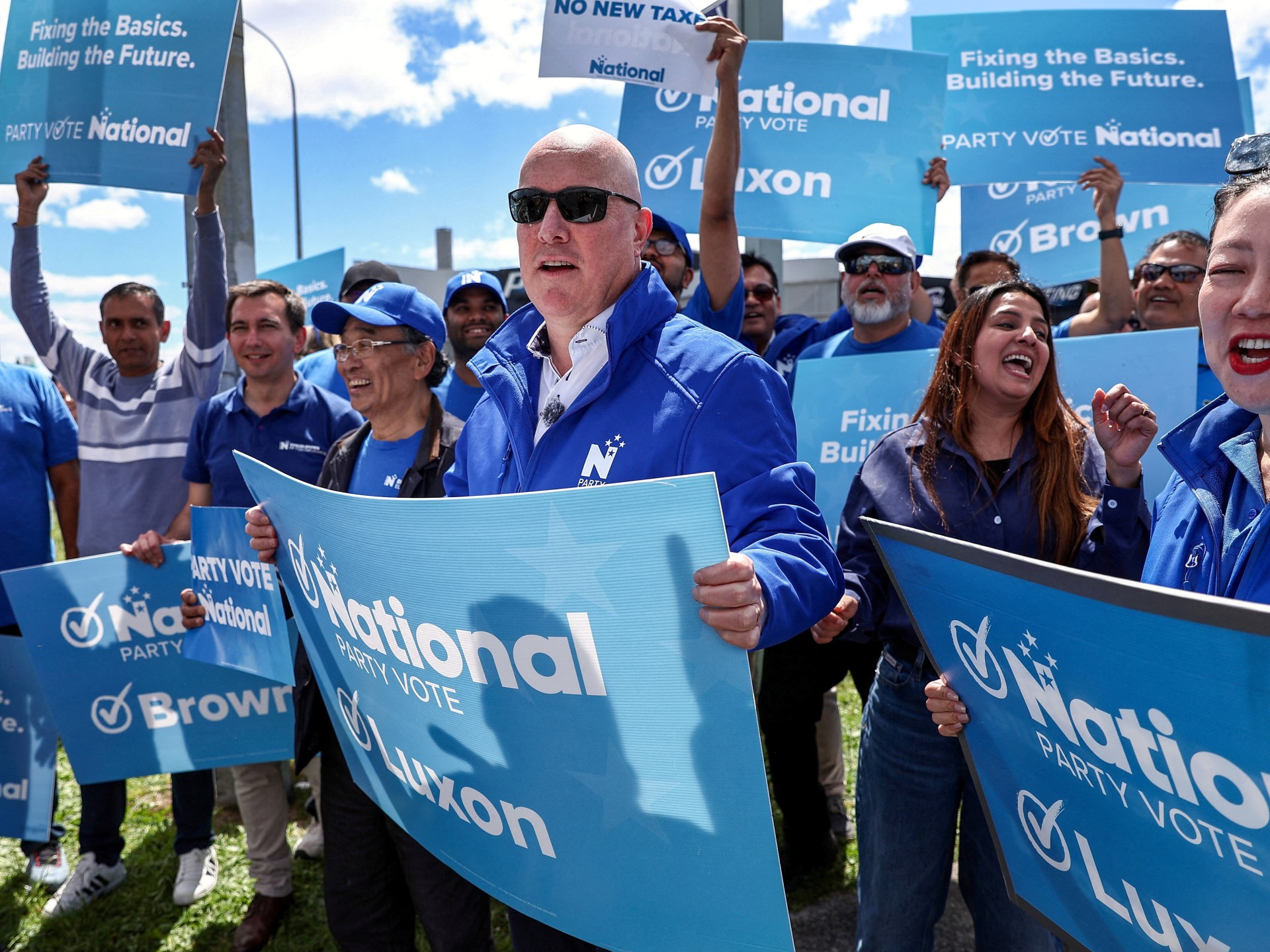
New Zealand is preparing for a close election on 7 November, with the governing centre‑right National Party and the opposition centre‑left Labour Party tied in recent polls. Neither party is projected to secure a majority on its own, so smaller parties could decide the government.
The country uses a mixed‑member proportional (MMP) system. Voters cast two ballots: one for an electorate candidate and one for a party. Seventy‑one electorate seats are filled directly, including seven reserved for Māori. The party vote determines the total number of seats each party receives in the 120‑seat parliament, with about 49 seats filled from party lists to match proportional share. A party must receive at least 5 % of the party vote or win an electorate seat to enter parliament. If a party wins more electorates than its party vote entitles it to, the excess seats are added to the size of parliament.
Incumbent Prime Minister Christopher Luxon, a former Air New Zealand chief executive, is seeking a second term. He entered parliament in 2020 as the MP for Botany and became National leader in 2021, leading the party to victory in 2023 and forming a coalition with New Zealand First and ACT. His leadership has faced challenges, including two attempted no‑confidence votes by National MPs in April and August.
Labour leader Chris Hipkins, 48, is campaigning for a return to the premiership. He became prime minister in January 2023 after Jacinda Ardern’s resignation, lost the October election, and now leads Labour in opposition.
Key campaign issues centre on the economy. National pledges to return the budget to surplus through fiscal discipline and to expand the national pension scheme. Labour focuses on the cost of living, promising cheaper healthcare and transport, and plans to invest in jobs, housing, infrastructure and public services. Smaller parties target specific sectors: New Zealand First wants to break up major electricity companies and split a large supermarket operator; the Greens call for a state‑owned power company, a publicly owned supermarket chain, a wealth tax, higher taxes on large companies and banks, and lower income tax for most people. Opportunity proposes a land value tax. Immigration and voting rights are also on the agenda: ACT wants to deport serious offenders regardless of residency length, while New Zealand First seeks to restrict voting to citizens.
The outcome hinges on the 5 % threshold. A small party that falls short and wins no electorate will have no seats, potentially costing its bloc a majority. For example, Opportunity must clear the threshold or win an electorate for its votes to help Labour form a majority coalition. The final size of parliament is uncertain; if Te Pati Māori wins more electorates than its party vote entitles it to, additional seats could be added, raising the majority threshold.
Key smaller parties include: - New Zealand First, led by Winston Peters, who wants the country to leave the Paris climate agreement and for the central bank to target employment and inflation. - ACT, led by David Seymour, a classical liberal, right‑libertarian party holding 11 of 123 seats. - The Greens, led jointly by Chloe Swarbrick and Marama Davidson, focus on social justice, living costs, nature and political funding reform. - Te Pati Māori, co‑led by Rawiri Waititi and Debbie Ngarewa‑Packer, prioritises Māori electoral roll enrolment, housing, health, education, environmental protection and constitutional transformation. - Opportunity, founded by economist Gareth Morgan in 2016 and led by Qiulae Wong, has never won a seat and is positioned as neither left nor right, aiming to boost economic growth.
Historically, smaller parties have often determined which of the two main parties governs. In 2017, Labour formed a coalition with New Zealand First and the Greens after National won more seats but could not secure a majority. New Zealand First has been a kingmaker for both sides in previous elections, and Te Pati Māori has supported National‑led governments in 2008, 2011 and 2014. The new potential kingmaker is Opportunity, which could play that role for the first time if Labour needs its seats to govern.