India
Newly Released NYC Records Reveal Officials Knew Ground Zero Air Was Unsafe After 9/11
By Gloria Pazmino, Katherine Koretski
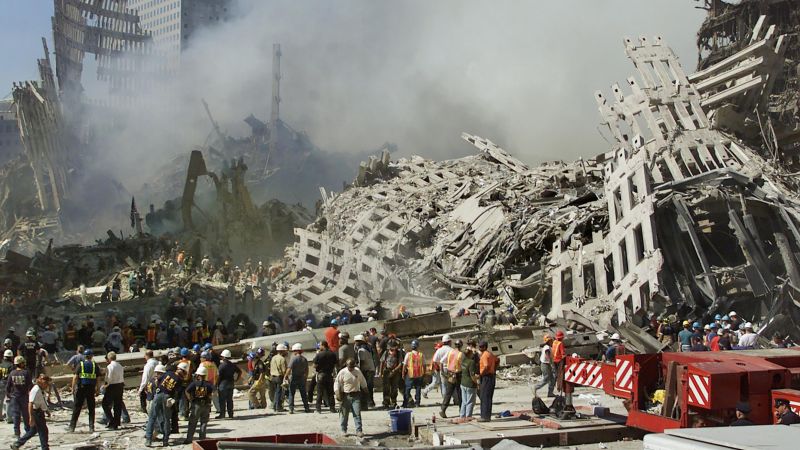
New York City has released more than 170,000 pages of previously undisclosed records revealing that city officials knew air quality around Ground Zero was hazardous following the September 11, 2001 attacks, despite public assurances that it was safe. Mayor Zohran Mamdani announced the release at a news conference Tuesday, just days before the 25th anniversary of the attacks. "As the years pass and the human toll grows, we reckon with the cost of September 11th whenever another New Yorker is stolen from us too soon," Mamdani said. "Now, close to 25 years later, more people have died from 9/11-related illnesses than were killed on the day itself." According to the 9/11 Memorial, at least 140,000 people from all 50 states have enrolled in the World Trade Center Health Program, and 49,000 have been diagnosed with certified WTC-related cancers. Mamdani noted that many eligible residents, including those who lived near the site or now live outside New York, have not yet enrolled or received outreach. Cancer coverage was not included when Congress created the health program in 2011; it was added in 2012 following advocacy efforts and a study showing elevated cancer rates among New York firefighters who worked at Ground Zero. Nearly 3,000 people died in the 9/11 attacks, but thousands more, including first responders, have since died from related illnesses. The document release resolves a lawsuit filed by the advocacy group 9/11 Health Watch, which had sued the city to obtain the records. The group's executive director, Ben Chevat, said the disclosure would help people access federal assistance and support further research into health outcomes. "Mr. Mayor, I want to thank you for being the mayor who, after 25 years, begins to answer the question: What did the city know about the dangers from the toxic cloud at Ground Zero, and when did it know it?" Chevat said at the news conference. The released documents include internal memos showing officials raised concerns about environmental testing conducted between October and November 2001, which regularly found elevated levels of toxins, including asbestos and other hazardous chemicals. Some records reference a white paper by U.S. Rep. Jerry Nadler of New York, who sent a memo to then-Mayor Michael Bloomberg's office in February 2002 alleging that the Environmental Protection Agency had "neglected its responsibility for monitoring indoor air quality around Ground Zero." According to the documents, Nadler said then-EPA Administrator Christine Todd Whitman had publicly declared the air "safe to breathe" before any government testing of indoor air quality had been completed. He also cited findings from University of California, Davis researchers showing "startling concentrations" of fine particulate matter capable of lodging deep in the lungs. News reports from February 2002 quote Bloomberg, who had succeeded Rudy Giuliani as mayor, saying, "Every test that has been done says the air quality was in acceptable limits. I think some people are just never going to believe that." A Bloomberg spokesperson declined to comment Tuesday. In a statement, Whitman said her earlier comments about air quality "were based entirely on the analysis done by EPA scientists," adding that the agency published data online and updated it regularly for transparency. She said EPA officials distinguished between conditions at the site and elsewhere in the city, warned workers of risks, and noted that the agency did not control the worksite, which was overseen by New York City. Another document included in the release, known as the "Harding Memo," was sent to then-Deputy Mayor Robert Harding and cited a Law Department estimate of about 35,000 potential plaintiffs, roughly 10,000 of whom were expected to file claims, related to the attacks. It outlined legislative options to limit the city's legal liability, warning that "judges and juries will be biased in favor of plaintiffs" and could award substantial damages. The memo also cited potential lawsuit grounds, including that health advisories may have caused people to return to the area too soon, risking toxic exposure, or too late, resulting in economic hardship. "People got sick because the leaders they trusted lied and told them they were safe to breathe in toxic air," Mamdani said. Asked whether the delay in releasing the documents constituted a "cover-up," the mayor replied, "This was multiple mayoral administrations refusing to release documents that New Yorkers were owed." Mamdani was joined at the news conference by 9/11 families and longtime advocate Jon Stewart, who said, "There was poison in the air, and on the ground, and in the window sills, and in your air conditioners and covering your pets and your clothes, and it stayed there for months. Everyone knew. Now it's very clear that the city knew as well." Karen Klingon, who lost her brother Robert after 9/11, attended the event. Robert Klingon lived near the World Trade Center and was treated through the WTC Health Program before collapsing in 2018 due to a brain tumor; he died two years later. "I think there wasn't just lack of transparency; there was a lack of regard for people, and I find that very disturbing," Klingon said. A searchable online portal will allow public access to the documents at no cost, with additional materials expected to be added in the coming months. City officials said the records were among 68 boxes discovered last year in a government office and are being released ahead of Friday's 25th anniversary of the attacks.