World
Sudan’s Factories Struggle to Reopen After War‑Induced Damage
By N. Mahmoud
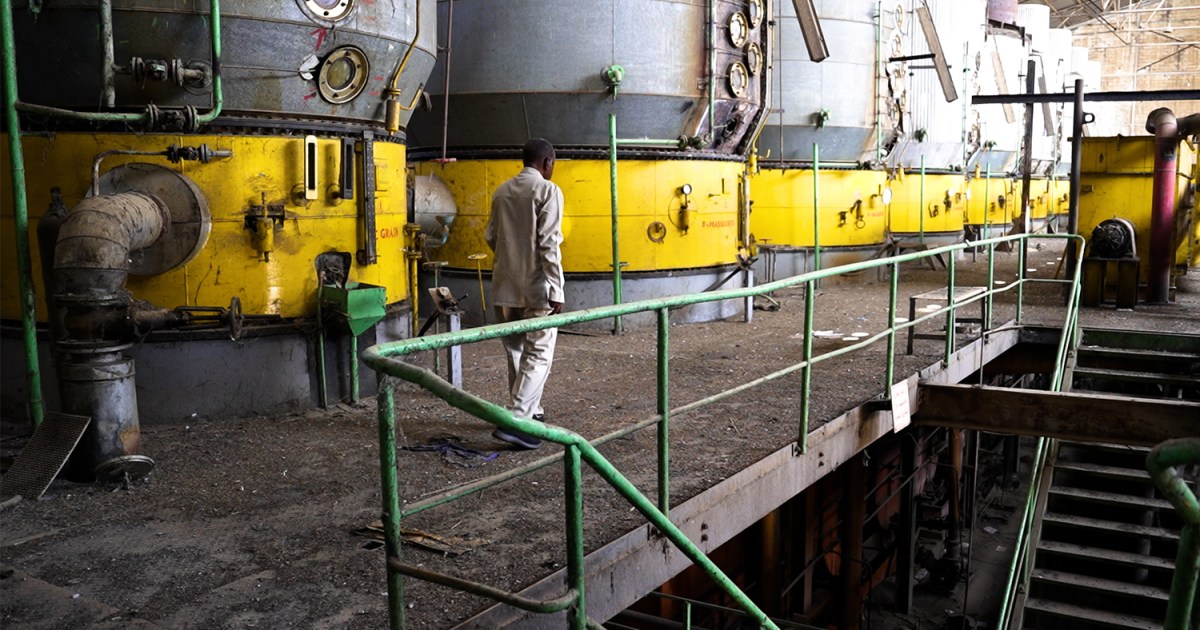
The war in Sudan has left many factories closed, workers unemployed, and consumers facing higher prices. Mansour Gaily’s sweets factory in Khartoum, which employed local workers, stopped production when fighting broke out between the Sudanese Armed Forces (SAF) and the Rapid Support Forces (RSF) in April 2023. More than three years later, Gaily reports that the factory is operating at only 40 % of its former capacity and that losses are estimated at $1 million. He says the factory lost machinery, spare parts and had to rebuild large sections.
Khartoum was once a major industrial centre, but the capital became a battleground during the war. The Sudanese Ministry of Industry estimates that about 1,800 industrial facilities were damaged, including 650 factories that were completely destroyed. The damage extends beyond buildings and equipment: raw materials, finished goods and equipment were destroyed or looted, and electricity shortages, damaged transport networks and rising import costs have made reopening difficult.
Other factory owners echo Gaily’s experience. Abdulelah Mohamed, who runs a plastic products and recycling plant, describes the damage as catastrophic and calls for new planning and vision for the sector. Sara Elfatih Khalil, chief executive of Al Teital Advance Industries, says her sesame oil factory, which employed 300 workers before the war, remains shut after warehouses were looted and supply chains were broken. She notes that less than 10 % of factories in the sector are currently operational and that those that are open face high costs.
Workers have been hit hard. Mohamed Haj lost his job at a sweets factory in Khartoum North and has struggled to find new work. Shopkeepers, such as Abdelgadir Mohamed in Bahri Central Market, report difficulty sourcing locally manufactured goods, and consumers like Ahmed Mahmoud say prices are volatile and high for both local and imported products.
In August, the Ministry of Industry set up a committee to assess industrial facilities in Khartoum State and prepare incentives to encourage reopening. The recovery plan includes restoring electricity, water, roads, sewage and waste management in industrial areas. Factory owners, however, say that reconstruction must also provide capital and practical assistance.
Economist Mohamed Elnayer argues that rebuilding offers a chance to address pre‑war structural weaknesses. He suggests that the industrial sector should be rebuilt across Sudan to avoid future paralysis if fighting resumes in the capital and to spread economic benefits.
Gaily hopes for stronger support from authorities to rehabilitate infrastructure, secure ingredients and bring back former employees. He stresses the need for financial support and coordinated efforts to sustain economic recovery.
Frequently asked questions
How many industrial facilities were damaged in Sudan during the war?
The Sudanese Ministry of Industry estimates about 1,800 industrial facilities were damaged, including 650 factories that were completely destroyed.
What is the current operational capacity of Mansour Gaily’s sweets factory?
The factory is running at 40 % of its former capacity, with estimated losses of $1 million.
What measures are being taken to help factories reopen?
In August, the Ministry of Industry set up a committee to assess industrial facilities in Khartoum State and prepare incentives, with a recovery plan that includes restoring electricity, water, roads, sewage and waste management.