Politics
Trump’s Iran Operation Leaves Iran’s Leadership Intact While Democrats Sweep Midterms
By Pallavi
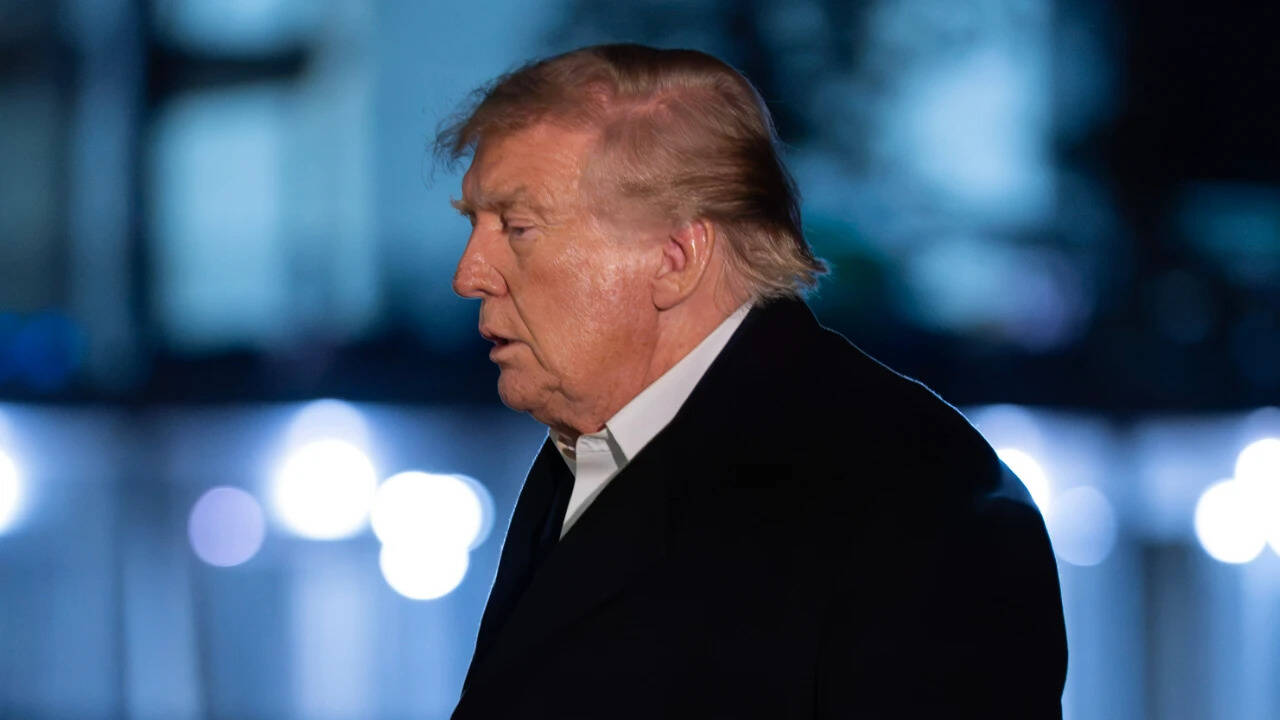
Donald Trump’s administration pursued a strategy of regime change that began with the January capture of Venezuelan president Nicolás Maduro, which the United States claimed gave it leverage over Caracas and its oil reserves. The administration then targeted Iran, launching a military operation on February 28 that killed Supreme Leader Ayatollah Ali Khamenei. Trump urged Iranians to “take over your government,” calling it their “only chance for generations.” The Iranian government survived the strike; Khamenei’s son, Mojtaba, was named successor and the security establishment gained influence.
The operation did not produce the mass defections or popular uprising that would have collapsed the regime. Instead, Iran’s political order, built on a network of clerical institutions, security agencies, political patrons and the Islamic Revolutionary Guard Corps (IRGC), hardened into a more security‑dominated state. Analysts such as Danny Citrinowicz of the Atlantic Council and Ali Hashem of Royal Holloway, University of London, noted that removing Khamenei could reinforce the regime rather than weaken it.
The U.S. also hoped that Venezuela’s oil could replace Gulf supplies if the Iran confrontation disrupted flows through the Strait of Hormuz. However, Venezuelan oil is extra‑heavy and sour, requiring specialized processing, and its aging infrastructure limits rapid output increases. Frederic Schneider of the Middle East Council on Global Affairs explained that Venezuelan crude cannot substitute for lighter Gulf grades.
The Iran conflict had domestic economic consequences. The national average gasoline price reached about $4.17 per gallon on November 2, the day before the midterms, 37 cents above the 2022 record. An Associated Press estimate placed the war’s cost to American taxpayers at $47.1 billion as of October 16, including $29 billion for munitions replacement, $11.9 billion for operations and $6 billion for equipment losses.
Trump’s remarks at campaign stops—calling higher fuel prices “a very inexpensive price to pay” and claiming the administration was “making a freaking fortune”—failed to assuage voters’ concerns about rising household expenses. Inflation, consumer confidence, and the cost of everyday essentials added to the economic pressure.
The escalation also strained Trump’s coalition. His 2016 and 2024 appeals to end endless wars and prioritize domestic interests were challenged by the Iran confrontation, which appealed to progressives and independent voters and unsettled anti‑interventionist conservatives.
Geopolitically, China and Russia continued to engage with Iran. China remained a major buyer of Iranian oil through shadow fleets, and Russia maintained its strategic relationship with Tehran, though the two countries are not a unified military bloc.
In the midterm elections, Democrats captured both the House of Representatives and the Senate, gaining ground in traditionally Republican states such as Kansas, South Carolina and Texas, and making inroads across the Rust Belt and Great Plains. The new Democratic majority gives Congress subpoena power, investigative hearings and the ability to challenge the administration’s Iran operation, legal basis, risks to shipping and energy supplies, and arrangements with Venezuela. The War Powers Resolution of 1973 and congressional control over funding also provide tools to scrutinize the conflict.
Trump acknowledged that “a part of it was Iran” after the Democratic sweep, but defended the decision, stating in the Wall Street Journal that he would have done it again.
The Islamic Republic of Iran has survived the death of its supreme leader, with power passing to his son and the security establishment gaining influence. Meanwhile, the American president who projected strength overseas has faced a powerful reality check at home.
Frequently asked questions
What happened to Iran's Supreme Leader after the U.S. strike?
Ayatollah Ali Khamenei was killed, and his son Mojtaba was named successor, with the security establishment gaining influence.
Did the Iran strike collapse the Iranian regime?
No, the regime survived; the political order hardened into a more security‑dominated state.
What was the result of the U.S. midterm elections?
Democrats captured both the House and Senate, gaining ground in states like Kansas, South Carolina, and Texas, and making inroads across the Rust Belt and Great Plains.