World
Trump Declares Himself ‘Mr. Veto’ as Democrats Secure Congressional Majority
By Sayak Basu
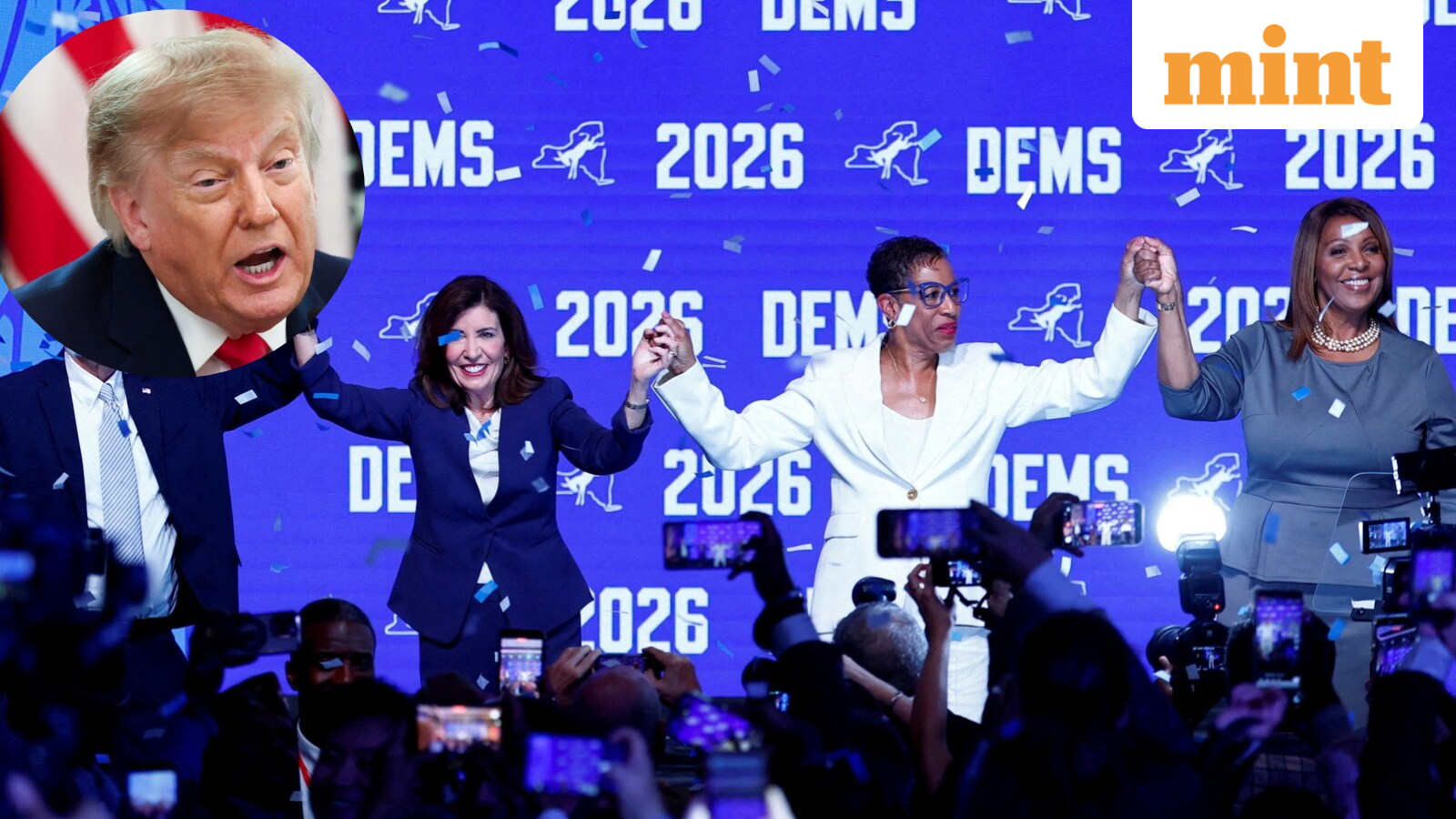
President Donald Trump has announced that he will rely on his veto power now that the Democratic Party has won control of both chambers of Congress. According to the Associated Press, the Democrats hold a 54‑44 majority in the Senate and a 228‑139 majority in the House, with counting still underway in several states. Trump’s only tool to block legislation from the new Congress is the presidential veto, a power that is difficult for Congress to override. The new Democratic majority will take effect on January 3, ending Trump’s ability to pass laws based solely on Republican votes, as reported by Bloomberg.
A presidential veto requires the President to reject a bill in its entirety and return it to the chamber that passed it with objections. Congress can override a veto only if two‑thirds of both the House and the Senate vote to pass the bill. Since 1789, only 112 of 2,599 presidential vetoes have been overridden.
Trump said in a CBS interview and on a New York Post podcast that he would become “Mr. Veto” and that “at some point, we’ll probably make deals.” The Constitution’s Article I, Section 7 outlines the veto process, noting that a bill becomes law after ten days if the President does not sign it while Congress is in session, or dies if Congress adjourns before the ten days expire (a pocket veto).
The President also retains significant authority over diplomacy, military command, and negotiations with foreign governments, though Congress can increase scrutiny and make controversial policies harder to pursue. The first step for any bill to become law is to survive a filibuster in the Senate, which requires 60 votes to end debate. Three exceptions allow the President to sign legislation that would otherwise be blocked by a filibuster: withdrawing U.S. forces from hostilities, ending a national emergency, or overturning a federal regulation.
In 1996, a Supreme Court decision struck down the Line Item Veto Act as unconstitutional, reaffirming that the President cannot partially accept a bill. Trump’s declaration of “Mr. Veto” marks a new chapter in the ongoing clash between the executive and the newly Democratic Congress.