Science
Rare 1610–1611 Astronomy Collection Sells for Rs 2.07 Crore at Christie’s
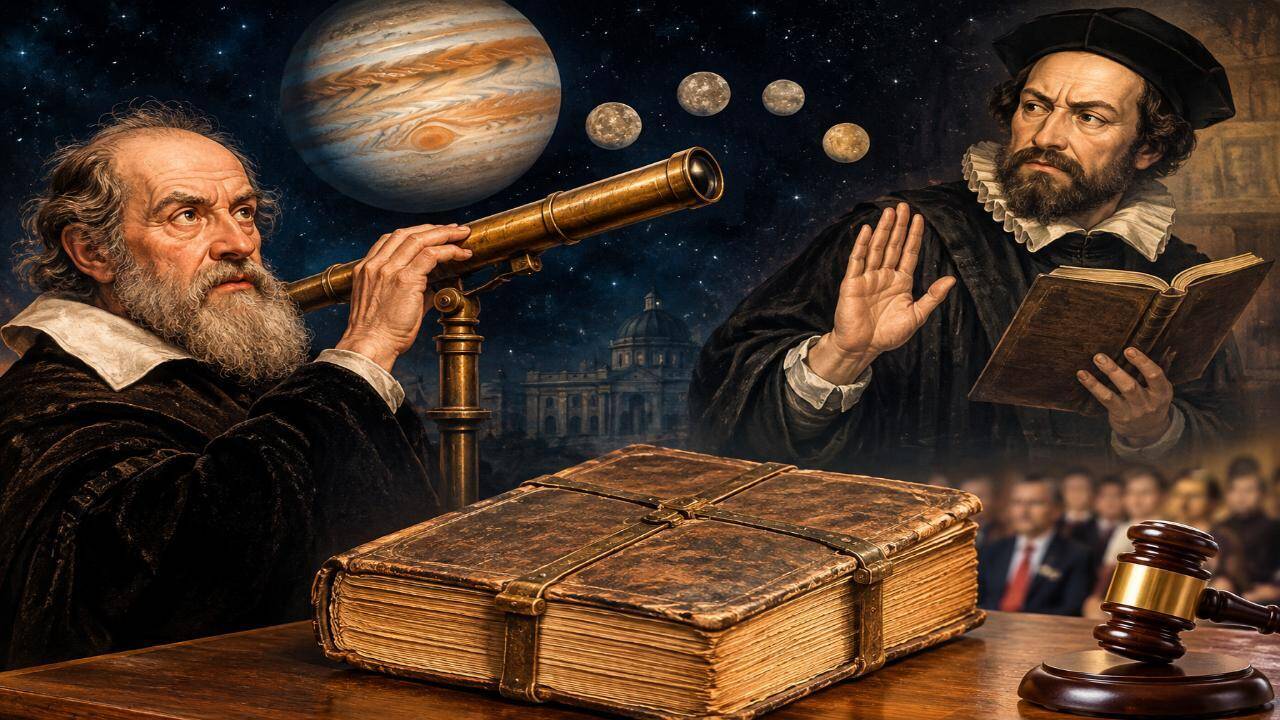
In February 2026 a rare volume containing Galileo Galilei’s 1610 publication *Sidereus Nuncius* and three other early works on astronomy and optics sold at Christie’s for US$217,600, about Rs 2.07 crore. The book was published in Venice in March 1610. In *Sidereus Nuncius* Galileo announced that he had observed four bodies orbiting Jupiter, a discovery that challenged the Aristotelian view that the Earth was the centre of the universe. He also described the Moon’s uneven surface and the Milky Way as a collection of individual stars. The four bodies are now known as Io, Europa, Ganymede and Callisto.
Francesco Sizzi, a contemporary astronomer, disputed Galileo’s claim, arguing that the supposed moons were optical effects produced by the telescope. Sizzi’s *Dianoia astronomica, optica, physica* was published in Venice in 1611 and was bound together with Galileo’s book in the same volume that later sold at Christie’s. According to Christie’s catalogue, Galileo declined to refute Sizzi, preferring to preserve their friendship.
The 2026 volume was a Sammelband, a collection of first editions bound together. Alongside *Sidereus Nuncius* and Sizzi’s response were two other 1611 first editions: Marcus Antonius de Dominis’s work on vision, light, lenses and the rainbow, which included material on the telescope, and Giovanni Antonio Magini’s treatise on spherical concave mirrors. The binding, made of stiff vellum boards, also contains a reused sheet from a 1474 Latin edition of Herodotus in the inside cover. The sale highlighted the unusual combination of scientific achievement and intellectual resistance that characterises the early history of astronomy.
Frequently asked questions
What did Galileo announce in Sidereus Nuncius?
He announced that he had observed four bodies orbiting Jupiter, described the Moon’s uneven surface, and described the Milky Way as a collection of individual stars.
Who disputed Galileo’s claim about the Jovian moons and what was his argument?
Francesco Sizzi disputed the claim, arguing that the supposed moons were optical effects produced by the telescope.
What other first‑edition works were bound with Sidereus Nuncius in the 2026 volume?
The volume also included Marcus Antonius de Dominis’s 1611 work on vision, light, lenses and the rainbow, Giovanni Antonio Magini’s treatise on spherical concave mirrors, and a reused sheet from a 1474 Latin edition of Herodotus in the inside cover.