India
Delhi’s Air Quality Deteriorated After Evening Crop Fires in Punjab and Haryana
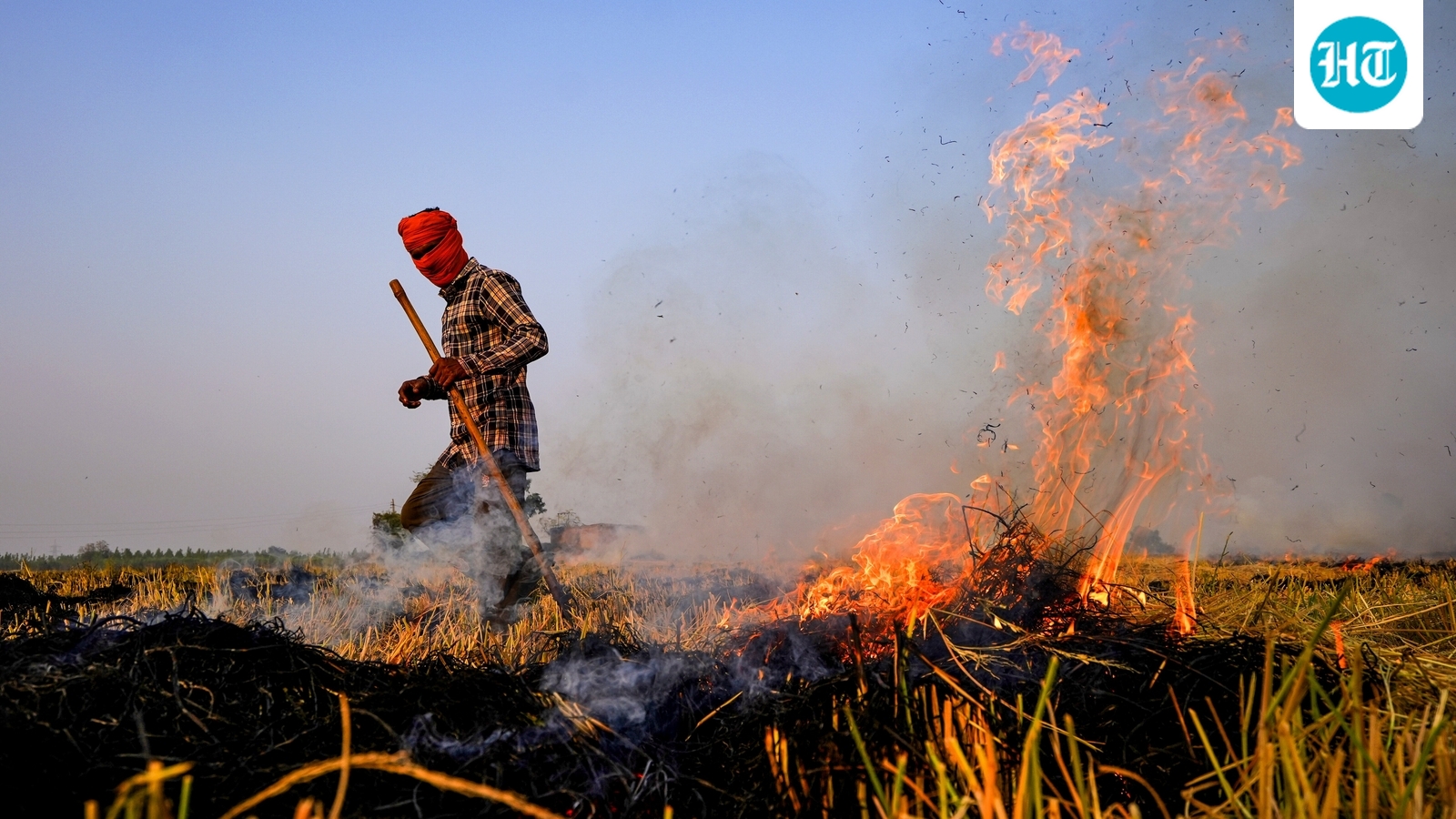
On the night of November 1, Delhi’s air quality index (AQI) rose sharply from 117 on Saturday to 261 on Sunday, and by Monday morning the Central Pollution Control Board’s hourly reading had crossed 300, the threshold for "very poor" air. The increase followed a surge in evening crop burning in Punjab and Haryana, as shown by India’s weather satellite data. Most fires were lit after the NASA satellite, which provides the standard stubble‑burning count, had passed over the region. The AQI reached 324 at 4 pm on Monday, the season’s first "very poor" reading; the last such reading this year was on February 11.
The weather leading up to the spike was poor, with little wind and still nights. Delhi experienced similar conditions on October 18 and 28, yet the air on those nights was much cleaner. Fine particulate matter (PM2.5) averaged 194 µg/m³ from 10 pm to 6 am on November 1, more than three times India’s 24‑hour limit of 60 µg/m³. On the October nights, PM2.5 averaged 68 and 127 µg/m³. Despite identical weather parameters—afternoon wind strength, dawn inversion, and night calmness—the November night held nearly three times as much PM2.5 as October 18 and about half as much as October 28.
Rain on October 29 and 30 washed out the air, bringing the AQI down to 60 on Friday. The hourly readings show that by the morning of November 1 the air was as dirty as it had been on the morning of October 28, but the pollution level diverged after that. On October 28, PM2.5 fell by nearly two‑thirds by mid‑afternoon, whereas on November 1 it did not fall at all, remaining slightly higher in the afternoon than in the morning.
The extra pollution on November 1 came from outside Delhi. Around midday on October 31, PM2.5 nearly doubled in three hours, the sharpest midday rise this season, and remained high into Monday morning. The fine particles made up nearly six‑tenths of all particulate matter in the air by weight on November 1, compared with just over four‑tenths on the October nights.
The NASA satellite that passes over Punjab at about 1:30 pm each day is the most cited source for stubble burning. Farmers now typically light fires after 3 pm. According to the Stubble Burning Status Report 2025 by iFOREST, more than 90 % of large fires in Punjab in 2024 and 2025 were lit after 3 pm, versus 3 % in 2021. Geostationary INSAT‑3DS satellite data show that 99 % of the fires it spotted in Punjab and Haryana last season were burning after 3 pm. This season, INSAT‑3DS recorded almost no evening fires from October 15 to 28, then the count climbed from 17 on October 29 to 90 on November 1. NASA’s count rose to 171 on November 1, the season’s highest.
Wind data from Safdarjung balloon readings and global weather models indicate that transport‑level winds blew from the north‑west on the afternoons of October 31 and November 1, the direction of the fire belt. On October 28, winds blew from the south. The air reaching Delhi on November 1 had spent most of the previous three days over Punjab and Haryana, passing over dozens of fires spotted by satellites. On October 28, the air came from the east, away from the fire belt, and passed few fires.
The analysis cannot determine exactly how much of the November 1 pollution was smoke. Humidity was above 90 % on the nights of October 31 and November 1, compared with 76 % on October 28, and humid air can help gases convert into fine particles. NASA’s seasonal count is about a quarter lower than last year for the same dates, but most burning now occurs after its satellite has passed, so the lower count does not necessarily indicate fewer fields burned.
Frequently asked questions
What caused Delhi's AQI to rise to 324 on Monday?
The spike was due to evening crop fires in Punjab and Haryana, with satellite data showing most fires lit after NASA's 1:30 pm pass.
When did Delhi experience its first "very poor" air reading of the season?
The first "very poor" reading of the season was on Monday at 4 pm, with AQI reaching 324.
How many fires were recorded by NASA on November 1?
NASA's count rose to 171 on November 1, the season’s highest.