India
MoHUA Official Says Delhi Land Record Digitisation Underway to Boost Housing Development
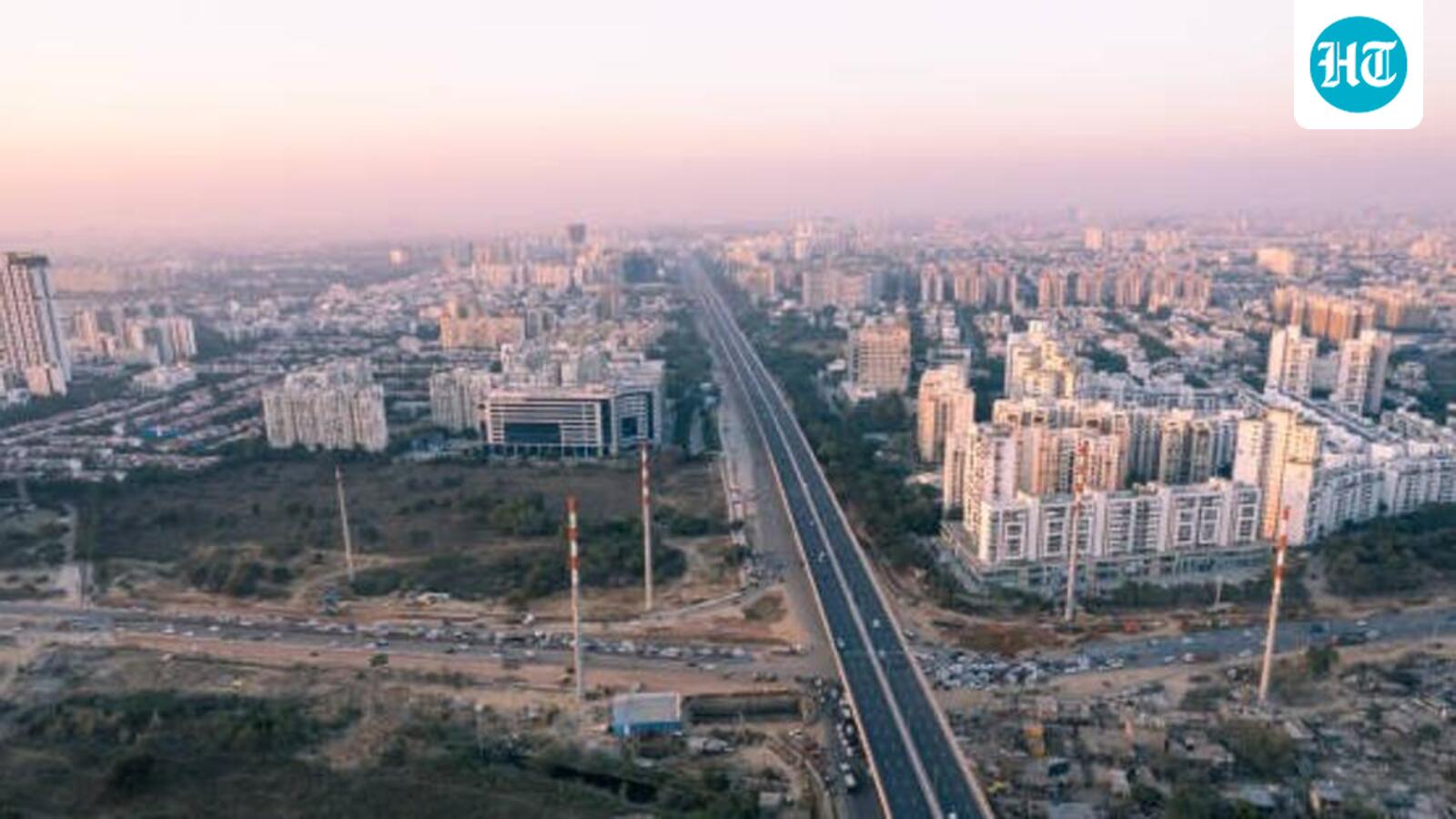
The central government is working to digitise and consolidate land records in Delhi, addressing what officials describe as a major obstacle to development in the capital. D Thara, secretary of the department of capital development at the Union ministry of housing and urban affairs (MoHUA), disclosed this at an event organised by the Associated Chambers of Commerce and Industry of India (ASSOCHAM) in New Delhi on Tuesday.
Thara questioned why relaxed transit-oriented development (TOD) rules had not resulted in greater housing supply near metro stations. She emphasised that consolidating land records in a single, unified system was critical. "The most important thing being land records digitisation and actually having collated land records in one place. That's very important. Delhi has a major issue in that space which has to be addressed and which we are working on," she said.
According to Thara, the Master Plan for Delhi was created to give the real estate sector concrete direction rather than vague goals. "The first thing which we did was to get the master plan out, signalling to the whole sector as to what we are intending, where and how. This is not a master plan of aspirations, this has specific prescriptions," she stated.
The push for digitising urban land records was initially announced in the Union budget presented in July 2024. Finance minister Nirmala Sitharaman had stated at the time that establishing an IT-based property records and tax administration system would strengthen the financial standing of urban local bodies. The Economic Survey 2023-24 noted that digitising land records could improve transparency in land transactions, reduce disputes over property ownership, and make land management more efficient.
On the subject of TOD, Thara acknowledged that implementation had largely stalled and said the government had moved to simplify the framework. Under the revised rules, a maximum floor area ratio (FAR) of 500 is now permitted on plots of at least 2,000 square metres served by an 18-metre road, with 65% of the allowable FAR reserved for residential purposes.
"Partly the regulations were too tight. Okay, we have relaxed the regulations. How is the market responding to it? We can't keep on harping that it won't happen, that won't happen. We have to take that initiative. We are ready to have conversations. Are you ready to have conversations?" Thara said.
She pointed to the likely demand for smaller housing units near metro stations as a factor that could make such projects commercially attractive. "Today if you sell a house in Delhi at ₹30 lakh and if it was on a metro, you don't need to sell 500 square feet. You can sell in 30 square meters (323 sq ft) or slightly more. And people are willing to do it. Huge number of people. Where is the supply? Why isn't the supply there?" she asked.
Thara also noted that the government had introduced a single-window mechanism to reduce the need for developers to deal with multiple agencies separately. She further encouraged real estate industry bodies to form a unified organisation and bring specific instances of project delays to the government's attention rather than raising general grievances.