World
North Korea Demonstrates Cluster‑Bomb Warheads on Mobile Launcher
By AFP
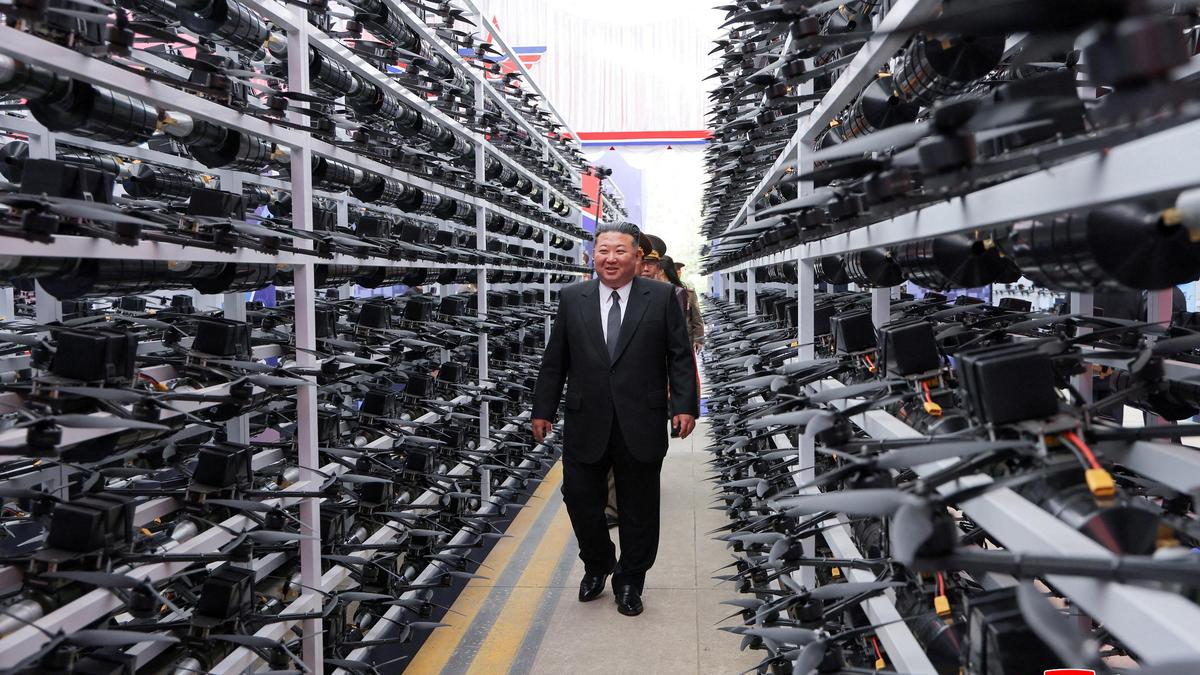
North Korea fired cluster‑bomb warheads on a mobile launcher on Saturday, October 31, 2026, according to the state news agency Korean Central News Agency (KCNA). The test was part of a series of weapons drills designed to train military units in the use of such munitions. It followed recent trials of attack drones, a precision‑guided torpedo system, and an intermediate‑range hypersonic missile. The test occurred amid heightened tensions after a landmine explosion on the heavily fortified border between North and South Korea, which wounded three South Korean soldiers. The North denied responsibility for the incident and pledged to strengthen its border defenses and resume its loudspeaker campaign. KCNA said the test aimed to “assess adaptation to combat and power of a cluster‑bomb warhead to be tipped on tactical ballistic missiles.” Officials confirmed that the weapon can reduce a target area of 12 to 13 hectares to ashes with its highest‑density power. The general director of the North’s Missile Administration stated that within the year units will be able to select and use all types of these weapons according to operational aims and target characteristics. KCNA released photographs of a projectile launching from a mobile launcher with an orange exhaust plume and of multiple cluster‑bomb impacts on an island target. North Korean leader Kim Jong Un was not present at the October 31 test, though he had overseen a cluster‑bomb warhead launch on a ballistic missile in April with his daughter Ju Ae. Published November 1, 2026 09:42 pm IST
Frequently asked questions
When did North Korea test the cluster‑bomb warheads?
On Saturday, October 31, 2026.
What was the intended effect of the cluster‑bomb warheads?
Officials confirmed the weapon can reduce a target area of 12 to 13 hectares to ashes with its highest‑density power.