World
U.S. Cancels G20 Opening Photo After European Protest Over Lavrov Presence
By AP
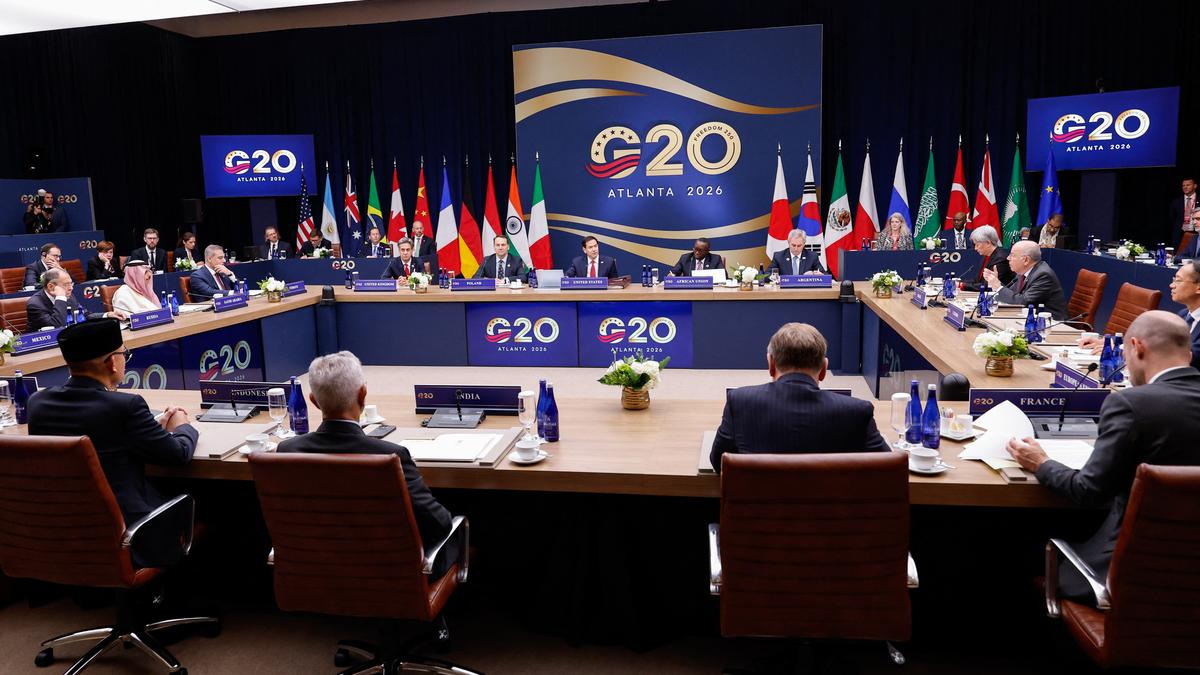
On Friday, October 30, 2026, the United States cancelled the traditional opening photograph of Group of 20 (G20) diplomats in Atlanta after several European leaders objected to being photographed with Russian Foreign Minister Sergey Lavrov and threatened to walk out of the session. U.S. Secretary of State Marco Rubio decided to cancel the photo, citing the potential distraction from the controversy, according to two U.S. officials who spoke on condition of anonymity. The meeting will proceed as scheduled and is intended to set the stage for a G20 leaders’ summit hosted by President Donald Trump at his Miami golf club in December. The cancellation has heightened concerns about the G20’s ability to reach consensus on contentious issues, including the Russia‑Ukraine conflict, U.S.‑Israeli tensions over Iran, U.S. tariffs, and Chinese activities in the South China Sea, all of which have contributed to rising global fuel costs and trade uncertainty.
Russia’s participation has already caused friction among Western allies. Some G20 members had previously expressed concerns about inviting Russia amid its intensified attacks on Ukraine, especially after President Trump waived fresh sanctions on Moscow and temporarily limited logistical and intelligence assistance to Ukraine. Russia’s Foreign Ministry complained about visa issues for its delegation that were resolved only at the last minute, leading to comments from ministry spokeswoman Maria Zakharova that “not everyone in Washington is happy” about Lavrov’s attendance. Zakharova said Lavrov would use the meeting to advocate for the “swift reform of global economic institutions.”
Lavrov has rarely visited NATO member states since Russia’s 2022 invasion of Ukraine and the subsequent sanctions. His presence in Atlanta is expected to create domestic political problems for President Trump just before the midterm elections and to upset at least the G20’s Western participants, according to former U.S. ambassador to Georgia Ian Kelly, now a professor at Northwestern University. Kelly described the invitation as “politically boneheaded” and noted that many Republican lawmakers, already concerned about losing congressional majorities, are “cranky” with Trump’s conciliatory approach to Putin. Democrats could use the invitation to criticize the GOP ahead of the November 3 midterm election.
In terms of the G20 itself, Kelly said Lavrov’s attendance would likely hinder efforts to produce a unified approach to the Russia‑Ukraine war, stating that it would “take away from the message that at least the Western members want to send.” It remains unclear whether Russian President Vladimir Putin will accept Trump’s invitation to the December summit in Florida.
South Africa, a founding G20 member and the only African country in the group, was not invited to the meeting, a decision U.S. officials said was a conscious choice to include only formal members. South Africa’s spokesperson Phindile Kunene said the country’s non‑participation was not voluntary and welcomed support from other G20 members who expressed reservations about the exclusion. Kunene stated that South Africa was ready to participate “on an equal footing with other members” when Britain takes over the presidency next year.
The U.S. has identified resolving differences over freedom of navigation in the Strait of Hormuz, the Red Sea, the Black Sea, and the South China Sea as a top priority for the meeting. Discussions will include Iran, Russia‑Ukraine, China, and smaller neighbors. The prospect of new U.S. military intervention in Iran looms over the event, with U.S. officials warning several West Asian countries and regional allies to prepare for potential renewed strikes after the November 3 midterm elections and the possibility of Iranian retaliation.
State Department officials say Rubio views the event as a way to advance practical cooperation on shared economic and security challenges and to seek solutions to geopolitical crises contributing to global economic shocks. However, skepticism remains about the G20’s ability to overcome substantial differences. Elaine Dezenski, head of the Center on Economic and Financial Power at the Foundation for Defence of Democracies, said the Atlanta meeting occurs in an environment of widening disagreement over the global economic order and will test whether the U.S. can build cooperation with partners when consensus appears out of reach. She noted that the Trump administration has shown a willingness to work outside the G20 framework to advance its foreign policy goals, and the meeting offers a chance to assess whether the U.S. can turn shared economic security concerns into meaningful cooperation without consensus.