World
Japan and India Sign Letter of Intent for Live‑Fire Training at Indian Ranges
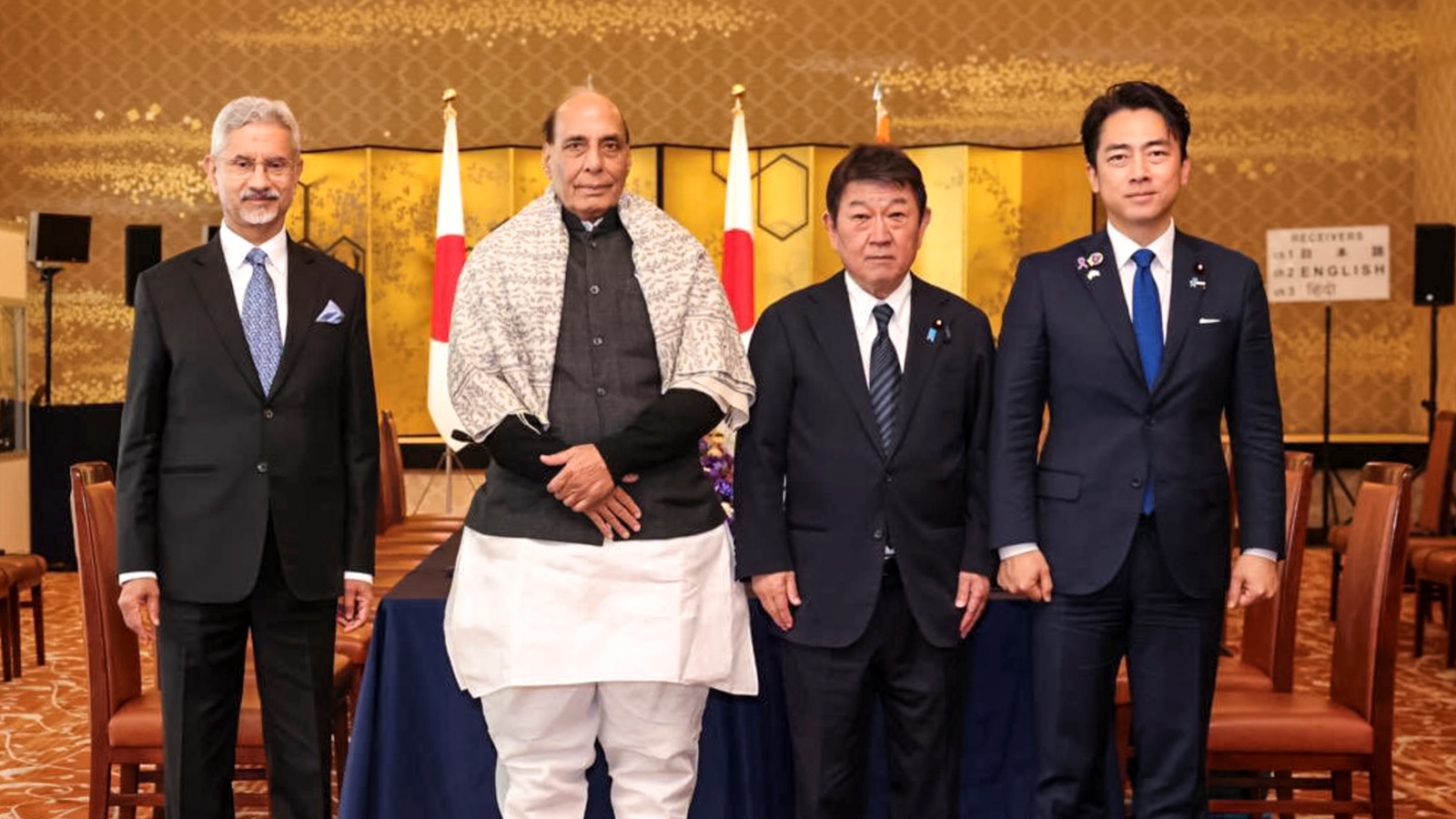
Japanese forces will, for the first time, conduct live‑fire training—including surface‑to‑ship missile exercises—at firing ranges in India, after Japan and India signed a Letter of Intent (LOI) on Thursday. The agreement was reached during the fourth India‑Japan 2+2 Dialogue, held in Tokyo, where Defence Minister Rajnath Singh and External Affairs Minister S. Jaishankar met with their Japanese counterparts Shinjiro Koizumi and Toshimitsu Motegi. In a joint statement, the two sides welcomed the LOI and pledged to accelerate coordination between their defence authorities to bring the arrangement into effect. The meeting followed the last 2+2 Dialogue, which took place on 20 August 2024 in New Delhi.
During the talks, Jaishankar noted that two major ongoing conflicts have had far‑reaching impacts, and that trusted partnerships such as the India‑Japan one are increasingly valuable. Singh added that the parties agreed to speed up cooperation in niche underwater and missile technologies, and to translate a recently signed Memorandum of Arrangement on Maritime Security Cooperation into concrete collaboration.
The ministers also expressed enthusiasm for strengthening defence industrial cooperation under the “Design with Japan, Make in India” framework and for concluding UNICORN‑related agreements on integrated antenna masts for Indian Navy warships. They agreed to finalize a Maritime Ship Repair Arrangement for reciprocal ship‑repair facilities and to enhance cooperation in mine‑countermeasure capabilities.
In the joint statement, Ministers Motegi and Koizumi explained Japan’s ongoing revisions to its National Security Strategy, National Defence Strategy and Defence Buildup Program, which they said would support deeper cooperation with India to maintain peace and security in the region and beyond. They welcomed the expansion of bilateral exercises, including the integration of unmanned systems and the pursuit of short‑notice bilateral and multilateral drills.
The statement also highlighted growing cooperation between the two coast guards, including the planned 5th Coast Guard Global Summit in India in February 2027, a framework initiated by the Japanese Coast Guard.
The ministers underscored the strategic convergence and trust between the two countries amid an increasingly complex international environment, and stressed the importance of closer coordination under the India‑Japan Special Strategic and Global Partnership to address geopolitical, economic and security challenges.
They reaffirmed their commitment to a free, open, rule‑of‑law‑based international order, and urged all countries to refrain from unilateral attempts to change the status quo, an implicit reference to China’s behaviour in the Indo‑Pacific.
On digital connectivity, the ministers pledged to strengthen secure and resilient connectivity in the Indo‑Pacific, including the development of trusted, redundant, high‑speed undersea cable networks.
They also agreed to enhance cybersecurity cooperation, particularly on AI‑enabled cybersecurity and the security of AI systems, with a focus on critical infrastructure.
Space sector cooperation will be expanded, and the next India‑Japan Space Dialogue will be held at an early date.
The ministers expressed grave concerns about economic coercion, arbitrary export restrictions and non‑market policies that disrupt global supply chains, and called for fair competition and resilient supply chains among like‑minded partners.
On counter‑terrorism, they condemned all forms of terrorism and violent extremism, including cross‑border terrorism, and called for concerted action against UN‑listed terrorist groups such as Al Qaeda, ISIS/Daesh, Lashkar‑e‑Tayyiba, Jaish‑e‑Mohammad and their proxies.
The ministers celebrated the 75th anniversary of diplomatic relations in 2027 as the India‑Japan Year of Shared Horizons, with commemorative programmes throughout the year, and agreed to hold the next 2+2 Ministerial Meeting in India on a mutually convenient date.
Frequently asked questions
When and where was the LOI signed?
On Thursday during the fourth India‑Japan 2+2 Dialogue held in Tokyo.
What type of exercises will be conducted under the LOI?
Live‑fire training, including surface‑to‑ship missile exercises.
Which ministers signed the LOI?
India’s Defence Minister Rajnath Singh and External Affairs Minister S. Jaishankar, and Japan’s Defence Minister Shinjiro Koizumi and External Affairs Minister Toshimitsu Motegi.