Cyber Awareness
South Africans Lost R2.4 Billion to Digital Banking Fraud in 2025, Sabric Reveals
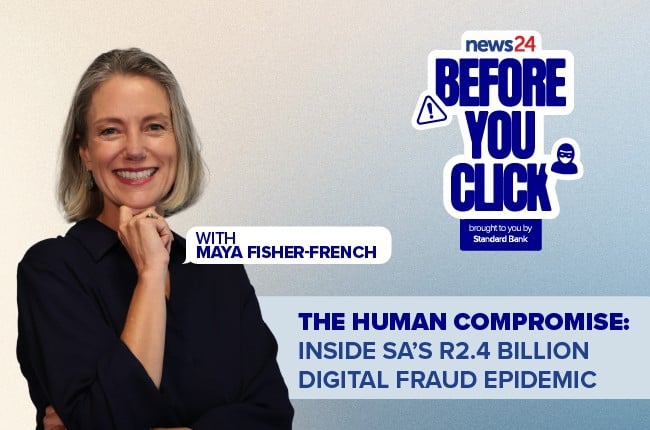
South Africa recorded losses of R2.4 billion to digital banking fraud in 2025, according to the latest crime statistics from the South African Banking Risk Information Centre (Sabric). More than 100,000 incidents were reported during the year, averaging roughly 300 cases per day, with financial losses nearly doubling over the past two years.
These figures were discussed at a recent Sabric roundtable, where participants identified social engineering as one of the leading drivers of digital banking fraud. Criminals exploit human emotions such as trust, urgency, fear, and confusion to manipulate victims into revealing confidential information, approving transactions, sharing one-time passwords (OTPs), or transferring money to external accounts.
Andre Wentzel, CEO of Sabric, spoke in an exclusive interview as part of the #BeforeYouClick anti-fraud awareness campaign. He advised that consumers should pause and think whenever they feel pressured into a situation involving trust, urgency, fear, or confusion.
Experts caution that the reported figures likely represent only a fraction of the true scale of fraud, estimating that just 20% of cases are actually reported, with many victims staying silent due to embarrassment or stigma.
Contrary to the common belief that hackers are breaching complex banking systems, Wentzel noted that approximately 90% of digital banking fraud takes place through mobile banking apps via social engineering tactics, meaning criminals are targeting people rather than technology.
Wentzel outlined several methods currently being used by fraudsters:
Phishing, smishing, and vishing — fraudulent emails, text messages, or phone calls that direct victims to malicious websites or convince them to transfer money into so-called “safe accounts.”
Impersonation scams — fraudsters posing as bank employees or fraud protection staff to gain victims’ trust quickly.
Mule accounts — stolen funds are rapidly transferred between multiple bank accounts to avoid detection before exiting the banking system.
Investment and cryptocurrency schemes — offers promising unrealistic returns that prey on financial desperation or interest in digital assets.
The growing use of artificial intelligence is compounding these risks. AI technology is enabling fraudsters to increase the scale, speed, and believability of their schemes, using tools such as deepfake audio and video, along with personalised phishing scripts, to mimic the voices and appearances of trusted individuals, including family members or company executives. Wentzel warned that this makes it increasingly difficult for both consumers and trained bank staff to distinguish genuine communication from fraudulent attempts.
Although South African banks continue to invest in technologies such as real-time fraud detection, behavioural analytics, and biometric authentication, Wentzel stressed that public awareness remains a critical defence against fraud.
To protect against digital fraud, the following guidelines were recommended: verify any communication independently through official bank channels rather than trusting it at face value, since scammers may already possess personal details that make them sound credible; remember that banks will never ask for OTPs, PINs, or request fund transfers to a “safe account”; if someone calls claiming to be from a bank’s fraud department, hang up and verify the claim using the bank’s official in-app messaging feature; and use AI tools or search engines to cross-check suspicious investment offers before committing any money.
The campaign’s central message urges consumers to pause, verify, and think before clicking on any suspicious communication, and to share information about these scams with family and friends to help prevent further victimisation.
This awareness initiative is part of the #BeforeYouClick campaign, brought to the public through Standard Bank channels.