Health
Chief Minister’s Angioplasty Comments Prompt Call for Evidence‑Based Guidance
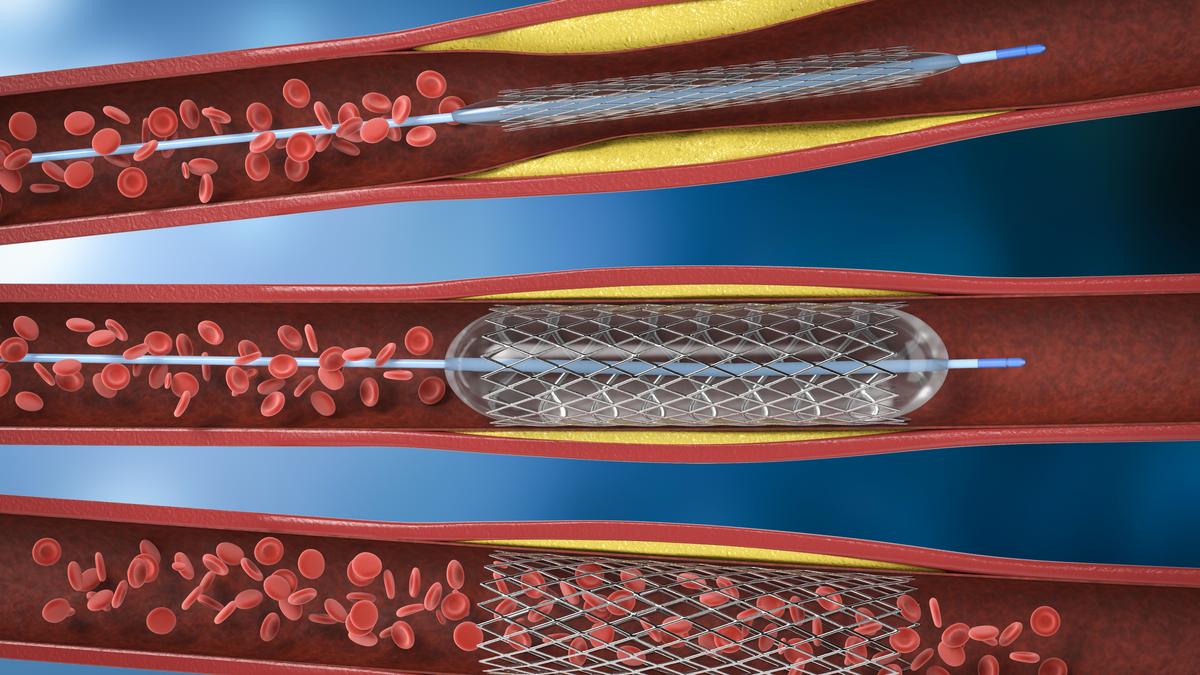
Keralam Chief Minister V. D. Satheesan recently questioned the necessity of “unnecessary” angioplasty procedures, sparking objections from medical organisations that the remarks could erode public confidence in doctors. The comments demand a thoughtful, evidence‑based response. Percutaneous coronary intervention (PCI) – balloon angioplasty with stent placement – has transformed cardiovascular care. During an acute heart attack caused by a suddenly blocked coronary artery, prompt angioplasty and stents can restore blood flow, preserve heart muscle and improve survival. In such emergencies, second opinions are unnecessary because time is critical.
Stents also provide significant relief for selected patients with persistent activity‑limiting angina. However, a coronary angiogram only shows the anatomy of the arteries; it does not by itself determine whether a narrowing requires intervention. The decision to intervene must consider the patient’s symptoms, the severity of the blockage, its effect on blood flow, the overall pattern of coronary disease and the expected benefit of intervention.
The landmark ISCHEMIA trial, published in the New England Journal of Medicine in 2020, enrolled 5,179 patients with stable coronary artery disease and moderate to severe ischemia at 320 sites in 37 countries. Patients were assigned either to an initial invasive strategy – angiography followed by angioplasty or coronary bypass surgery – or to a conservative strategy of optimal medical treatment, with revascularisation reserved for those who had an acute event or angina. After a median follow‑up of 3.2 years, there was no significant difference between the two groups in composite outcomes (cardiac arrests, hospitalisation for unstable angina or heart failure) and all‑cause and cardiovascular mortality were similar. After 5 years, there was still no significant difference in composite outcome or mortality. The core lesson is that most patients with stable coronary artery disease and ischemia on optimal medical treatment would do as well as those who undergo stenting or bypass surgery.
The growing scale of PCI in India warrants careful examination. National Interventional Council figures show that annual PCI procedures rose from approximately 113,000 in 2008 to more than 726,000 in 2024 – an increase of more than six‑fold. In contrast, PCI procedures in the United States fell by about 40 % between 2003 and 2016, reflecting progress in prevention and treatment. These figures do not by themselves prove that stents are overused in India, given its large population, the substantial burden of premature coronary disease, socio‑economic progress in recent decades and improved access to cardiac care centres. Nevertheless, the divergence in trends between the two countries raises an important question: how much of the increase in PCI reflects genuine clinical need, and how much reflects differences in practice patterns, financial incentives and gaps in knowledge about the efficacy of optimal medical treatment?
Optimal medical therapy, based on evidence‑based guidelines, is the foundation of care for all coronary artery disease patients. It includes LDL‑cholesterol lowering, appropriate antiplatelet treatment, blood‑pressure control, evidence‑based diabetes management and lifestyle changes. A coronary stent treats a specific narrowing; it does not cure the underlying atherosclerosis or eliminate the risk of future heart attacks. Patients remain vulnerable to disease elsewhere in the coronary arteries and must continue preventive treatment.
The way forward is neither condemnation of cardiologists nor unquestioning acceptance of every angioplasty recommendation. Most doctors strive to act in their patients’ best interests, but no profession is immune to inappropriate practice. The ultimate test of healthcare is not how many procedures are performed, but how many lives are saved and whether patients receive the right treatment at the right time at an affordable cost.
Dr. Enas A. Enas, Preventive Cardiologist and Physician‑Scientist, Founding President of the CADI Research Foundation USA; Dr. Basil Varkey, Professor Emeritus of Medicine. Published – October 28, 2026 12:51 am IST