Business & Finance
888‑Carat Black Diamond ‘Infinity’ Debuts at Dubai Conference After 50 Years of Transformation
By Livemint
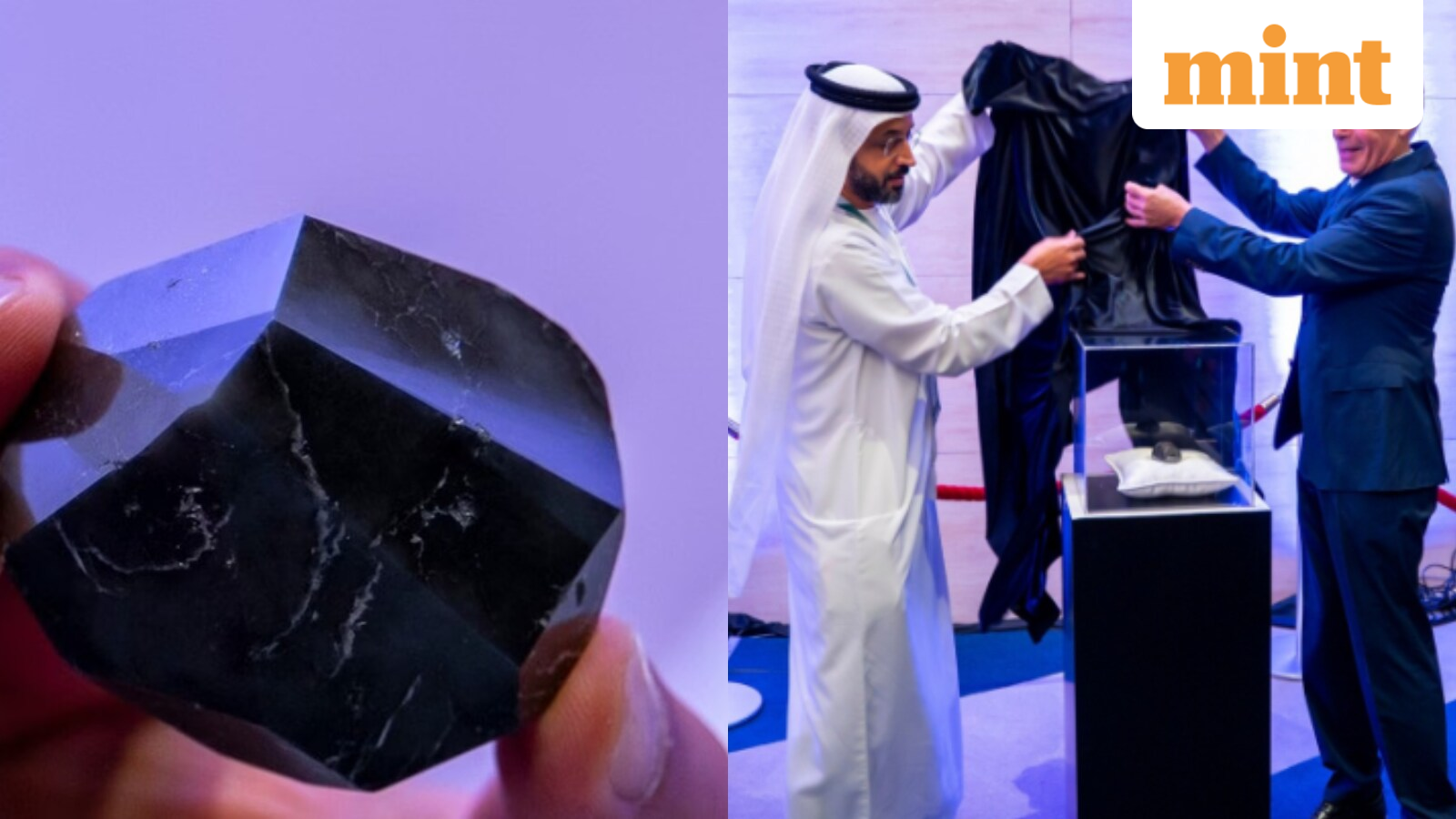
An 888.88‑carat natural black diamond, called Infinity, was displayed publicly for the first time at the Dubai Diamond Conference 2026. The stone, classified as Fancy Black, was presented by Diamond Trading NV and transported to the event by Brink’s under specialised security arrangements. Diamond Trading NV, based in Antwerp, Belgium, specialises in sourcing, trading and distributing rough diamonds worldwide. Infinity was discovered in the Democratic Republic of the Congo and originally weighed 1,138 carats in its rough form. Andrew Coxon acquired the stone on behalf of De Beers in 1975. In 2013 the Gemological Institute of America examined the rough crystal and recorded it as the largest single‑crystal natural diamond it had examined at that time, according to Gulf News. The rough stone was cut and polished between 2022 and 2024, resulting in the finished 888.88‑carat diamond. It is now owned by Diamond Trading NV. Nearly five decades passed between its acquisition in 1975 and the completion of the polished stone. Speaking at the conference, Daniel de Belder of Diamond Trading NV explained how the diamond’s natural characteristics guided the cutting and polishing process. “It is a black diamond. It carries features that are witnesses of the eruptive process, when it came from 150 kilometres deep down to the surface,” he said. He added that the team sought to preserve the diamond’s natural features rather than remove the marks associated with its formation and journey toward the Earth’s surface. “We adapted the plan and the manner in which we shape it to what nature is. We did not try to erase the traces of this very dramatic and fast transit from deep in the earth.” Black diamonds, also known as carbonado diamonds, are natural diamonds that appear black or dark grey due to numerous tiny mineral inclusions, fractures and structural irregularities that absorb or scatter light. Unlike colourless diamonds, which are valued for their brilliance, black diamonds generally have an opaque appearance. Inclusions of minerals such as graphite, pyrite and hematite contribute to their dark colour. Natural black diamonds are rare and form deep within the Earth’s mantle, at depths ranging from 150 to 800 kilometres. The Gemological Institute of America notes that traditional clarity grading does not apply to black diamonds because of their opaque appearance and extensive inclusions, and that they are assigned a single colour grade: Fancy Black.