Climate & Environment
UK's Hottest Summer on Record Devastates British Flower Farms
By Today News Hours Editorial Desk
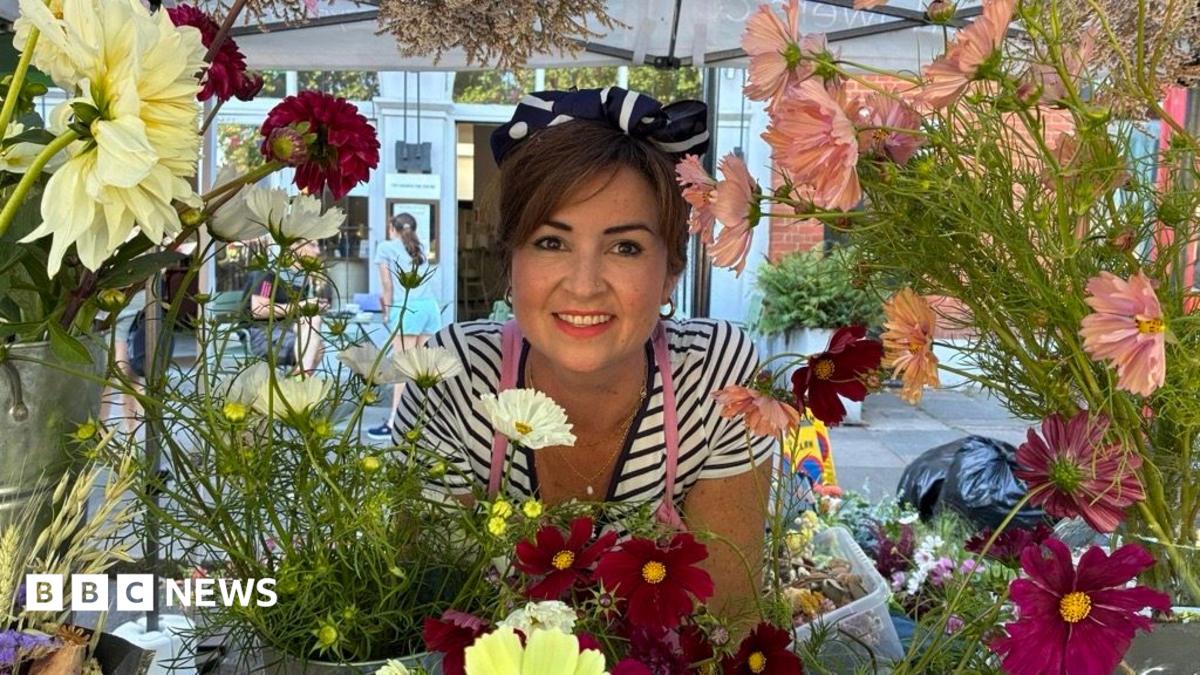
British flower growers say this year's record-breaking heat has wiped out significant portions of their crops, with some unable to bring any blooms to London markets. Speaking at Chiswick Flower Market on Sunday, several growers described losing most of their harvests to the extreme weather, while others detailed extraordinary measures taken to save their plants, including one who lived in a caravan in a field to water crops before and after peak daytime heat. Market organisers said several regular vendors had dropped out entirely due to having nothing left to sell.
Provisional Met Office figures confirm summer 2026 was the UK's warmest since records began in 1884. England and Wales experienced their driest July on record, and by 10 August the National Drought Group reported that 71.3% of England was in drought, with water restrictions affecting more than 27 million people.
For growers, the heat forced a complete restructuring of daily routines. Lisa Comfort, who runs a flower field in Chipperfield, Hertfordshire, said temperatures were already too high to cut flowers by 8:30am, leaving only after-dark hours for watering. "With the children, we were like, it's just too hard," she said, adding that her family would remember the summer as one spent essentially camping at the farm.
George Stevens, a fourth-generation grower at Stevens of Sibsey in Lincolnshire, lost most of his peony crop in May after temperatures jumped from 14C to above 30C within days. "We missed the whole season," he said, explaining that the subsequent dry ground prevented seeds from germinating without costly irrigation.
Financial strain has become a major concern. Andie McDowell, who operates the pick-your-own farm Dahlia Beach in Oxfordshire with roughly 30,000 dahlia plants, said producing the needed 5,000 stems weekly during her August-to-October season has become far more expensive. "We're spending an absolute fortune... you're just having to throw more and more money at it just to get the flowers to flower," she said, citing rising costs for labour, fertiliser and transport.
George said the financial pressure has pushed his business toward a breaking point, questioning whether continuing remains viable. Lisa acknowledged the trade was never about profit: "You don't get into this to make yourself rich... it is a way of life."
The broader agricultural sector faces similar struggles. The Energy and Climate Intelligence Unit estimates the heat and drought could cost arable farmers up to £390m in lost revenue, potentially resulting in one of the worst harvests since 1984.
Despite the hardships, growers are adapting rather than quitting. Lisa adopted a "pulse watering" technique learned from Australian farms, watering for 15 minutes every six hours to maintain soil moisture, which she said produced noticeable improvements. Ellenah Murahwa, of Holmbush Flowers in Horsham, West Sussex, also rationed water carefully, noting her family's dahlias—usually blooming in early August—only just began flowering. "You just have to work with the weather and do your best," she said.
Andie McDowell diversified into weather-independent income by hosting events at her farm, including line dancing and a silent disco among the dahlias. "People are so desperate to get out and do something fun so we've really leaned into events this year," she said.
British-grown flowers remain a small fraction of the market, with the growers' association Flowers from the Farm estimating that roughly 90% of cut flowers sold through UK florists, supermarkets and wholesalers are imported, primarily from the Netherlands. The association, which now counts more than 1,000 members, says demand for seasonal, scented, locally grown flowers is rising.
George Stevens arrived at Sunday's market after just two hours of sleep following an overnight harvest by head torch. Asked what keeps him going, he cited pride and a desire to continue his family's legacy. For Ellenah Murahwa, the motivation is simpler: "This is definitely a passion project... it's always something that brings joy."