Agriculture
German Immigrants Influenced Early U.S. Farming Practices
By Dan
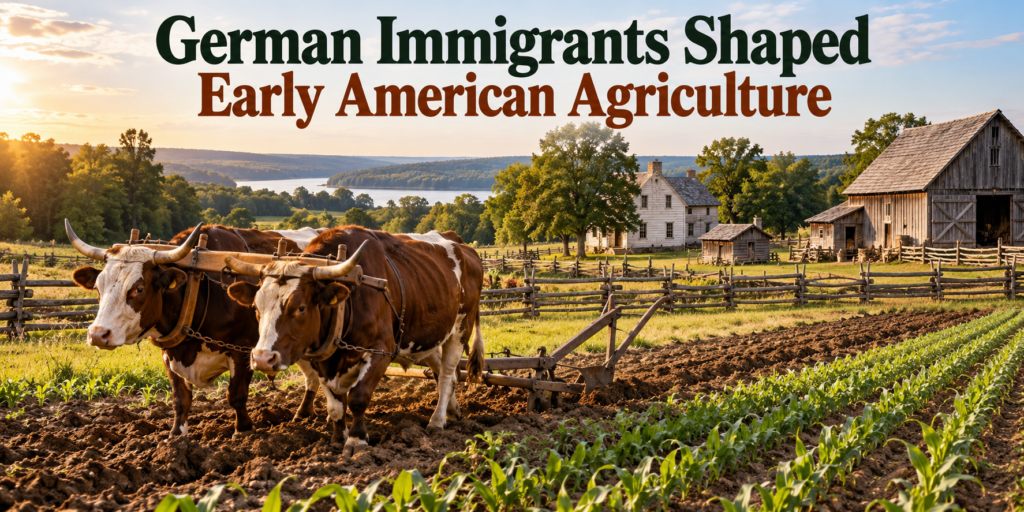
The development of American agriculture was shaped not only by fertile soil and abundant land but also by the farming traditions, tools, and practices that immigrants brought from their homelands. In the American Agriculture History Minute, Mark Oppold examines how ethnicity influenced early American farming, focusing on the contributions of German immigrants. German farmers differed from their English, Scottish, and Irish counterparts in several ways. They often preferred oxen over horses for plowing, a choice that reflected European agricultural traditions and proved effective on farms where heavy plowing was required. German settlers also emphasized row crops, continuing the organized crop production familiar to them in Europe. These practices were adapted to the larger plots of land and fertile soils available in America, allowing farmers to expand and modify their methods. Oppold notes that Scottish and Irish farmers tended to combine crop production with livestock rearing, raising cattle and sheep alongside crops. While individual farmers did not adhere to rigid systems, these cultural traditions influenced how immigrant communities approached farming in the early United States. The mix of traditions from English, Scottish, Irish, and German settlers, combined with the opportunities presented by expansive farmland, helped create a diverse agricultural landscape. The differences in draft animals, crop production, and livestock management illustrate the broader story of American agriculture, showing how immigrant knowledge and experience became part of the nation’s farming heritage. The American Agriculture History Minute by Mark Oppold explores the people, inventions, traditions, and events that helped shape agriculture in the United States.