Law & Justice
Women Protesters Allegedly Manhandled by Police After Sunset in Delhi Demonstrations
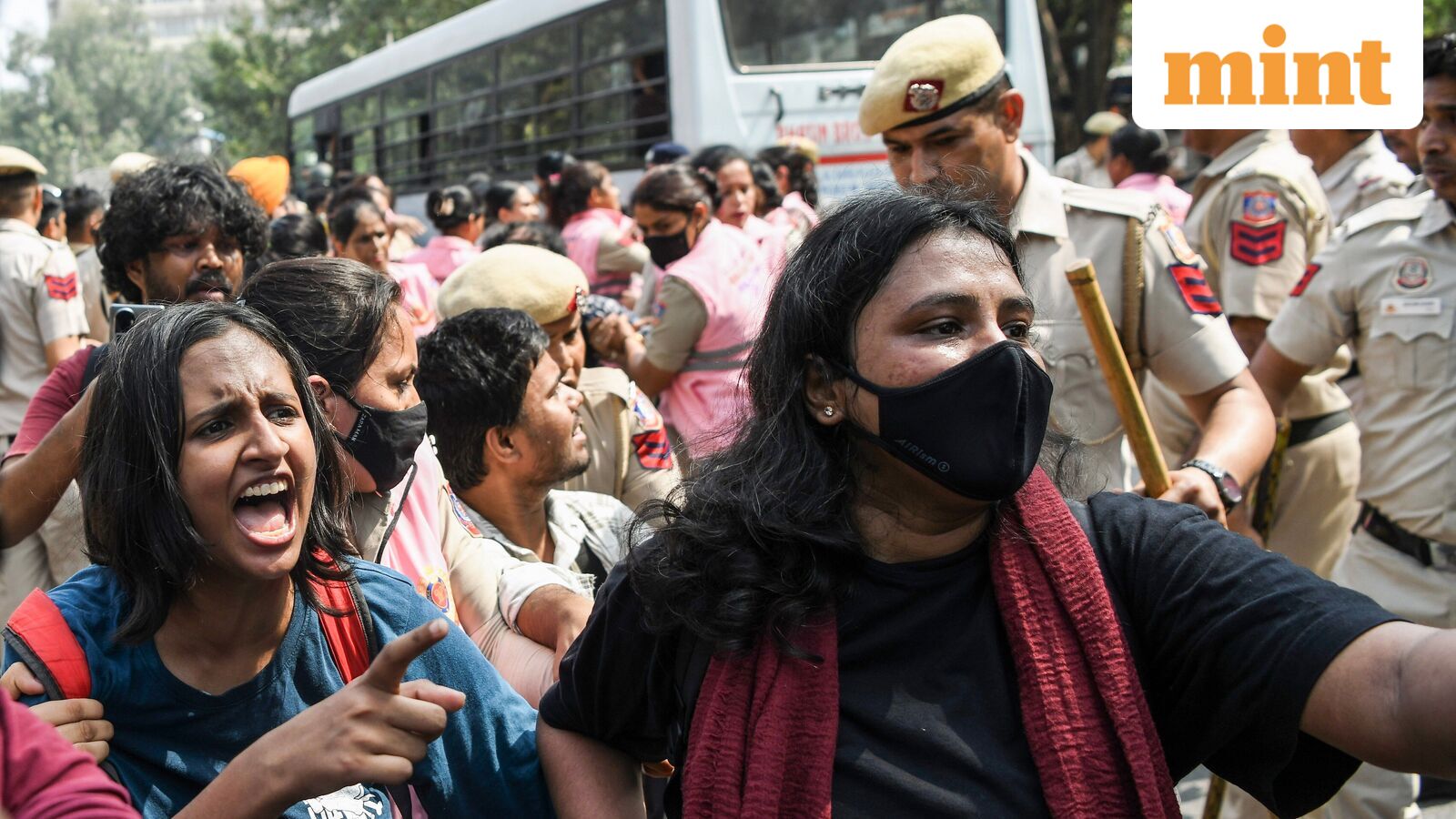
Social media erupted in outrage after weekend demonstrations in central Delhi, where protestors demanded the resignation of Chief Election Commissioner Gyanesh Kumar over alleged irregularities in the Special Intensive Revision of electoral rolls. Netizens and civil society groups claimed that women protestors were manhandled by male police officers and detained after dusk. The incidents have drawn attention to the statutory safeguards for women under the Bharatiya Nagarik Suraksha Sanhita (BNSS), 2023, and raised questions about police power during public demonstrations.
Section 43(5) of the BNSS generally prohibits the arrest of a woman between sunset and sunrise, except in genuinely compelling circumstances. A female police officer must submit a written report explaining the necessity of a nighttime arrest, and prior written permission must be obtained from a Judicial Magistrate First Class. The restriction applies from sunset, not automatically from 6 PM. Ordinarily, a woman is presumed to submit to custody after oral intimation of arrest, so a male officer should not need to touch her. Any physical contact must be justified by the circumstances and must not involve unnecessary or excessive force.
If a detention continues without lawful authority, a woman can approach the Delhi High Court under Article 226 for a writ of habeas corpus or challenge the arrest before a magistrate at remand. She may also seek an independent investigation, departmental proceedings, or, in appropriate cases, compensation.
Videos shared by journalists show male security personnel grappling with and dragging demonstrators into transit vehicles, and other footage captures female demonstrators being shoved into police buses, with netizens claiming the detentions continued past 6:00 PM. Legal experts noted that routine protest policing does not qualify as an “exceptional circumstance” under Section 43(5). The law requires a female officer to make a written report and obtain prior written permission from a Judicial Magistrate First Class before any nighttime arrest can proceed.
The BNSS also contains a proviso to Section 43(1) that ordinarily presumes a woman submits to custody upon oral intimation of arrest and prohibits a male police officer from physically touching her unless circumstances otherwise require. Physical contact must be justified and cannot involve unnecessary or excessive force. If police personnel are found to have breached these safeguards, detainees have multiple constitutional and judicial avenues, including writ petitions, criminal prosecution of officers (subject to government sanction), and filing representations before human rights commissions.
The legal experts emphasized that the burden of proof lies with the police if physical force is used by male officers, and that unnecessary or disproportionate contact can amount to a violation of statutory safeguards and breach fundamental rights under Article 21.