Climate & Environment
Indonesian Forest Fires Trigger Worst Regional Haze Crisis Since 2015, Sickening Millions
By Patrick Lee, Zaheena Rasheed
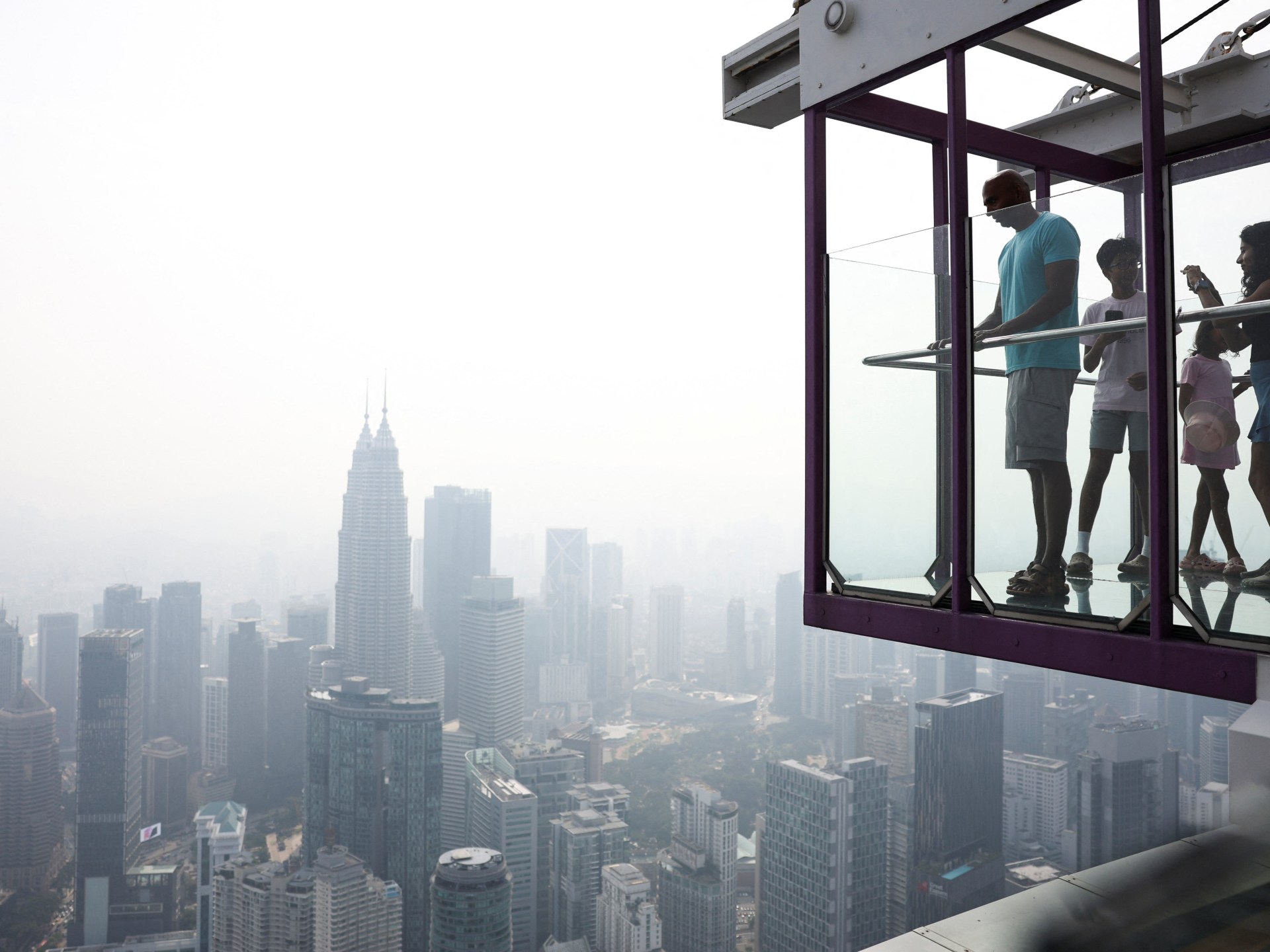
Smoke from forest and peatland fires in Indonesia has blanketed parts of Malaysian Borneo with hazardous air pollution, causing a sharp rise in respiratory illnesses and forcing the cancellation of outdoor Independence Day events. The haze, originating from fires in Kalimantan, has spread across the Malaysian state of Sarawak throughout August and reached peninsular Malaysia, Brunei, and Singapore.
This marks the worst haze episode in the region since 2015, when Indonesian fires exposed tens of millions to toxic smoke and caused more than 500,000 respiratory illness cases.
On Tuesday, six areas in Sarawak recorded hazardous air quality levels exceeding 300 on Malaysia's Air Pollutant Index, a scale where readings above 100 are considered unhealthy. Kuching, the state capital, recorded a reading of 407, while Serian, near the Kalimantan border, hit 408.
Mia Emylia Hassan, a 33-year-old mother in Kuching, described the air as thick with smoke, reducing visibility to about one kilometer. Her 10-month-old daughter, recently released from the hospital after a lung infection, has struggled to recover due to the haze, requiring two emergency room visits when she had difficulty breathing.
Malaysia's Ministry of Health reported that asthma cases nationwide surged to 1,811 during the week of August 23-29, up from 219 the previous week. Conjunctivitis cases also rose from 146 to 720 in the same period.
Karen-Michaela Tan, a 52-year-old asthma patient near Kuala Lumpur, said she experienced audible wheezing and breathlessness, requiring nebulizer treatments and steroids despite keeping her home sealed with air purifiers running constantly.
The Association of Southeast Asian Nations (ASEAN) activated its highest-level transboundary haze alert for the southern region, citing increased fire hotspots and prolonged dry conditions linked to an intensifying El Nino pattern.
Sarawak canceled outdoor Independence Day celebrations, and Deputy Premier Douglas Uggah Embas warned that areas recording pollution index readings above 500 would be placed under local emergency measures, closing all but essential public and private offices.
Schools have also been affected. Education Ministry rules require outdoor activity suspension when the index reaches 100 and full closures at 200. Nearly 600 schools around Kuching closed on August 20-21, affecting about 200,000 students, and 30 more schools closed on August 28, impacting over 4,000 children. Youth sports programs, including a Kuala Lumpur football academy, have also suspended outdoor activities.
In Indonesia, the impact has been more severe. Deputy Health Minister Dante Saksono Harbuwono said approximately 13,500 people were treated for respiratory infections in July and August, with about 5.5 million people on Borneo and Sumatra directly exposed to smoke.
Government data shows more than 200,000 hectares burned between January and July across Borneo and Sumatra, with nearly 95,000 hectares burned in July alone. Fires have intensified in West Kalimantan, where hotspots nearly doubled to 7,377 on Monday, according to Berton Panjaitan of Indonesia's National Disaster Mitigation Agency. Central Kalimantan saw a slight decline in hotspots to 5,244, though active fire spots rose to 72.
Air quality readings in Kalimantan cities reached extreme levels, with Palangkaraya hitting 780 and Pontianak reaching 593 on the IQAir index.
Analysts say many fires are deliberately set by plantation companies and smallholders to clear land for palm oil, farming, and paper production, despite this practice being illegal. Indonesian police reported arresting 72 people suspected of setting recent fires.
Experts warn conditions could worsen. Helena Varkkey, a transboundary haze specialist at Universiti Malaya, said El Nino appears to be reaching "super" strength, intensifying heat and dryness across Southeast Asia. Malaysian atmospheric scientist Jayaprakash Muralitharan said peatland fires can smolder underground for weeks, resisting extinguishing efforts until sustained rainfall arrives. He estimated relief may not come until late September or October when seasonal rains typically begin.