India
US Grain Industry Pushes Maize for India’s Expanding Ethanol and Aviation Fuel Markets
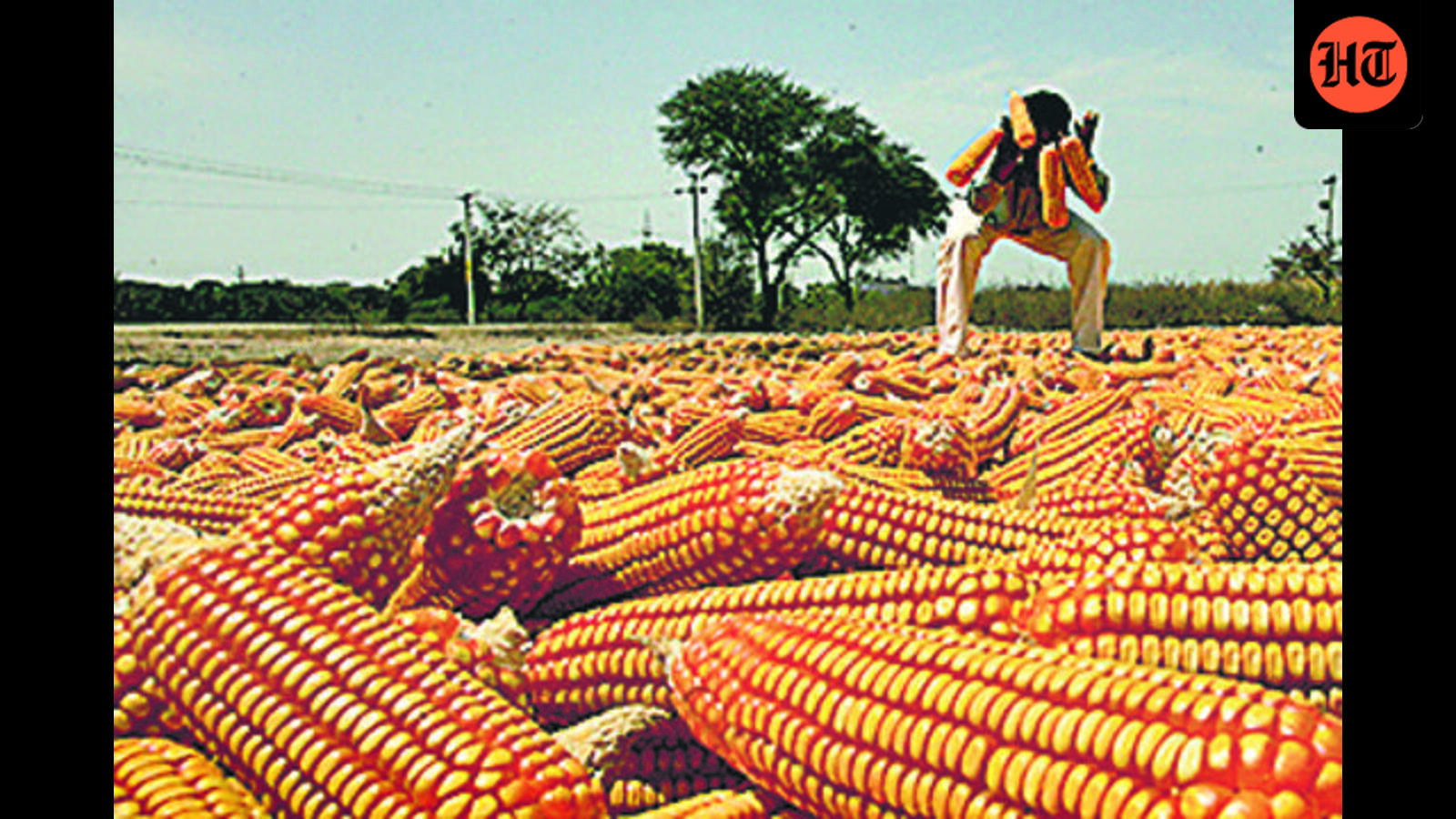
The U.S. grain sector is seeking to introduce American maize into India’s growing ethanol economy, arguing that corn should be evaluated by its life‑cycle carbon emissions rather than its status as imported genetically modified grain. The pitch was made at a full‑day U.S.–India biofuels summit in New Delhi on September 22, where the U.S. Grains & BioProducts Council and the U.S.–India Strategic Partnership Forum convened industry and policy stakeholders to discuss higher ethanol blending, sustainable aviation fuel (SAF), and new uses for ethanol.
A dedicated session titled “Lifecycle Assessment of Maize to Ethanol – India & U.S. Case Studies” was part of the agenda, which also covered on‑road blending in both countries, ethanol‑based cooking, sustainable marine fuel, ethanol in consumer products, and its impact on rural economies.
Participants said the U.S. side is exploring several entry points into the Indian market, including higher ethanol blends, SAF, and cooking ethanol. One source noted that the broad proposal is to continue using Indian feedstock for the existing E20 programme while assessing whether U.S. maize could be used for higher blends such as E85, particularly for flex‑fuel vehicles. The argument is that India should compare the carbon intensity of different feedstocks—the greenhouse‑gas emissions associated with producing and using a fuel—rather than reject imported maize solely because it is U.S.‑origin or genetically modified.
The life‑cycle argument is significant because India and the U.S. currently approach ethanol differently. The U.S. system increasingly emphasizes the carbon‑intensity value of fuels, while India’s ethanol programme has largely been driven by administered procurement prices, feedstock availability and blending requirements. An industry representative said the U.S. Grains & BioProducts Council has commissioned the Indian Institute of Petroleum (IIP) to conduct a life‑cycle assessment (LCA) of maize‑based ethanol. The study is still being finalized and has not yet been released publicly. The assessment is expected to compare the emissions associated with different feedstocks used to produce ethanol.
Preliminary work on Indian feedstocks found maize to have a relatively low carbon‑intensity value, but a source cautioned that U.S. and Indian maize cannot be compared until the full study is released. The U.S. side is therefore seeking to make carbon intensity part of the conversation around future ethanol policy in India. This does not necessarily mean India will agree to import U.S. maize. India’s agricultural policy, according to several government statements, remains protective of domestic farmers, and the government has repeatedly ruled out compromising on maize and other sensitive farm commodities in trade discussions.
India achieved its 20% ethanol‑blending target ahead of the original 2030 deadline, but the government has said that any increase in nationwide blending beyond E20 will be considered only after further scientific and technical studies. E85 has already been introduced for flex‑fuel vehicles and is not the same as raising the nationwide petrol‑blending mandate, creating a potential opening for the U.S. industry. Rather than seeking immediate access to India’s existing E20 market, the U.S. grain industry appears to be looking at the feedstock requirement that could emerge if India develops a much larger market for E85 and other higher ethanol blends.
One proposal discussed was to use Indian feedstock for the existing 20% blend and consider U.S. corn for higher blends as the market develops. The distinction matters because India has so far maintained that fuel ethanol for its blending programme is sourced from domestic producers. In August, the commerce ministry explicitly said there had been no concession or commitment to import U.S. ethanol for fuel blending. Importing maize as a feedstock for processing in India would be a different proposition from importing finished ethanol, but it would still raise questions around farm protection, food and feed demand and India’s restrictions on genetically modified agricultural material. Those questions are politically sensitive because farmers are a large and influential electoral constituency in India.
The issue has surfaced again this year. Farmer organisations have repeatedly protested against the proposed India‑U.S. trade deal, arguing that greater access for American agricultural products could hurt domestic farmers. The government, for its part, has repeatedly said agriculture is a red line. Agriculture minister Shivraj Singh Chouhan said in February that there would be “no compromise” on farmers’ interests and specifically said the door was closed to imports of wheat, rice, maize and dairy products. India’s import rules also require regulatory approvals for genetically modified (GM) material, while the government has maintained a case‑by‑case approach to GM crops.
The U.S. pitch could, however, find interest among automobile manufacturers that have invested in flex‑fuel technology but are struggling to create a mass market for it. India launched its first flex‑fuel passenger vehicle in June. The government has also laid out a plan to expand E85 dispensing, with an initial roll‑out in Delhi‑NCR and other major corridors and a much larger network planned thereafter. But sales of flex‑fuel vehicles have remained weak, and the petroleum ministry has asked automakers to provide a roadmap for launching such vehicles as it seeks to build demand. The problem for manufacturers is that a consumer has little reason to buy a flex‑fuel vehicle unless the higher ethanol blend is made widely available, cheaper and conveniently accessible. The auto industry has therefore been pushing for cheaper E85 and additional policy support. In fact, automakers have time and again sought lower prices for high‑ethanol fuels and tax benefits to encourage consumer adoption. E85 was introduced in Delhi at ₹82.12 a litre and in Mumbai at ₹91.18 a litre. People familiar with industry calculations say imported U.S. corn‑based ethanol could potentially lower the cost of E85 to around ₹60‑65 a litre, which would give automakers a much stronger argument for expanding flex‑fuel vehicles.
The U.S. pitch is not limited to road transport. According to a source, the September discussions said U.S. companies are also looking at investments in sustainable aviation fuel (SAF) facilities in India, particularly through alcohol‑to‑jet (ATJ) technology, which converts alcohol such as ethanol into aviation fuel. “SAF may be another way for the U.S. to enter India in a big way despite some outrage as most common people do not associate SAF with ethanol. Moreover, it causes no harm to the general public,” one of the persons quoted above said. India already has a substantial ethanol‑distillery base. The challenge is connecting that capacity with ATJ technology, certification and a long‑term demand framework. This industry representative said U.S. expertise could be useful in technology, infrastructure and certification, areas where India is still building capabilities. Certification is particularly important because airlines will require recognised sustainability certification before they can use the fuel in commercial aviation. Currently, the industry is looking for a demand trajectory extending beyond 2030, rather than a short‑term mandate, to justify investment in ATJ facilities. The U.S. could potentially participate through technology, investment and certification expertise, while Indian distilleries provide the ethanol base.
The U.S. grain industry is not looking to enter India immediately but is working on a longer plan as it sees India eventually needing substantially more ethanol than its domestic feedstock base can comfortably provide, which can make U.S. maize a potential source.