Science
New Study Shows Heisenberg’s German Reactor Was Far from Critical
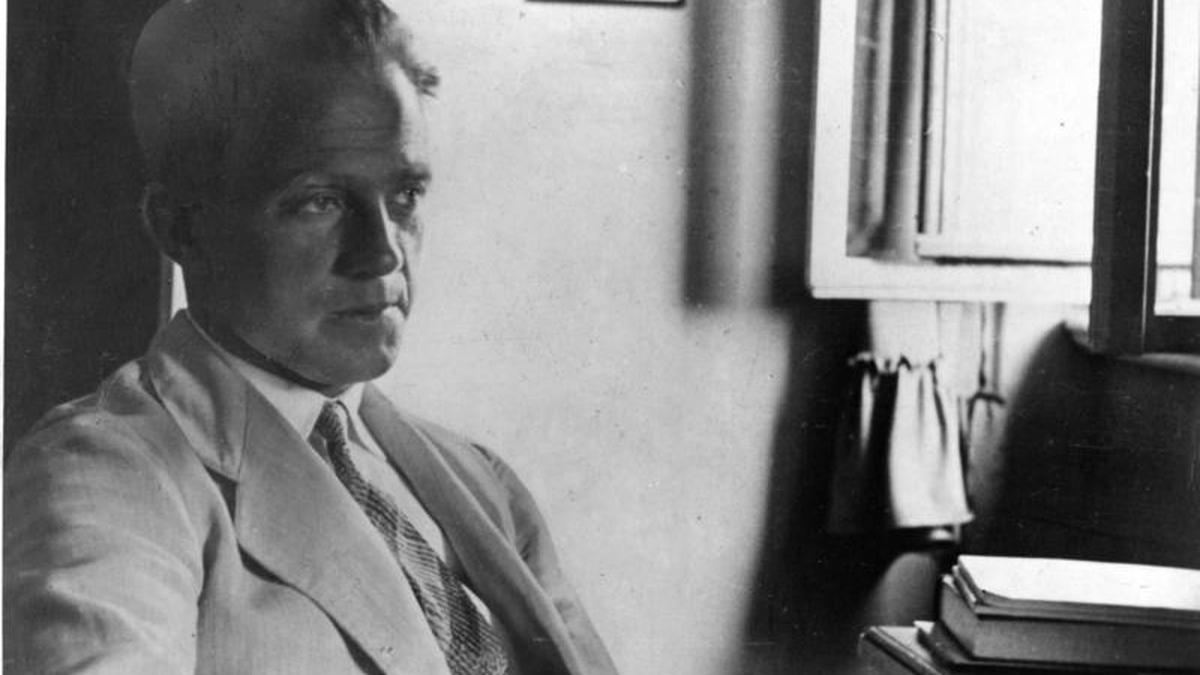
A recent study published in PNAS Nexus has found that the German nuclear reactor built by Werner Heisenberg and his team in Haigerloch was not close to achieving criticality, contrary to post‑war claims. The reactor, known as the B8 pile, was assembled in a church cellar in April 1945 and consisted of 664 uranium cubes suspended on chains in about 1,400 litres of heavy water. The cubes were surrounded by a 40‑cm graphite shell, an aluminium layer, and a 60‑cm layer of ordinary water. Heisenberg’s team had spent six years constructing the pile, but when neutrons were introduced the reactor did not sustain a chain reaction.
Heisenberg later wrote in a 1947 Nature article that the Haigerloch site lacked sufficient resources and that a small increase in uranium quantity could have made the reactor critical. The new research, conducted by U.S. scientists, examined surviving uranium cubes from the B8 pile. Only about 14 of the original 1,100 cubes remain. One cube measured a density of 18.535 g/cm³, lower than the 19.01 g/cm³ of solid uranium, indicating porosity. Another cube contained 0.724 % uranium‑235 by mass, showing it was natural rather than enriched.
The study also investigated the purity of the heavy water used. A 1944 report by Karl Wirtz noted that German heavy water stocks had been diluted to 98.85 % purity, and a post‑war sample from Haigerloch in 1947 showed only 96.8 % purity. Using records from Norsk Hydro, the researchers estimated that Germany’s maximum supply of pure heavy water during the war was 1,836 kg. From these data, they calculated the neutron multiplication factor of the B8 pile to be 0.942, well below the critical value of 1. Even if the heavy water had been 100 % pure, the factor would have risen only to 0.95.
Simulations of more than 1,200 combinations of uranium and heavy water revealed that the B8 pile would have required at least 2,994 kg of uranium and 3,411 litres of heavy water to become critical. In reality, the pile contained 1,538 kg of uranium and 1,549 kg of heavy water. The study also estimated that all German facilities combined possessed only 2,572 kg of uranium and 1,890 kg of 96.8 %‑pure heavy water, a shortfall that could support a maximum factor of 0.959.
The first U.S. reactor, Chicago Pile‑1, achieved criticality on 2 December 1942 using natural uranium and graphite as a moderator. Some historians have suggested that Heisenberg’s choice of heavy water was a mistake. A 2025 study in The European Physical Journal H argued that German graphite, produced from metallurgical coke, contained high levels of boron, which absorbs neutrons. The B8 pile’s graphite, derived from the earlier B7 pile, had 3.4 weight‑parts per million of boron, compared with 1.4 wppm in the Manhattan Project’s graphite. Simulations showed that this contamination made criticality impossible, regardless of the spacing of the uranium cubes.
The study concludes that the primary difference between the German and American programs was industrial capacity. The United States built extensive facilities for uranium enrichment, reactor construction, and chemical separation, creating 130,000 jobs and investing $2.2 billion at the peak. Germany lacked comparable infrastructure. While some questions about the Nazi nuclear program remain—such as whether German scientists deliberately delayed the bomb project—the available evidence suggests that their material base and supply chains were insufficient for a functional nuclear weapon. The Manhattan Project scientists’ concerns about a German bomb were therefore understandable given the information available at the time.
Published by mukunth.v@thehindu.co.in on 6 October 2026 at 08:15 am IST.
Frequently asked questions
What was the neutron multiplication factor of Heisenberg’s B8 pile?
The study calculated a neutron multiplication factor of 0.942, below the critical value of 1.
How much uranium and heavy water were needed for the B8 pile to reach criticality?
Simulations indicated at least 2,994 kg of uranium and 3,411 litres of heavy water were required.
What was the purity of the heavy water used in the B8 pile?
Post‑war samples showed the heavy water had 96.8 % purity, while earlier stocks were diluted to 98.85 %.