India
GST Council Unveils Major Procedural Reforms, Removes Arrest Powers and Streamlines Refunds
By TNN
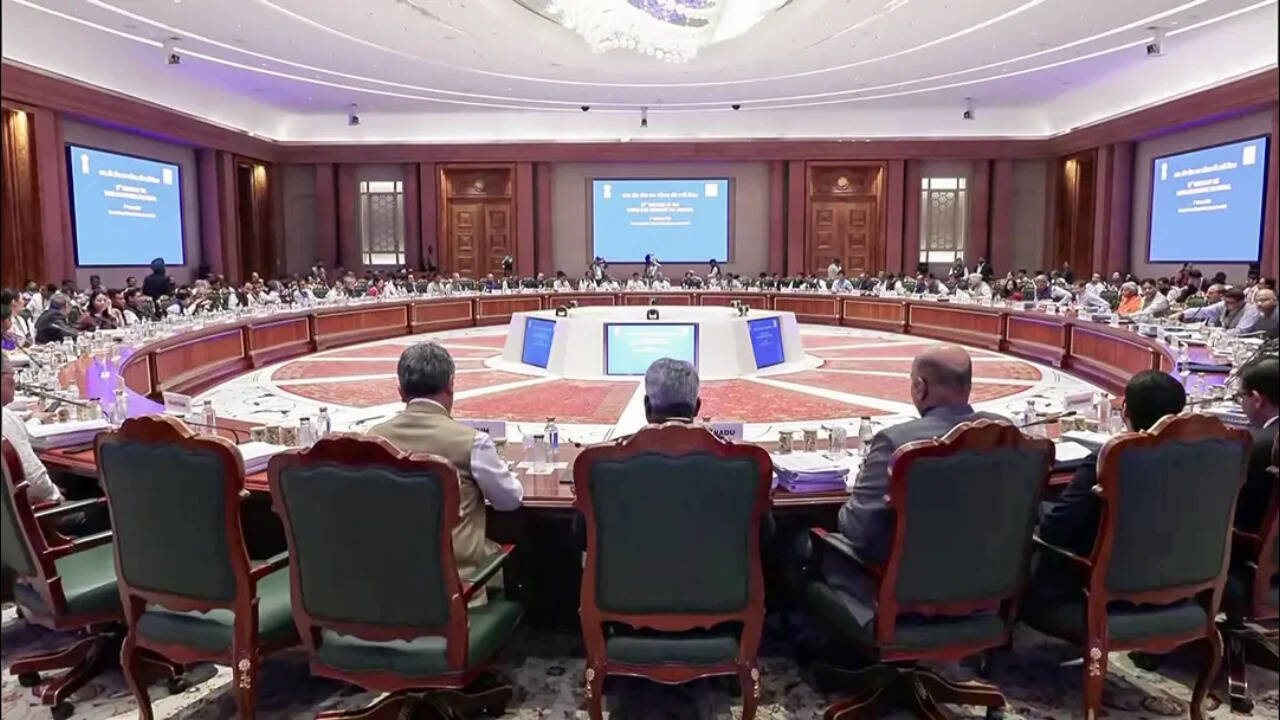
NEW DELHI – On Friday, the GST Council approved a comprehensive overhaul of procedures that will reshape how businesses operate, obtain refunds and credit for taxes paid, and reduce truck stoppages. The changes, part of GST 2.0, are slated to take effect from April and include amendments to the law and system upgrades.
The council, chaired by Finance Minister Nirmala Sitharaman, reached unanimous decisions on most items but deferred two matters. One concerns limiting input tax credit (ITC) for entities that collect tax but have not deposited it; a panel of officers will finalize recommendations within three months for an April implementation.
Prime Minister Narendra Modi praised the council’s recommendations on removing arrest provisions, increasing decriminalisation and simplifying procedures, noting that the focus is on faster decisions, lower compliance costs, automated refunds and a trust‑based administration.
Key changes include: - Abolition of arrest powers for officers under section 69 of the Central GST Act, a power that had not existed under the former VAT regime. - Raising the monetary threshold for prosecution five‑fold to ₹5 crore and rationalising punishment under section 132 of the CGST Act. - Reforms in dispute resolution: no notices will be issued for tax amounts under ₹10,000, and notices in the existing 12 lakh‑plus cases will be withdrawn. - Penalties will be treated as a “charge”; voluntary payment of tax will attract a reduced penalty of 5% if interest is paid within 30 days, or 60 days in adjudication cases. - The maximum general penalty will be cut from ₹25,000 to ₹10,000, and the pre‑deposit limit for appeals will be capped at ₹40 crore. - To reduce truck stoppages, officials in states other than the origin and destination will no longer intercept vehicles unless a joint commissioner officer has specific information. - Refund processing will aim to clear 90% of claims within three days, with acknowledgement periods reduced from 15 to 10 days and a deemed acknowledgement system introduced. - Input tax credit simplifications will allow businesses to claim refunds for accumulated ITC on capital goods, with a facility available from November that can be spread over 60 months to support long‑gestation projects. - Restrictions on ITC use for supplies such as health and life insurance, outdoor catering, free samples, telecom towers and factory pipelines will be removed. - Services sector simplifications will benefit exports. - Small businesses with up to ₹5 crore turnover selling only to consumers (B2C) will be allowed to file annual returns in principle. - E‑commerce sellers will not need to register in multiple states, benefiting about 90% of such sellers. - Registration rationalisation will enable most businesses to register within three days and allow automatic changes except for altering the principal place of business. - Return filing will be simplified to automate details and move toward an invoice management system.
These reforms aim to make GST more efficient, transparent and citizen‑friendly, according to the council’s statements.
Frequently asked questions
What are the key procedural changes introduced by the GST Council in GST 2.0?
The council abolished arrest powers under section 69 of the CGST Act, raised the prosecution threshold to ₹5 crore, removed notices for tax amounts under ₹10,000, reduced the maximum general penalty from ₹25,000 to ₹10,000, streamlined refund processing to clear 90% of claims within three days, simplified input tax credit rules for capital goods, removed restrictions on ITC for certain supplies, and eased e‑commerce registration requirements.
How will GST refunds be processed after the reforms?
Refund processing will aim to clear 90% of claims within three days, acknowledgement periods will be reduced from 15 to 10 days, and a deemed acknowledgement system will be introduced.
What changes affect small businesses and e‑commerce sellers?
Small businesses with up to ₹5 crore turnover selling only to consumers can file annual returns in principle, and e‑commerce sellers will no longer need to register in multiple states, benefiting about 90% of such sellers.