Climate & Environment
Aldabra Atoll Hosts Record 180,000 Giant Tortoises, Study Finds
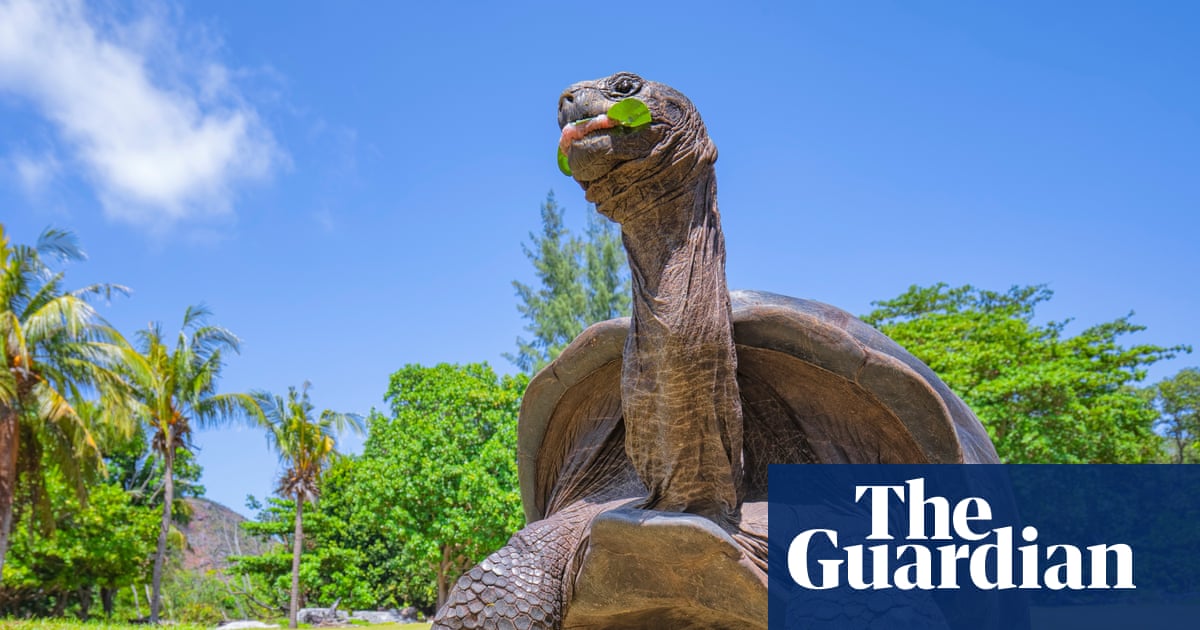
A recent survey of the world’s largest free‑roaming population of Aldabra giant tortoises has shown the species is thriving. The study, conducted by the Seychelles Islands Foundation (SIF) and the University of Exeter, estimated that about 180,000 tortoises live on Aldabra Atoll, the highest figure ever recorded for the species and far more than the human population of Seychelles. Researchers analysed five years of tortoise counts from 2018 to 2022, providing the first update since the late 1990s figure of 100,000. Aldabra Atoll is one of only two places in the world where giant tortoises are found in the wild, the other being the Galápagos. Dr Frauke Fleischer‑Dogley, CEO of SIF, said the number proves what long‑term conservation can achieve and is “wonderful news for Seychelles, for the world, and for everyone who has worked to protect Aldabra.” The study, published in *Ecology and Evolution*, estimates a stable population of almost 183,000 adult and sub‑adult tortoises. In the 19th century exploitation left fewer than 1,000 on the island, but a recovery programme led to the atoll becoming a strict nature reserve in 1981 and a UNESCO site in 1982. Dr Nancy Bunbury, a co‑author, noted that dense vegetation makes counting difficult, but modelling unseen individuals produced the most reliable baseline yet. The authors caution that vigilance remains essential. Climate change is expected to bring longer, more frequent droughts that could reduce shade and food, while rising sea levels threaten low‑lying areas. Invasive mammals such as feral cats and black rats still prey on eggs and hatchlings; their planned eradication could allow further population growth and resilience to climate pressures. Dr Dave Hudson, a postdoctoral research associate at Exeter’s Cornwall campus, said the results are “great news for the tortoises and testament to the fantastic work done in the field,” but that the numbers provide a baseline, not an endpoint, and that conservation managers need the evidence to track future change and act early as pressures increase.
Frequently asked questions
How many Aldabra giant tortoises are estimated to live on Aldabra Atoll?
About 180,000 tortoises, with a stable population of almost 183,000 adult and sub‑adult individuals.
Why is Aldabra Atoll important for giant tortoise conservation?
It is one of only two places in the world where giant tortoises are found in the wild, and a recovery program turned it into a strict nature reserve in 1981 and a UNESCO site in 1982.
What threats could affect the Aldabra giant tortoise population?
Climate change may bring longer, more frequent droughts and rising sea levels, while invasive mammals such as feral cats and black rats prey on eggs and hatchlings.