India
IAF Demonstrated Rapid Strike Capability During Operation Sindoor, Chief Highlights Air Power’s Role
By Rahul Singh
In the early hours of May 7, 2025, the Indian Air Force (IAF) struck two terror sites in Pakistan’s Punjab province: Markaz Subhanallah in Bahawalpur and Markaz Taiba near Muridke. The army also hit targets at seven locations, including Mehmoona Joya in Sialkot, Sawai Nala and Syed Na Bilal in Muzaffarabad, Gulpur and Abbas in Kotli, Barnala in Bhimber, and Sarjal. On May 9–10, 2025, the IAF targeted military sites in Rafiqui, Murid, Chaklala, Rahim Yar Khan, Sukkur, Chunian, Pasrur, Sialkot, Skardu, Sargodha, Jacobabad, Bholari and Malir Cantt in Karachi.
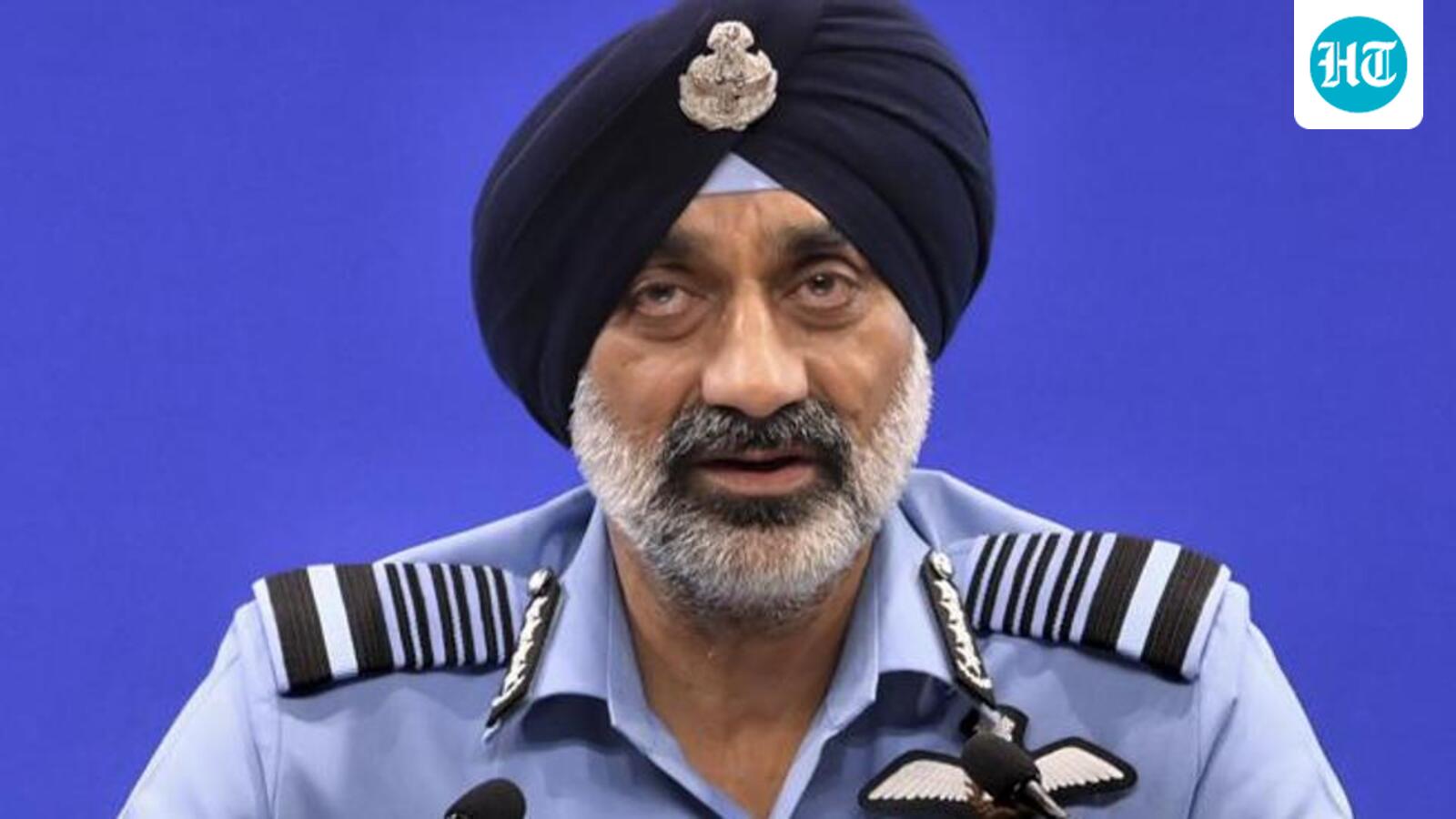
Air Chief Marshal AP Singh, speaking at the IAF Day address at Hindan air force station, said the four‑day confrontation last year showcased the IAF’s speed and effectiveness in combat operations. He emphasized that air power is the primary means of protecting national interests amid rapidly changing global circumstances.
Singh, who will retire on October 31, highlighted the importance of personnel, noting that an air force’s true strength lies in its operational preparedness and ability to act swiftly. He referenced the IAF’s tagline “Infallible, Impervious, and Precise” and stressed the role of professional training for aircrew and ground crew.
The chief also mentioned ongoing initiatives such as Vayu Shakti, Dronathon, and the multilateral air exercise Tarang Shakti, which involve more than 80 Indian and foreign aircraft, including fighters from the F‑35 to the locally produced Tejas. Eight air forces—US, France, Germany, UAE, Australia, Bangladesh, and Sri Lanka—participated, along with 32 observers from Brazil, Egypt, Italy, Japan, Malaysia, Oman, Singapore, South Africa, Thailand, and Vietnam.
Singh discussed the IAF’s adoption of artificial intelligence, autonomy, and digital innovation, describing the use of AI to analyze large data sets for decision‑making and the development of autonomous systems with “man‑in‑the‑loop.” He also highlighted efforts to bolster self‑reliance, citing indigenous systems such as the Tejas, advanced medium combat aircraft, HTT‑40 trainer, Dhruv and Prachand helicopters, Astra missiles, Akash air defence systems, and BrahMos missiles. The IAF’s top priority remains rapid adoption of emerging technologies while maintaining human authority at the centre.