Climate & Environment
Saudi Arabia Sees Rare Snowfall as Desert Dunes Turn White for the First Time in Decades
By admin
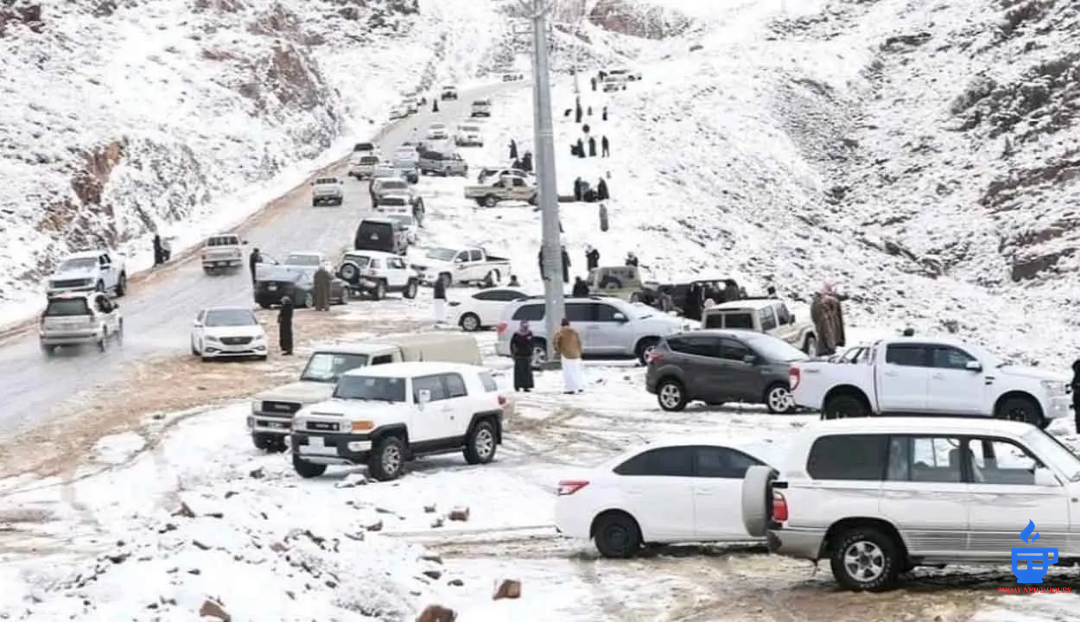
<hr class="wp-block-separator has-alpha-channel-opacity"/> <p>In an extraordinary weather event, <strong>Saudi Arabia</strong> has witnessed a <strong>rare snowfall</strong> that blanketed the desert landscape, a sight unseen for <strong>30 years</strong>. The <strong>snowfall</strong>, which began on <strong>December 17, 2025</strong>, and continued through the week, has transformed the <strong>golden sand dunes</strong> of the kingdom into a stunning winter wonderland.</p> <hr class="wp-block-separator has-alpha-channel-opacity"/> <h3 class="wp-block-heading"><strong>Snow Sweeps Across Saudi Arabia</strong></h3> <p>Regions including <strong>Tabuk</strong>, <strong>Hail</strong>, <strong>Qassim</strong>, and areas near the <strong>capital Riyadh</strong> were affected by this unexpected weather event, with temperatures plummeting to <strong>freezing levels</strong>. In the <strong>Tabuk</strong> region, temperatures dropped as low as <strong>-4°C</strong> at <strong>Jabal Al-Lawz</strong>, a location known for its mountain peaks, making the snow even more remarkable for <strong>Saudi Arabia’s usually warm climate</strong>.</p> <hr class="wp-block-separator has-alpha-channel-opacity"/> <h3 class="wp-block-heading"><strong>The Cause of the Cold Snap</strong></h3> <p>The <strong>National Center of Meteorology (NCM)</strong> attributes this unusual cold wave to a <strong>deep low-pressure system</strong> originating from the <strong>Mediterranean Sea</strong>, which pushed <strong>frigid air</strong> southward into the Arabian Peninsula. According to <strong>Hussein Al-Qahtani</strong>, spokesperson for the NCM, the cold air interacted with <strong>rain-bearing clouds</strong>, resulting in the <strong>unprecedented snowfall</strong>.</p> <hr class="wp-block-separator has-alpha-channel-opacity"/> <h3 class="wp-block-heading"><strong>Snowfall in Unlikely Locations</strong></h3> <p>While snow is often seen on the <strong>mountain peaks</strong> in Saudi Arabia, it’s rare for it to cover <strong>desert plains</strong>. This time, snow was recorded in <strong>Al-Majmaah</strong>, <strong>Al-Ghat</strong>, and even areas near <strong>Riyadh</strong>, with snow accumulating on <strong>open fields</strong> and elevated terrain. In <strong>Al-Ahsa</strong>, known for its <strong>warm climate</strong>, residents were also taken by surprise when snow began to fall.</p> <figure class="wp-block-image size-large"><img src="/news-images/fd4b317af97cd0bcedb6.png" alt="Snow in Saudi Arabia Al-Jawf" class="wp-image-430"/></figure> <hr class="wp-block-separator has-alpha-channel-opacity"/> <h3 class="wp-block-heading"><strong>Historical Context: Cold Waves in Saudi Arabia</strong></h3> <p>The NCM noted that the most intense cold wave in Saudi Arabia's history occurred in <strong>1992</strong>, when <strong>Hail</strong> station recorded temperatures as low as <strong>-9.3°C</strong>. However, in <strong>January 1973</strong>, a powerful polar surge from <strong>Siberia</strong> brought <strong>20 cm of snow</strong> to <strong>Riyadh</strong>, an event that remains a significant part of Saudi Arabia’s weather history.</p> <hr class="wp-block-separator has-alpha-channel-opacity"/> <h3 class="wp-block-heading"><strong>Climate Change and the Warming Paradox</strong></h3> <p>Scientists suggest that <strong>climate change</strong> could be influencing extreme weather events like this one. Experts from the <strong>World Meteorological Organisation</strong> have highlighted that the Arab region is warming at a rate nearly <strong>twice the global average</strong>, leading to what’s known as the <strong>“warming paradox”</strong>. This phenomenon explains how higher global temperatures can hold more moisture in the atmosphere, resulting in <strong>increased intensity</strong> of <strong>extreme weather events</strong>, including <strong>both heatwaves</strong> and <strong>unforeseen cold snaps</strong>.</p> <hr class="wp-block-separator has-alpha-channel-opacity"/> <h3 class="wp-block-heading"><strong>Saudi Arabia’s Cold Future</strong></h3> <p>This rare snow event aligns with <strong>Saudi Arabia’s Vision 2030</strong>, which aims to develop a <strong>high-altitude winter destination</strong> in the <strong>Sarawat Mountains</strong>. As part of the <strong>$1.5 trillion Neom megacity project</strong>, <strong>Trojena</strong> will host the <strong>Asian Winter Games</strong> in <strong>2029</strong>, marking a major shift for the kingdom as it embraces a colder future in its economic strategy.</p> <hr class="wp-block-separator has-alpha-channel-opacity"/> <h3 class="wp-block-heading"><strong>Looking Ahead: More Extreme Weather?</strong></h3> <p>Climatologists are warning that while no single weather event can definitively confirm climate change, the <strong>growing frequency of unusual weather patterns</strong> across the region—ranging from <strong>flash floods</strong> to <strong>sudden cold spells</strong>—suggests that <strong>Saudi Arabia</strong> and surrounding areas may continue to experience more unpredictable <strong>weather extremes</strong> in the years ahead.</p>