Climate & Environment
Thick Fog Disrupts Delhi-NCR Morning as Air Pollution Stays at ‘Very Poor’ Levels
By admin
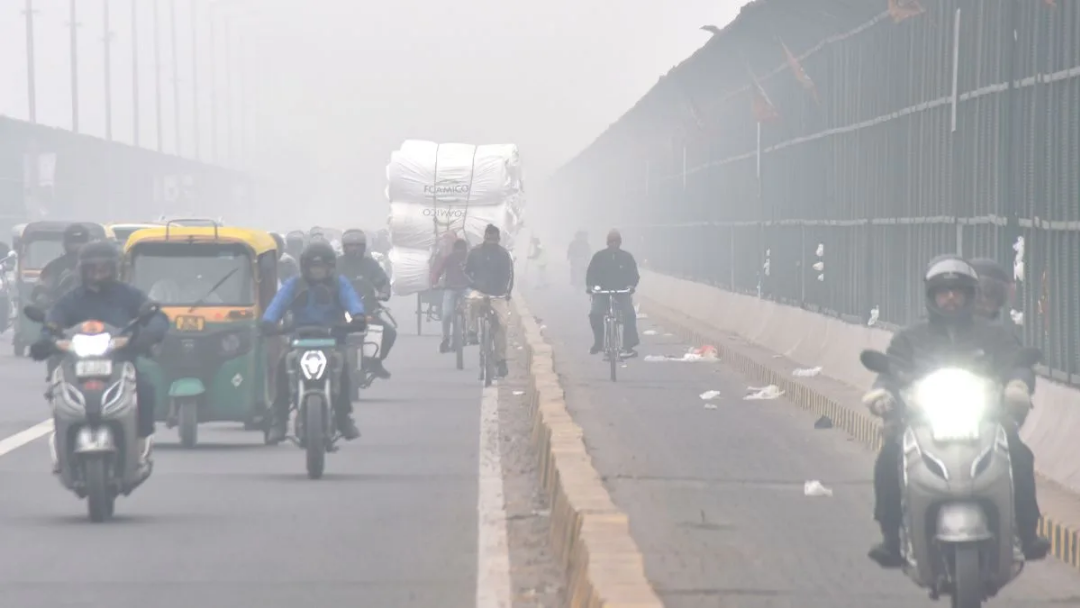
<hr class="wp-block-separator has-alpha-channel-opacity"/> <p><strong>Large parts of Delhi-NCR woke up to thick fog on Thursday morning, leading to sharply reduced visibility and slower movement across roads and highways in the region.</strong></p> <p><strong>According to the India Meteorological Department (IMD), dense fog conditions were recorded during early morning observations. Visibility levels dropped significantly at key locations, with Palam Airport reporting visibility as low as 150 metres, while Safdarjung Airport recorded around 200 metres.</strong></p> <hr class="wp-block-separator has-alpha-channel-opacity"/> <h3 class="wp-block-heading"><strong>Traffic Moves Slowly Across NCR</strong></h3> <p><strong>The foggy conditions had a visible impact on road traffic, especially along major routes connecting Delhi with Gurugram, Ghaziabad, and Noida. Vehicles were seen moving cautiously, and several morning commuters experienced delays due to poor visibility.</strong></p> <p><strong>Officials at Indira Gandhi International Airport (Palam) said visibility briefly dipped further to around 100 metres, but gradual improvement was expected as the day progressed. Authorities confirmed that no further decline in visibility was anticipated.</strong></p> <hr class="wp-block-separator has-alpha-channel-opacity"/> <figure class="wp-block-image size-large"><img src="/news-images/ca8e4c6ef6bab1107479.png" alt="Delhi fog flight delays" class="wp-image-319"/></figure> <h3 class="wp-block-heading"><strong>Fog Likely to Continue</strong></h3> <p><strong>Weather experts warned that early morning fog is likely to persist over the next few days as winter conditions strengthen across northern India. The IMD has forecast dense fog during the early hours on both Thursday and Friday, advising commuters to remain cautious.</strong></p> <hr class="wp-block-separator has-alpha-channel-opacity"/> <h3 class="wp-block-heading"><strong>Air Quality Remains a Concern</strong></h3> <p><strong>Alongside the fog, air pollution levels in the national capital remained high. Data from the Central Pollution Control Board (CPCB) showed the city’s Air Quality Index (AQI) at 358, placing it firmly in the ‘very poor’ category.</strong></p> <p><strong>Such pollution levels can cause breathing discomfort, particularly for people with respiratory conditions, children, and the elderly.</strong></p> <hr class="wp-block-separator has-alpha-channel-opacity"/> <h3 class="wp-block-heading"><strong>Temperature and Humidity Update</strong></h3> <p><strong>On the weather front, Delhi recorded a minimum temperature of 9°C, slightly above the seasonal average. The maximum temperature is expected to reach around 23°C later in the day.</strong></p> <p><strong>Humidity levels were extremely high, touching 100% in the morning, which contributed to the formation and persistence of dense fog.</strong></p> <hr class="wp-block-separator has-alpha-channel-opacity"/> <figure class="wp-block-image size-large"><img src="/news-images/9ae9dfd3d5d6fc943f97.png" alt="Delhi fog flight delays" class="wp-image-320"/></figure> <h3 class="wp-block-heading"><strong>Understanding AQI Levels</strong></h3> <p><strong>As per CPCB standards:</strong></p> <ul class="wp-block-list"> <li><strong>0–50: Good</strong><strong><br></strong></li> <li><strong>51–100: Satisfactory</strong><strong><br></strong></li> <li><strong>101–200: Moderate</strong><strong><br></strong></li> <li><strong>201–300: Poor</strong><strong><br></strong></li> <li><strong>301–400: Very Poor</strong><strong><br></strong></li> <li><strong>401–500: Severe</strong></li> </ul>