World
Carney's Investment Summit Nets Nearly C$500bn as Canada Courts Global Capital Amid US Trade Tensions
By Today News Hours Editorial Desk
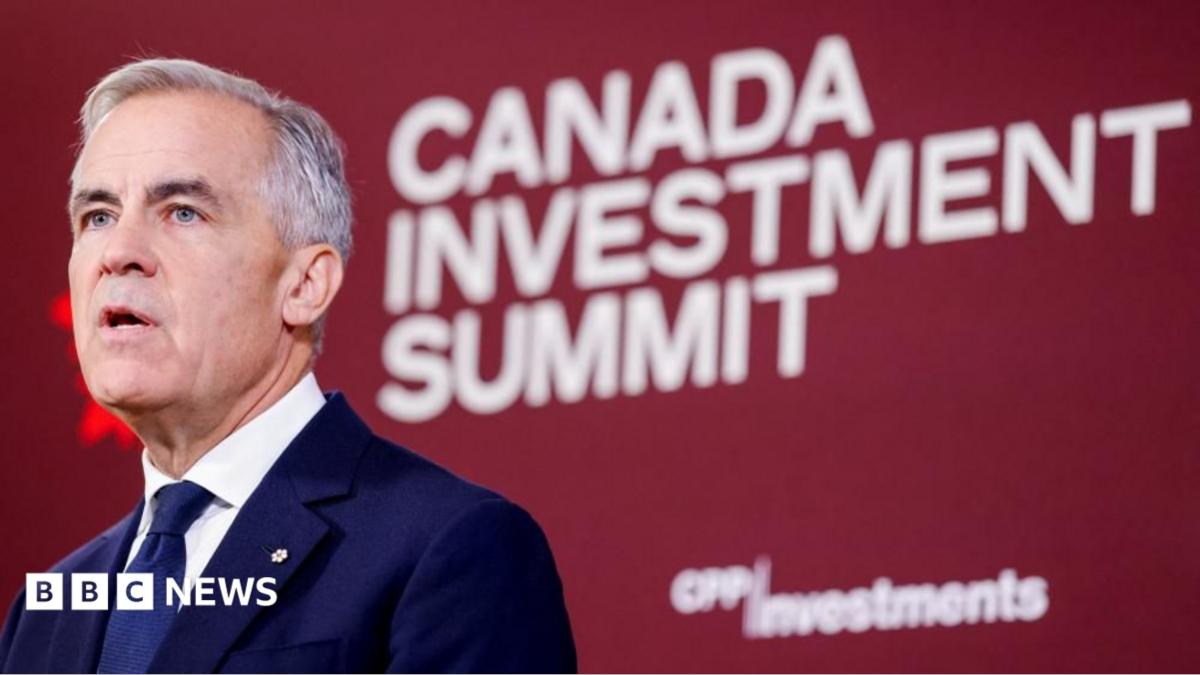
Prime Minister Mark Carney has positioned Canada as a "safe harbour" for major global investors, telling more than 100 financial leaders gathered in Toronto this week that the country is well-placed to thrive amid geopolitical and economic instability. Carney has pledged to attract C$1tn ($720bn; £530bn) in investments over five years, aiming to reduce Canada's economic dependence on the United States following the collapse of trade talks and a subsequent tariff dispute.
The two-day summit, which drew investors representing more than C$120tn in assets, showcased over 160 potential projects spanning data centres, pipelines and port expansions. The federal government introduced new tax incentives, including a "mega deduction" measure, and promised faster regulatory approvals for large-scale projects. Carney said Ottawa would aim for a one-year review timeline on major proposals, adding that "if we're going to say no, a quick no is necessary."
Analysts have said Canada must overhaul its tax and regulatory systems and secure a skilled labour supply to remain competitive for investment. On Monday, Carney met individually with executives including BlackRock's Larry Fink and Blackstone president Jon Gray.
Among the summit's major announcements was a plan to allow private investment in four of Canada's largest airports — in Toronto, Vancouver, Montreal and Calgary. Ottawa said the move could raise billions of dollars for reinvestment in transport infrastructure, including smaller regional airports. Under the plan, the federal government would retain ownership of land and core assets while opening airport operations to private capital. Canada's airports currently operate under a not-for-profit model, unlike many other developed nations.
The proposal drew criticism from labour groups. Lily Chang of the Canadian Labour Congress called it "exactly the wrong move" during a trade war, while Nick Barry-Shaw of the Council of Canadians described the summit as focused on "country selling" rather than "nation building."
According to Carney's office, the summit generated close to C$500bn in new investment commitments across sectors including critical infrastructure, digital technology, energy and defence. Artificial intelligence infrastructure emerged as a particular draw, with Cohere cofounder Aidan Gomez noting that Canada's cold climate, available land and clean energy grid make it well-suited for data centre development. RBC chief executive Dave McKay said there was strong alignment between government and industry priorities at the summit.
Despite the push to diversify economic partnerships, Carney reaffirmed Canada's relationship with the United States remains vital. Addressing American executives directly, he said, "We will always be neighbours, and Canada will continue to be the US's most important partner in many key areas." His remarks came as new US tariffs took effect on certain Canadian goods, while others were lifted; additional restrictions on products such as alcohol and motorcycles are set to begin next week.
Outside the summit's opening gala, hundreds of protesters gathered to denounce what they called a "great Canadian sell-off" of public resources to corporate interests. Kai Nagata of the advocacy group Dogwood argued that many of the invited buyers were American, warning that such deals risk drawing Canada closer to US influence.
Carney is next expected to travel to Europe, where he will address the EU parliament and pursue what his government describes as a new security and economic alliance with the bloc. McKay said Canada's geographic ties to the US will remain important, but stressed the need to diversify trade relationships. "I think Canadians have woken to opportunities in Asia and in Europe," he said.