World
Denmark Summons Russian Ambassador After Warship Fires Flares at Military Helicopter
By Today News Hours Editorial Desk
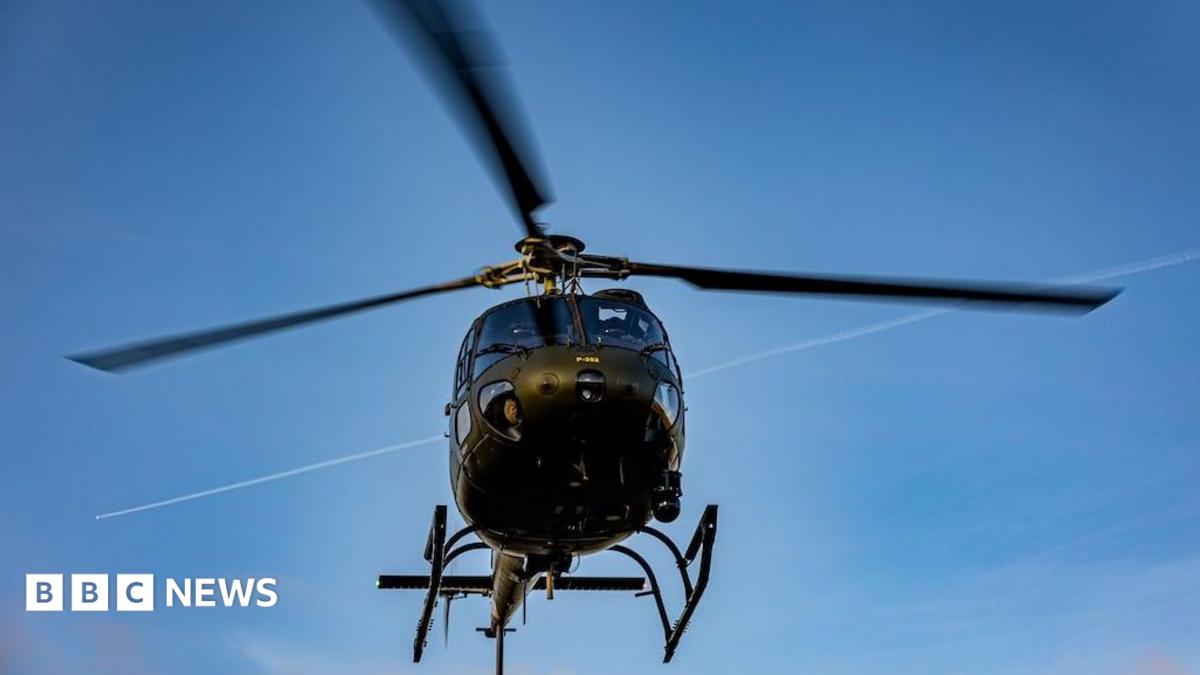
Denmark has lodged a formal protest with Russia after one of its military helicopters was targeted with flares fired from a Russian warship in the Baltic Sea. According to the Danish armed forces, a Fennec helicopter was conducting a routine photographic surveillance mission of a Russian frigate near Gedser, in international waters, on Monday when the vessel launched two emergency flares. One of the flares passed close to the aircraft.
Danish Prime Minister Mette Frederiksen condemned the incident as "reckless," saying it appeared intended to "intimidate and divide." The Danish government summoned the Russian ambassador in response. Foreign Minister Lars Lokke Rasmussen said Russia was "gradually shifting the boundary for what they consider acceptable behaviour," adding that such actions could not be tolerated. Danish officials called the episode "completely unacceptable."
Defence Minister Jeppe Bruus told Reuters that the frigate's crew made no attempt to establish contact with the helicopter before firing the flares.
Russian Ambassador Vladimir Barbin said Moscow would "thoroughly investigate all the circumstances of the incident," but placed blame on the Danish side, accusing the helicopter of conducting "provocative actions" and "dangerous manoeuvres" near Russian naval vessels. He noted this was not the first such incident, citing a similar complaint he had raised the previous year, and suggested any communication issues originated with the Danish military rather than the Russian Navy.
European Commission President Ursula von der Leyen described Russia's conduct as "reckless and dangerous" in a social media post, linking the incident to a broader pattern of what she called Russian aggression and provocation against Europe.
The flare incident coincided with a separate security episode in the region. Overnight, Nato fighter jets shot down a drone that entered Lithuanian airspace. Authorities believe the drone crossed into southern Lithuania, near Kaunas, from Belarus shortly after midnight on Tuesday, though its origin has not yet been confirmed. Lithuanian President Gitanas Nausėda linked the event to escalating Russian aggression, writing on social media that readiness to defend the country's airspace remains essential given the ongoing war in Ukraine, and affirmed that Lithuania would continue to defend its skies alongside Nato allies. Lithuania borders Belarus, a close ally of Russia, along much of its southern and eastern frontier.
Separately, Poland reported "aviation operations" in its airspace overnight Monday, attributing the activity to Russian jet-powered unmanned aerial vehicles involved in strikes on Ukrainian territory. Polish authorities described the response as preventive, aimed at securing airspace particularly in regions near the conflict.
These incidents add to a series of airspace violations this year in which Nato jets have been scrambled to intercept stray Ukrainian drones over Estonia and Latvia. Ukraine has attributed such incidents to Russian electronic warfare tactics designed to divert the flight paths of its drones.