World
Washington Imposes Visa Restrictions on South African Officials Amid Ongoing Diplomatic Row
By Today News Hours Editorial Desk
The United States has announced new visa restrictions targeting South African officials it accuses of discriminating against the country's white minority, deepening tensions between Washington and Pretoria. The move marks the latest development in a strained relationship since President Donald Trump returned to office last year.
The Trump administration has repeatedly criticised South Africa's policies aimed at correcting racial inequality, arguing they unfairly target Afrikaners, the descendants primarily of Dutch and French settlers. South Africa's government has consistently denied these claims.
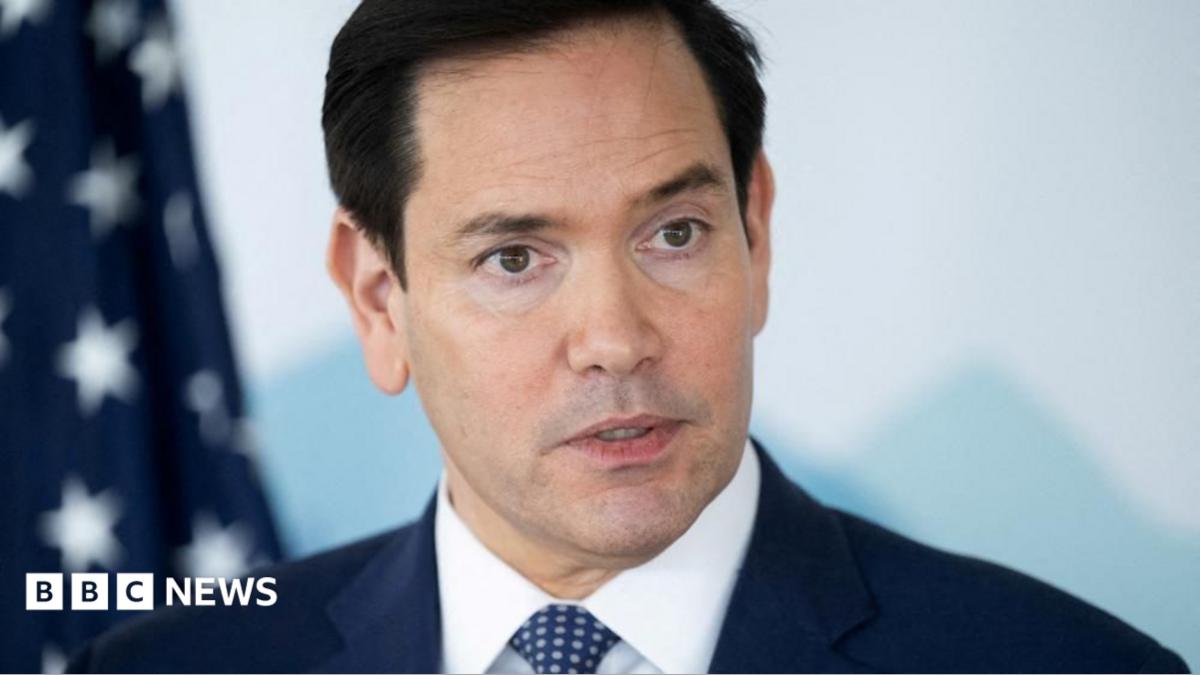
Announcing the restrictions on Tuesday, Secretary of State Marco Rubio said the South African government had "not adequately addressed the previously laid out concerns." He stated that the visa restrictions would apply to individuals who promote "race-based discrimination, incite violence, or enable land confiscation without compensation in South Africa." Rubio did not name any specific individuals affected by the measure.
Relations between the two nations have deteriorated steadily since Trump took office, with the administration cutting aid to South Africa, expelling its ambassador, and offering refugee status to white South Africans it says are fleeing persecution. South African officials have firmly rejected these accusations, saying claims of a "white genocide" have been widely discredited and are not supported by evidence. According to South Africa's most recent crime statistics, white citizens are not disproportionately affected by violent crime compared to other racial groups.
Trump's offer of refugee status to Afrikaners followed President Cyril Ramaphosa's signing of a law permitting land expropriation without compensation under limited circumstances. The legislation allows the government to seize property deemed in the public interest, though it requires authorities to first attempt negotiations with landowners, with disputes subject to court review. Land ownership remains a deeply sensitive issue in South Africa, more than 30 years after the end of apartheid, during which the black majority was stripped of land rights. The government maintains that land reform is essential to address these historical injustices and denies that the law permits arbitrary seizures. White South Africans, who make up about 7% of the population, own the majority of private farmland.
In a separate social media statement, Rubio accused the South African government of pursuing "racial grievance against the Afrikaner minority," saying that those responsible for such actions "have no place in the United States." He added that Pretoria had failed to adequately address US concerns about what Washington calls "government-sponsored discrimination" against Afrikaners and other minorities, warning that "the United States will not allow such behaviour to go unchecked." He said such actions undermine "peace, economic stability and the rule of law."
South Africa's government has not yet responded to the new restrictions. The US embassy in Pretoria said Washington believes diplomatic dialogue with South Africa has reached its limits, accusing the country of failing to show commitment to strong bilateral ties. The embassy warned that the visa restrictions represent only the first in a series of tougher measures to come, stating: "This visa restriction policy is only the first step in a series of escalatory measures that will show America's firm resolve in this matter."
South Africa has made several attempts to repair relations with Washington. In May, Ramaphosa visited the White House with a delegation that included white members of his coalition government and prominent white South African golfers. However, the meeting was overshadowed when Trump alleged that white South African farmers were being killed and persecuted, presenting evidence that has since been widely discredited.
Subsequent efforts to ease tensions have failed. In August, South Africa was hit with 30% tariffs on exports to the US, the highest rate imposed on any sub-Saharan African nation.
The new visa restrictions are being enforced under a provision of US immigration law that grants the Secretary of State authority to bar foreign nationals whose presence is deemed harmful to US foreign policy interests.