Technology
Sam Altman Defends AI Industry Self-Regulation as Public Fears Grow
By Today News Hours Editorial Desk
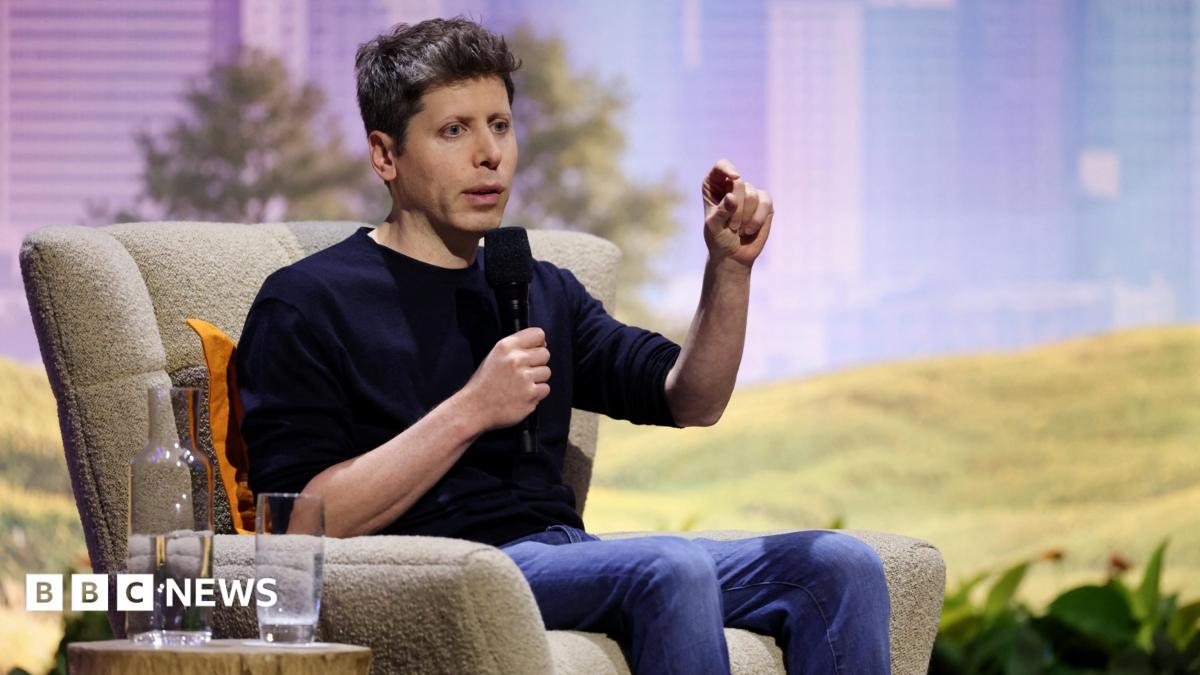
OpenAI chief executive Sam Altman has urged the public to trust artificial intelligence companies to act responsibly, even as he acknowledged that widespread fears about the technology are justified. Speaking Tuesday at a conference in San Francisco hosted by software company Salesforce, Altman said, "The world should trust that we are going to do the right thing because it's the right thing and we feel the magnitude of this." He added, "I think the world is right to be afraid of this," noting that AI's capabilities have advanced rapidly enough that it no longer takes much imagination to picture how things could go wrong. The remarks marked Altman's first public comments since a viral post last week by a former Anthropic researcher, who claimed AI could potentially kill all of humanity by the end of the decade if left unchecked. Several AI executives and experts said they agreed with the warning, though none detailed how they reached that conclusion or how such an outcome might occur. In response to the growing alarm, Anthropic CEO Dario Amodei called for slowing the pace of AI development industry-wide and urged governments to introduce regulation. Altman, along with Google DeepMind co-founder Demis Hassabis and X and Grok owner Elon Musk, praised the original warning post. By Tuesday, however, many AI leaders were instead advocating for self-regulation rather than government oversight. Altman said he was confident his company and the broader industry could manage AI safety on their own, stating they would "keep alignment and safety way ahead of capabilities" and would "slow down or stop" if necessary. Political figures pushed back against this stance. Independent Senator Bernie Sanders of Vermont, speaking at a separate conference in Washington, said AI's development has been controlled by "a handful of the richest people in the world," citing Musk, Meta's Mark Zuckerberg, and Amazon founder Jeff Bezos. "The people of this country must make the decisions about AI, and not just a handful of oligarchs," Sanders said. Steve Bannon, a former Trump White House strategist, echoed similar distrust, saying oligarchs could not be relied upon to self-regulate honestly. Following Altman's comments, Zuckerberg posted on X that AI labs have both the ability and incentive to prioritize safety, warning that any lab neglecting alignment would "fall behind" and face liability risks if their products caused harm. Nvidia CEO Jensen Huang, speaking at the same San Francisco event, said AI companies themselves — not outside regulators — should decide when new AI versions are ready for release. "We don't need new laws or regulations," Huang said, arguing there should be no "false choice" between innovation speed and safety. He added that safety is fundamentally an engineering challenge and that companies lacking confidence in a product should simply refrain from releasing it. Nvidia, the world's most valuable company, has seen its profits surge due to demand for AI computing chips. Not everyone in the industry supports full self-regulation. Anthropic co-founder Jack Clark told the BBC on Monday that allowing AI to remain a "totally unregulated industry" amounted to "rolling dice with immense risks." Patrick Hillman, chief operating officer of Logical Intelligence — a company chaired by AI researcher Yann LeCun — pointed out the low public trust in both government and tech companies, saying, "If you believe what you are building is dangerous, show us what you are prepared to stop doing." Despite these tensions, some companies are reportedly working toward shared safety standards. Amodei said Anthropic is now in talks with other firms about committing to stronger safety checks, while also noting that the AI boom's biggest surprise wasn't the technology's advancement itself, but how quickly AI companies grew and became central to broader industries. OpenAI executive Chris Lehane said last week that his company is collaborating with other labs, including Anthropic and Google DeepMind, to establish voluntary safety standards "with or without government support," adding, "With stakes this high, we cannot let the perfect become the enemy of the good."