Business & Finance
Dangote Refinery Swings to $1.82 Billion Profit as It Fills Europe's Fuel Shortfall
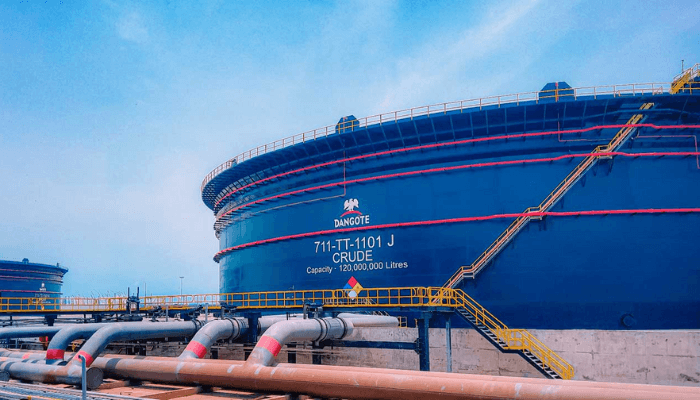
Nigeria's Dangote Petroleum Refinery supplied roughly 13% of the jet-fuel shortfall Europe faced in the second quarter of 2026, capitalizing on a regional supply crisis that helped push the company from a loss into substantial profit, according to figures reported by Reuters.
The refinery shipped approximately 80,000 barrels of jet fuel to Europe each day during the quarter, making it the region's largest external supplier of the fuel after the United States. These figures emerged as Dangote seeks investors for what would be Africa's largest initial public offering.
Disruptions in the Middle East eliminated about a quarter of Europe's typical diesel and jet-fuel supplies, driving regional inventories to their lowest levels in 12 years. Dangote's capacity to ramp up exports during this shortage secured the refinery a significant role in Europe's aviation-fuel market, less than two years after production began.
The refinery's financial results reflect a sharp reversal. Dangote posted revenue exceeding $13 billion and a net profit of $1.82 billion in the first half of 2026, compared with a $476 million loss in 2025 when the plant was still ramping up production and managing heavy financing costs. The improved performance was driven by higher output and a widening gap between crude oil prices and the rates refiners could charge for diesel and jet fuel. The company also boosted diesel and gasoil shipments to Europe and West Africa amid strong buyer demand.
Situated on Nigeria's Atlantic coast, the refinery has direct shipping access to European and American markets, avoiding the need to pass through the Strait of Hormuz or the Red Sea. This geographic advantage has grown more valuable as attacks and shipping restrictions continue to disrupt fuel flows from the Middle East.
The strong export performance gives investors more clarity on the business underpinning Dangote's proposed valuation of roughly $47 billion to $49 billion. The company plans to offer 4.1 billion new shares priced at 525 naira each, aiming to raise about $1.6 billion, or 2.15 trillion naira. Proceeds are earmarked partly for an expansion project that would double the refinery's processing capacity to 1.4 million barrels per day. Dangote is also weighing a secondary listing in the United States within the next four years.
Despite the positive outlook, the current market conditions driving profits present risks for potential investors. The exceptional fuel margins stem largely from the Middle East disruptions and broader tightening of the global diesel market caused by conflicts and attacks on refineries elsewhere. Should those supply disruptions ease, European fuel prices and refining margins could decline, forcing Dangote to depend more on operational efficiency, consistent crude supplies and steady demand rather than scarcity-driven pricing.
The refinery's ability to process up to 36 different crude grades and produce a range of fuels gives it operational flexibility, and its scale offers cost advantages that many older European refineries lack. Still, investors will need to weigh these strengths against the costs and execution risks tied to the planned $14.3 billion expansion, potential regulatory shifts in Nigeria, and the inherent volatility of global fuel markets.
Dangote's growing presence in the European market indicates the refinery has moved beyond simply displacing Nigerian fuel imports, positioning itself as a key supplier to one of the world's largest fuel markets. Whether it can sustain that position once the current supply shortage subsides remains an open question.